





Vintage Sporting Accessory
These vintage sporting accessory pieces bring the character of past games and field sports straight into the modern home.
Vintage Sporting Accessory
A vintage sporting accessory encompasses everything from equestrian items and games room pieces to novelty items celebrating cricket, football, rugby, tennis, golf, and shooting. When exploring a vintage sporting accessory, buyers encounter items created for recreation, display, and practical desk use across the Victorian, Edwardian, and mid-twentieth-century eras.
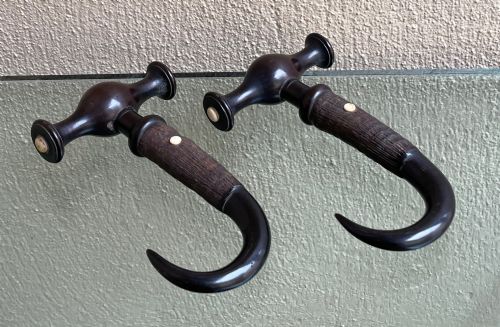
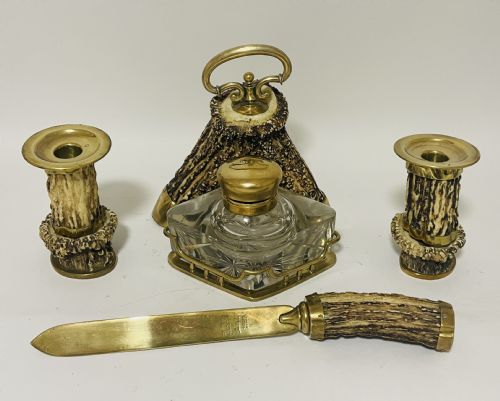
The pieces on this page span from 1860 up to 1960, showing how past pastimes influenced domestic objects. Common forms include bookends modelled as bats and balls, lidded boxes shaped like footballs, silver menu holders depicting foxes, and practical items such as horn boot pulls and brass mounted antler desk sets.
Origins range across traditional English craftsmanship, utilising materials suited to both rugged outdoor pursuits and refined indoor spaces. Each object serves as a tangible link to the social history of sport, whether found in a grand games room, an Edwardian study, or a Victorian country house.
Materials and construction
Natural materials dominate these items, with horn, bone, antler, fruitwood, and oak frequently utilised to shape items like boot pulls, bookends, and desk sets. Artisans shaped these organic elements to mirror the textures of the natural world and the equipment used in outdoor games.
Metals such as sterling silver, silver plate, and brass provide durability and refined detail for items like picture frames, menu holders, and scoreboards. Orme & Sons Manchester and Thornton Smith Co. demonstrate the level of specialised manufacturing applied to games room furnishings and wooden bookends during the nineteenth and early twentieth centuries.
Vintage Sporting Accessory Retail Price Guide 2026
Typical asking prices for vintage sporting accessory among the pieces listed under this phrase on Sellingantiques today, from the lower quarter to the upper quarter. They describe what is for sale here now, not the wider market.
One unexpected piece turns a humble football into a hardwood box, ready to hide secrets instead of bouncing across a pitch.
Assessing craftsmanship
Quality in these pieces depends on the precision of the carving and the fidelity of the sporting depiction, whether it is a hardwood box modelled as a soccer football or a stoneware rugby ball inkwell. Superior examples display careful attention to anatomical or equipment details, showing realistic proportions rather than crude approximations.
The choice of materials and the integrity of the maker's finish also dictate standard, evident in the crisp hallmarks on sterling silver picture frames and menu holders or the robust mounting of brass on antler desk sets.
Thornton Smith Co.·Orme & Sons Manchester
The Vintage Sporting Accessory Glossary
- Sterling Silver
- A silver alloy containing 92.5 percent pure silver by mass and 7.5 percent other metals, usually copper. This standard alloy provides the durability needed for items like menu holders and picture frames while maintaining a bright lustre.
- Place Card Holder
- A small decorative stand used at formal dining tables to hold cards bearing the names of guests. In sporting themes, these are often cast in silver to represent animals or game.
- Desk Set
- A coordinated collection of writing accessories, often mounted on a tray or base. Victorian versions frequently incorporated natural elements like brass-mounted antlers.
- Boot Pull
- A device used to assist in pulling on tight riding or field boots. Nineteenth-century examples often utilised horn or carved wood.
Vintage Sporting Accessory: Frequently Asked Questions
What periods do these pieces come from?
The items span from the nineteenth century through the Edwardian era and into the mid-twentieth century. Dates include specific years like 1860, 1919, and 1936 alongside broader periods such as Victorian and Edwardian.
This range demonstrates how sporting themes evolved in domestic design over a century of manufacturing.
How were these items used originally?
Many served practical functions in games rooms, studies, and dining rooms, from keeping score on snooker boards to holding place cards at dinner parties. Others, such as inkwells and picture frames, were standard desk accessories for writing and display.
Sporting motifs allowed enthusiasts to incorporate their recreational interests into everyday household administration.
What materials should I expect to find?
Makers utilised a diverse mix of organic and metallic substances suited to both field sports and indoor games. Common materials include sterling silver, silver plate, brass, oak, fruitwood, horn, bone, and antler.
Combinations of wood and metal or horn and brass are typical for items like desk sets and bookends.
How do I identify a novelty sporting piece?
Novelty pieces are functional objects cleverly disguised as sporting equipment or animals, such as a lidded wooden box shaped like a football or a stoneware rugby ball configured as an inkwell. They combine utility with whimsical design, often dating from the late Victorian or early twentieth-century periods.
Examining the maker's marks, materials, and overall craftsmanship helps determine their authenticity and age.