





Vintage Silver Tea Stand
These vintage silver tea stands bring period elegance to the table, offering practical warmth and refined charm for afternoon tea.
Vintage Silver Tea Stand
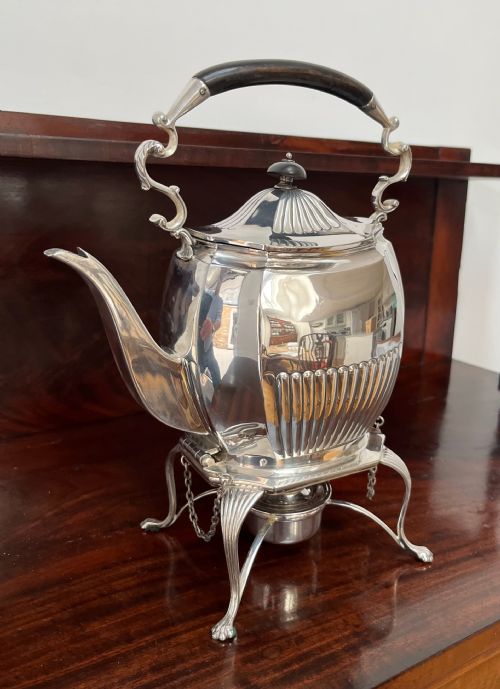
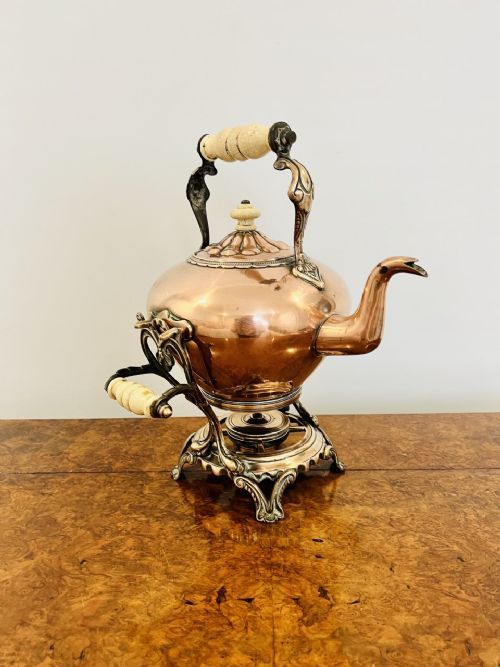
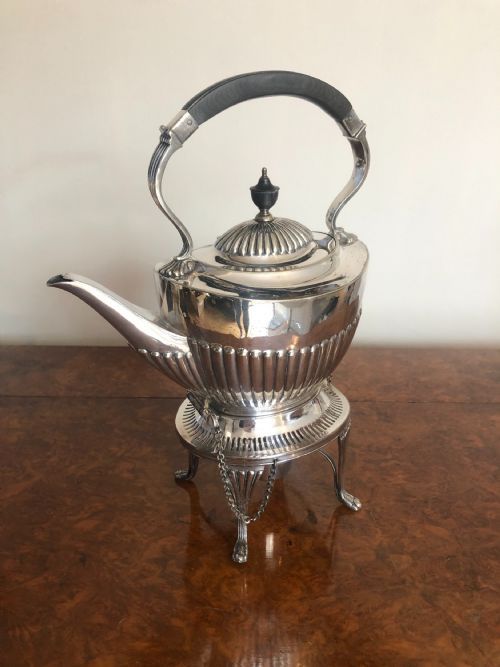
A vintage silver tea stand is primarily encountered here as a spirit kettle mounted upon a dedicated frame, complete with an integral burner for continuous warmth. These pieces span several distinct eras, with Edwardian silver-plated examples appearing alongside Art Deco designs and occasional Victorian copper iterations.
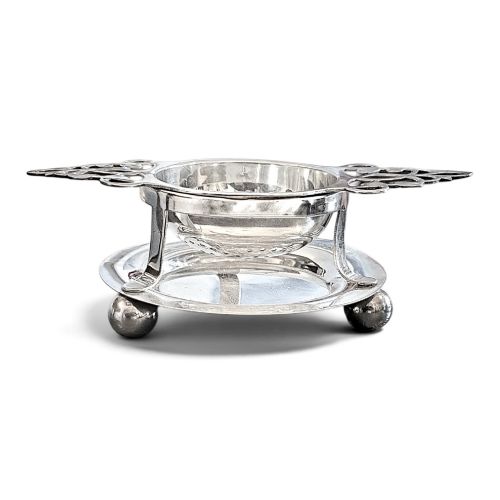
The selection ranges from elaborate spirit kettles with burners to smaller table accessories such as tea strainers with matching stands. Buyers will find that silver plate dominates the available forms, though sterling silver pieces also feature among the selection.
How they were made
The construction of these stands relies heavily on silver plate and sterling silver, often combined with functional elements fashioned from ebony, bone, and wood for insulation. Metal frames support the kettles securely above spirit burners designed to maintain the water temperature during service.
Craftsmanship from the Edwardian and Art Deco periods reflects distinct stylistic influences, ranging from ornate Neoclassical and Georgian Revival motifs to clean, geometric lines. Artisans utilised durable base metals beneath silver plating, ensuring the structural integrity necessary for holding boiling water.
Vintage Silver Tea Stand Retail Price Guide 2026
Typical asking prices for vintage silver tea stand among the pieces listed under this phrase on Sellingantiques today, from the lower quarter to the upper quarter. They describe what is for sale here now, not the wider market.
What varies in quality
The distinction between standard production and superior craftsmanship lies in the weight of the metal and the precision of the frame joints. Finer examples display crisp decorative chasing and robust burner mechanisms that operate smoothly within the stand.
Makers such as Hammond, Turner & Sons and Mappin & Webb represent a standard of execution where proportions remain balanced and every component, from handles to feet, is thoughtfully integrated. Lesser pieces may show simplified mounts and thinner plating that lacks the depth of heavier antique specimens.
Hammond, Turner & Sons·Mappin & Webb
The Vintage Silver Tea Stand Glossary
- Spirit kettle
- A water kettle mounted on a metal stand above a small spirit burner used to keep water hot at the table. This form is central to many traditional tea services.
- Silver plate
- A layer of pure silver fused to a base metal substrate, such as copper or nickel brass. This technique provided an accessible alternative to solid sterling silver.
- EPNS
- Electroplated nickel silver, a common base material for silver-plated items produced from the nineteenth century onwards. It offers durability and a bright metallic finish.
- Tea strainer
- A small perforate bowl used to catch loose leaves when pouring tea from pot to cup. Many period examples include a matching small stand to catch drips.
- Art Deco
- A design style from the nineteen-twenties and thirties characterised by geometric shapes and streamlined forms. Pieces from this era often feature clean, unadorned surfaces.
Vintage Silver Tea Stand: Frequently Asked Questions
How do spirit burners work?
The spirit burner sits in a small cradle beneath the kettle and uses liquid fuel to maintain the water temperature during tea service.
Users fill the burner reservoir, light the wick, and adjust the flame using the built-in snuffer cap or regulator.
Are these kettles safe for boiling water?
Many vintage spirit kettles are constructed to hold and heat water, provided the interior remains clean and free from heavy corrosion.
It is advisable to check the structural integrity of the handle insulators and the burner mechanism before attempting to heat water.
How do I distinguish Edwardian from Art Deco styles?
Edwardian stands frequently incorporate revivalist motifs such as Neoclassical flourishes, elaborate handles, and ornate feet. These designs lean towards traditional elegance and decorative ornamentation.
Art Deco stands favour geometric symmetry, clean vertical lines, and minimal surface decoration, reflecting the aesthetic shifts of the nineteen-thirties.
What is the difference between sterling silver and silver plate?
Sterling silver consists of solid precious metal throughout, marked with official hallmarks indicating its silver purity. It represents the highest tier of precious metal composition.
Silver plate involves a thin coating of silver applied over a base metal such as copper or nickel, offering the appearance of silver at a different weight and scale.