
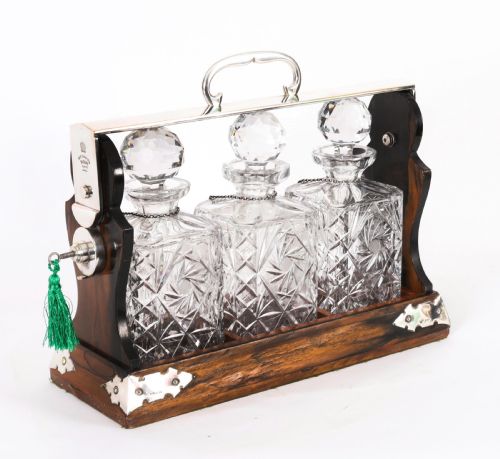


Vintage Silver Tantalus
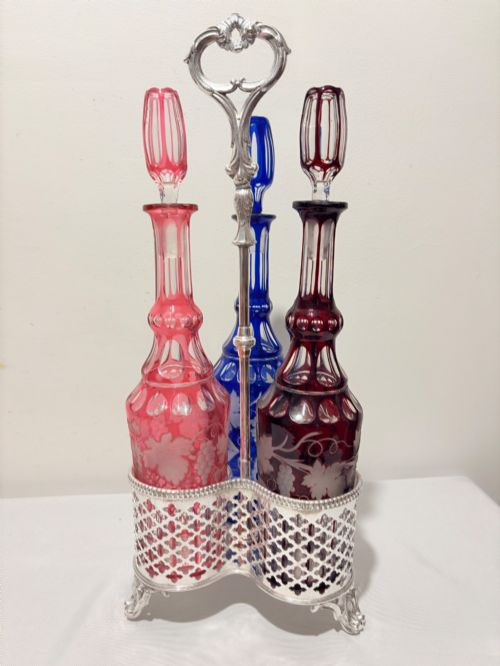
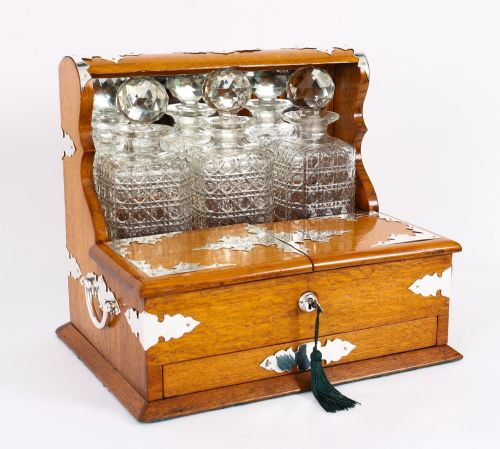
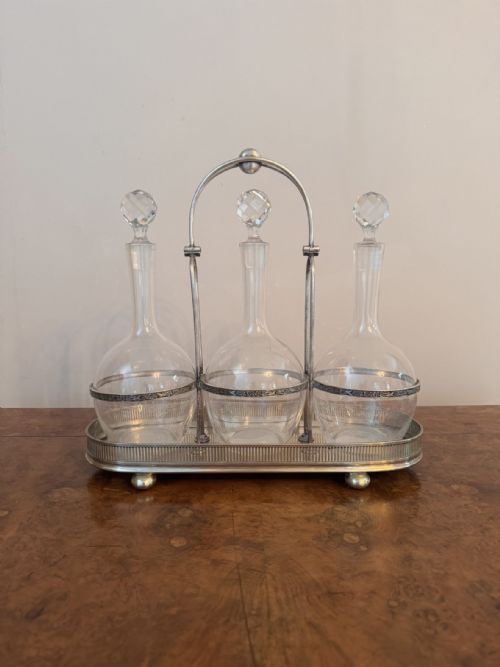
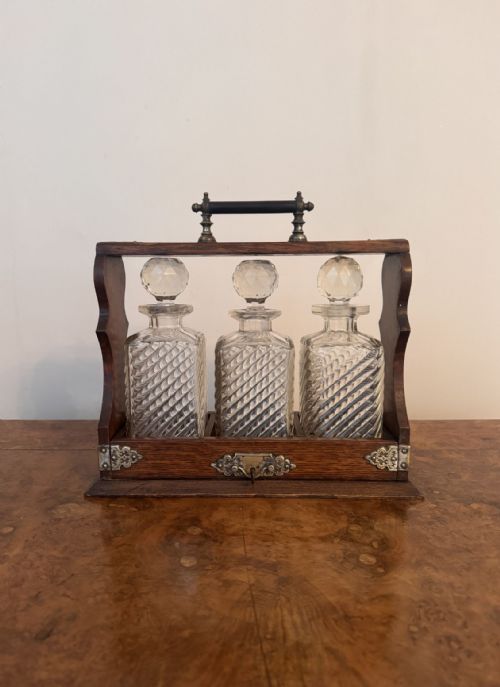
A vintage silver tantalus holds decanters behind a locking frame, offering a clever way to display and secure spirits.
Vintage Silver Tantalus
When you search for a vintage silver tantalus, you encounter locking spirit frames designed to prevent unauthorized access to expensive liquor. The pieces on this page span the Victorian, Edwardian, and Art Deco periods, ranging from straightforward oak and silver plated models to elaborate games compendiums.
Most examples you meet here date from the late nineteenth and early twentieth centuries, featuring two or three cut glass or crystal decanters secured within metal frameworks. Alongside traditional tantalus stands, the selection includes related barware such as liqueur stands, spirit barrels, and decanter cruets.
The form developed primarily as a dining room or smoking room accessory for affluent households. Makers combined utilitarian security mechanisms with decorative display elements, producing pieces that function as both drink dispensers and decorative furniture.
How they were made
Craftsmen built the structural frames using solid oak, blonde oak, or exotic coromandel wood, often housing mechanisms within locking handles. Metal components utilised silver plate, Old Sheffield plate, chrome, brass, or sterling silver for the locking bars, carrying handles, and mounts.
Containers and decanters required heavy cut crystal or cut glass, shaped into bottles, barrels, or jugs to catch the light. Silver hallmarks, when present, indicate the assay office and year of production for the precious metal mounts.
Some tantalus sets include tiny tot pails for measuring out drams with proper ceremony.
What varies in quality
Quality reveals itself in the integration of the locking mechanism and the weight of the frame. Finer examples feature robust silver plating or solid sterling mounts that operate smoothly without binding the locking bar against the decanter necks.
The glass contributes significantly to the overall standard of the piece, with deep hand-cut crystal patterns and matching original stoppers marking superior production. Additional utility, such as integrated games compendiums or supplementary tot pails, elevates the ambition of the design.
Betjemann·Elkington·The Goldsmith Co·Hukin and Heath·Jacques Adnet
The Vintage Silver Tantalus Glossary
- Tantalus
- A locking drink stand that keeps decanters visible yet inaccessible to unauthorized drinkers. The mechanism secures the stoppers in place until a key releases the handle.
- Games compendium
- A multi-functional box incorporating storage for board games alongside the bottle frame. These items combine entertainment and hospitality in a single cabinet.
- Old Sheffield plate
- An early method of fusing a thin layer of sterling silver to a copper base metal. This technique produces distinct edge wear where the underlying copper shows through.
- Silver plate
- A manufacturing process where a base metal receives a thin coating of silver. Most surviving decanter stands utilise this method for durability and gleam.
- Coromandel
- A dense, dark exotic timber with striking contrasting grain patterns. Makers reserved this expensive material for luxury cabinets and tantalus frames.
Vintage Silver Tantalus: Frequently Asked Questions
How does a tantalus lock work?
A metal bar passes across the top of the decanter stoppers and fastens into a locking mechanism at the end of the stand. Turning a key releases the handle, allowing the bar to lift so the bottles can be removed.
Without the key, the stoppers remain trapped inside their collars, preventing anyone from pouring the contents.
Were these made for specific rooms?
These pieces traditionally stood on sideboards in dining rooms, drawing rooms, or dedicated smoking rooms. They allowed hosts to offer spirits to guests while keeping the supply secure from household staff.
Later Art Deco models often transitioned to home bars and living spaces as entertaining habits shifted.
How do I date a piece?
Dating relies on stylistic clues, wood types, and any metal hallmarks present on the mounts. Victorian examples often feature heavy oak and ornate silver plating, while Edwardian versions lean towards refined three-bottle frames.
Art Deco items introduce modernist chrome framing and streamlined crystal silhouettes from the 1930s.
Are the decanters always original?
Many surviving pieces retain their matched cut glass or crystal decanters, though replacements occur frequently due to accidental breakage over the decades. Matching patterns and correct stopper fits indicate original pairings.
Listings specify whether the glass and original silver plated stands belong together.