


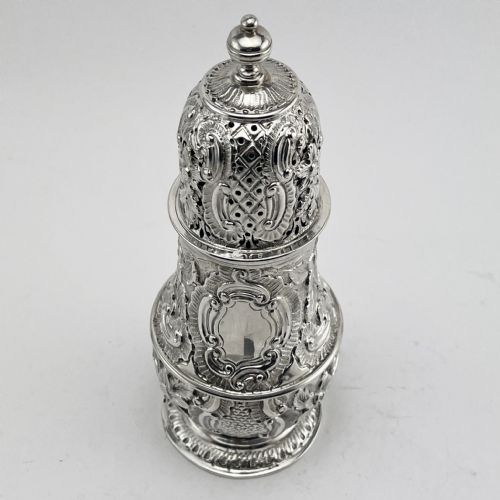


Vintage Silver Spice Shakers
These vintage silver spice shakers bring refined character to the table, offering practical use alongside enduring craftsmanship.
Vintage Silver Spice Shakers
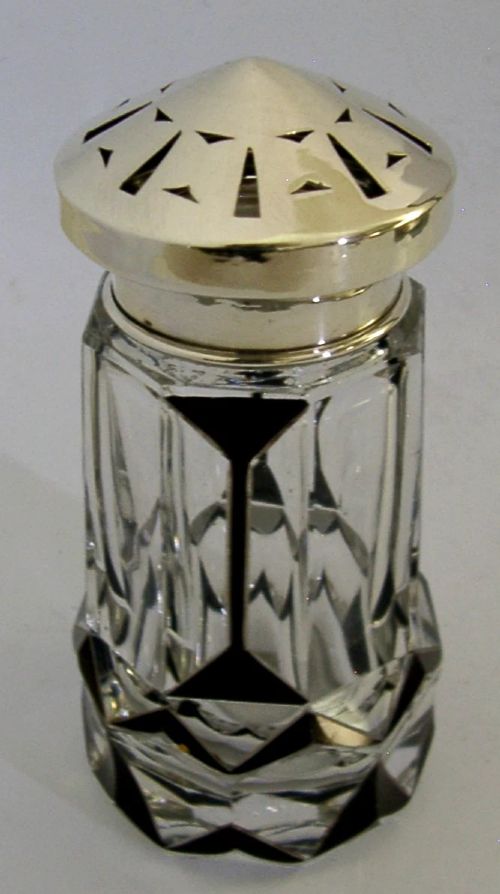
Vintage silver spice shakers encompass a charming variety of small dining table accessories designed for dispensing condiments and sugar. When exploring this selection, buyers frequently encounter pepper pots, sugar casters, and pepperettes shaped during the Edwardian, Victorian, and mid-twentieth-century periods. These table wares appear in both sterling silver and silver plate, sometimes accompanied by cut glass containers or arranged in matched pairs.
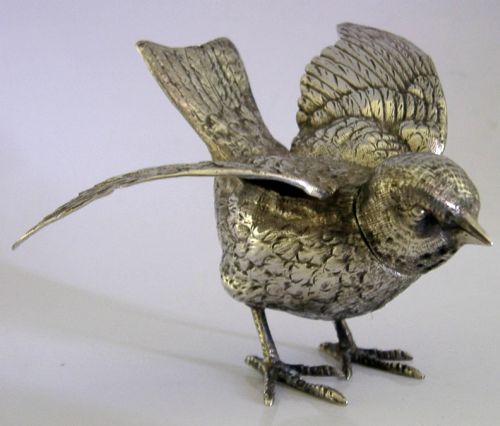
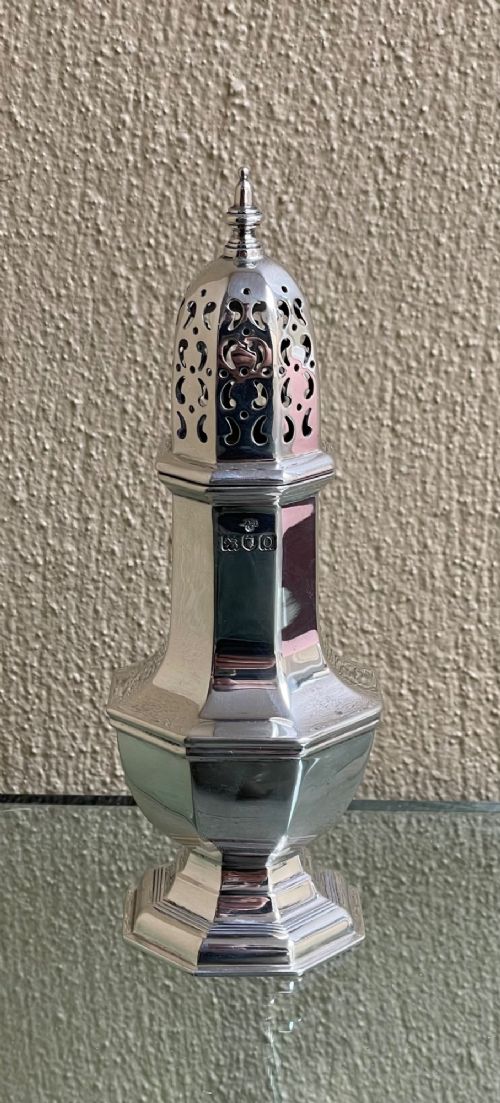
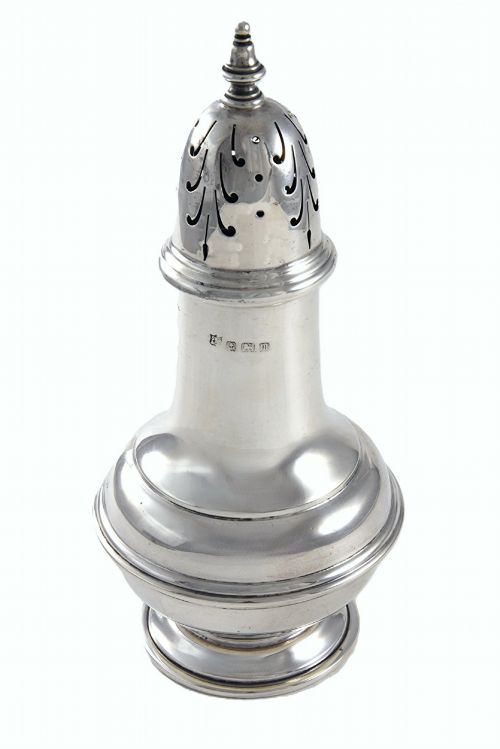
The assortment on this page ranges from tall sugar sifters bearing traditional hallmarks to whimsical novelty forms modelled as animals. Pieces such as the fox pepperette or the Dutch bird chick pepper pot demonstrate the playful side of historic table silver alongside standard Georgian and George V styles.
How they were made
Makers of vintage silver spice shakers relied heavily on solid sterling silver and durable silver plate, often combining metal bodies with cut glass reservoirs to create functional contrast. Pierced lids required precise hand-cutting or stamping to ensure steady flow rates for fine spices and sugars.
Silversmiths utilised traditional casting and hammering techniques to shape intricate animal figures and classical baluster caster bodies. Hallmarks stamped into the metal recorded the assay office, standard of silver, and year of manufacture, providing a permanent record of origin.
Dining tables of the past gained considerable charm from silver animal shakers shaped as life-size bird chicks and foxes.
What varies in quality
Quality among vintage silver spice shakers rests largely on the crispness of detail in chased or pierced ornamentation and the weight of the metal used. Heavier gauge sterling silver provides a substantial feel in the hand compared to lighter plated alternatives, while crisp hallmarks indicate careful workshop standards.
Artistic execution distinguishes standard utilitarian table wares from exceptional novelty pieces, particularly in naturalistic animal forms. The survival of original glass liners and secure fitting lids further elevates the standing of individual items.
James Dixon & Sons Ltd·Evald Nielsen
The Vintage Silver Spice Shakers Glossary
- Sugar caster
- A tall container with a pierced domed lid used for sprinkling caster sugar over desserts or pastry. These pieces typically feature a baluster profile and stand on a spreading foot.
- Pepperette
- A small table vessel designed specifically for dispensing ground pepper at meals. They often match larger salt cellars within a broader cruet set.
- Cruet set
- A matched collection of bottles or pots held in a stand for holding various condiments, oils, and vinegars at the dining table. They frequently combine silver frames with cut glass bottles.
- Hallmark
- A series of official marks stamped on precious metal items to guarantee the purity of the silver and identify the maker and year. British pieces commonly display a lion passant and town mark.
- Sterling silver
- An alloy consisting of pure silver and other metals, usually copper, to increase durability while maintaining a bright finish. British sterling standard requires a specific proportion of pure silver.
Vintage Silver Spice Shakers: Frequently Asked Questions
What is the difference between a caster and a shaker?
Casters are generally taller vessels with a wider foot and a secure, removable pierced top designed for granular sugar. Shakers often refer to smaller pots intended for ground pepper and fine spices.
Both items served specific roles on the dining table, though their exact terminology often overlapped depending on the period and the maker's intention.
How do I clean antique silver spice shakers?
Maintenance requires a soft cloth and a reputable silver polish formulated to lift tarnish without removing the underlying metal surface. Gentle care preserves the crispness of engraved details and maker's marks.
Harsh chemical dips and abrasive pads should be avoided entirely, as they strip the natural patina accumulated over decades of use.
Were these pieces used individually or in sets?
Many spice containers were produced as matched pairs or incorporated into larger multi-bottle cruet frames alongside mustard pots and oil cruets. Individual sugar casters also stood alone on tea and dessert tables.
Collectors find both single survivors and complete matched sets among historical dining silver.
How can I tell the age of a silver spice pot?
Age is primarily determined by examining the stamped hallmarks for date letters, monarch profiles, and assay office symbols. Stylistic cues such as Art Nouveau curves or Edwardian proportions also offer strong indications of the period.
Comparing construction techniques and the wear patterns on the base helps confirm the manufacturing era.