
Vintage Silver Dishes
Vintage silver dishes bring the craft of past decades to the table, offering practical utility and decorative charm through varied forms from bowls to trinket boxes.
Vintage Silver Dishes
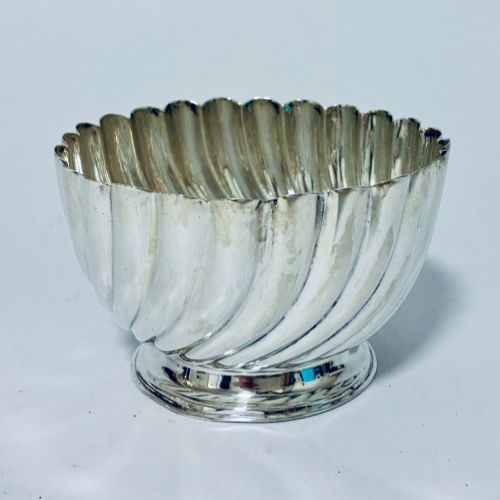
Vintage silver dishes encompass a wide category of table vessels, serving pieces, bowls, and small containers designed for domestic use or display. Buyers searching for vintage silver dishes encounter items ranging from Victorian and Edwardian serving vessels to Art Deco and Mid-Century modern bowls.
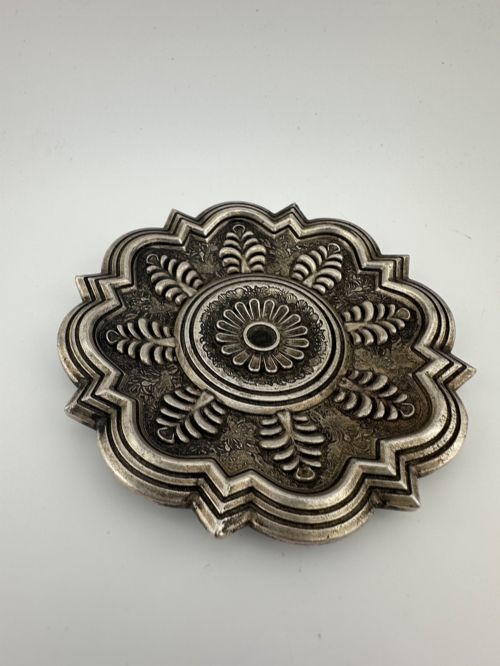
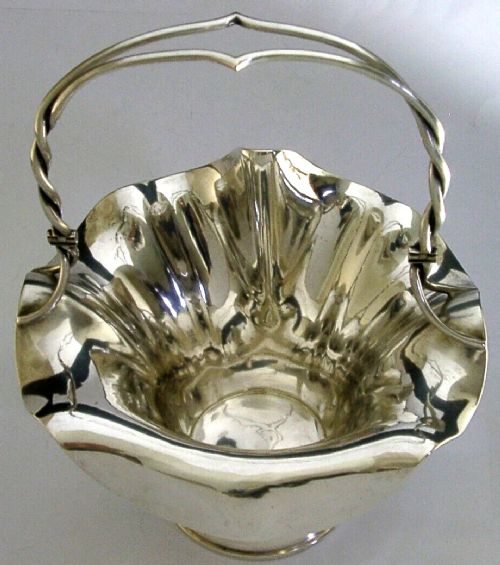
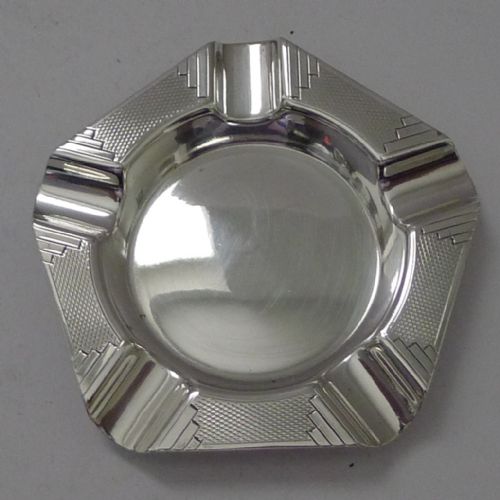
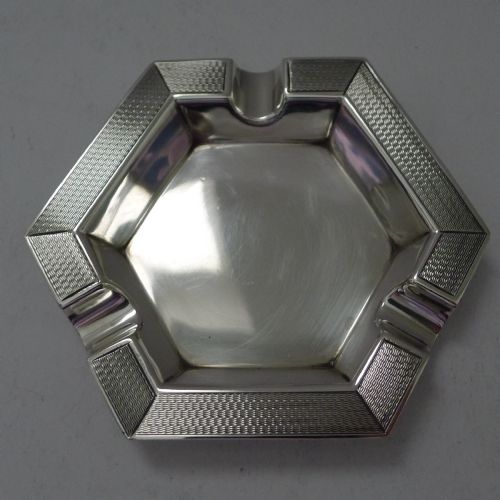
The selections span utilitarian objects like butter dishes and ashtrays alongside purely decorative baskets, tazzas, and card trays. Most pieces emerge from British workshops of the nineteenth and twentieth centuries, though continental, American, and Asian export silver also populate the field.
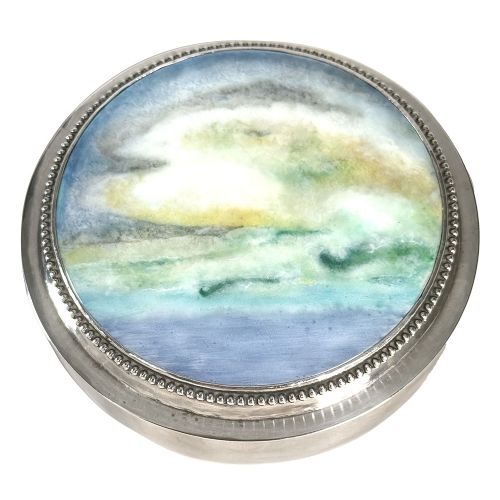
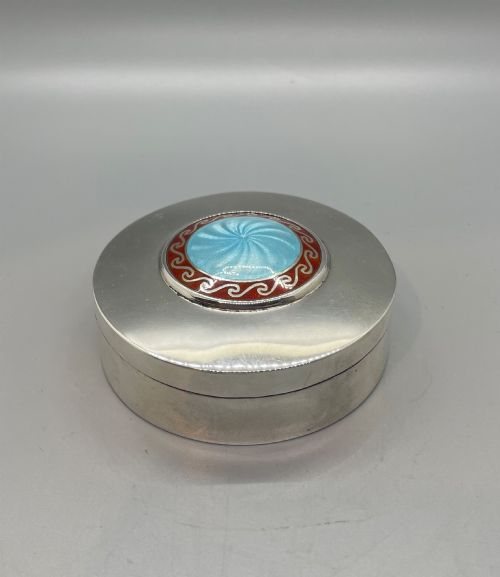
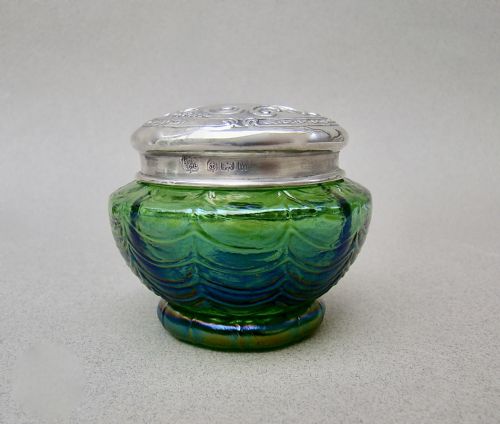
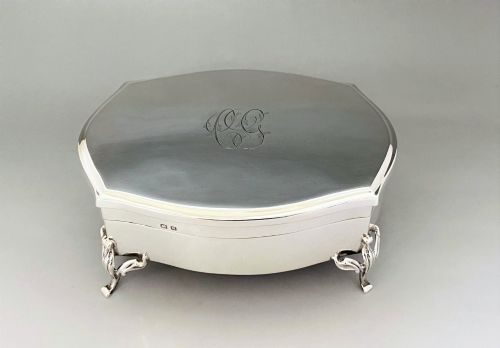
Forms vary from simple hammered bowls to complex lidded trinket boxes featuring glass liners or enamel plaques. The category bridges formal dining accessories and personal vanity items, uniting them through precious metal and plated surfaces.
How they were made
Silversmiths constructed these pieces primarily from solid sterling silver or silver plate, utilising foundational techniques such as casting, hammering, and spinning. Many items integrate complementary materials like cut glass, satin glass, crystal, and copper to create contrast and texture.
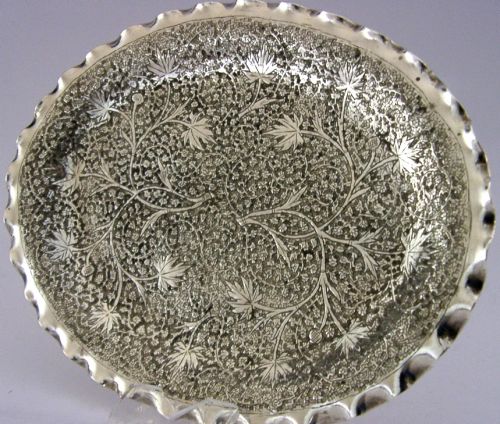
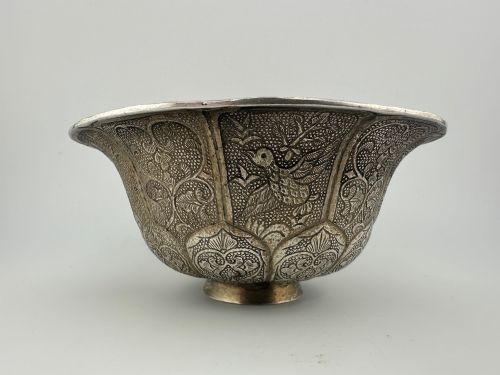
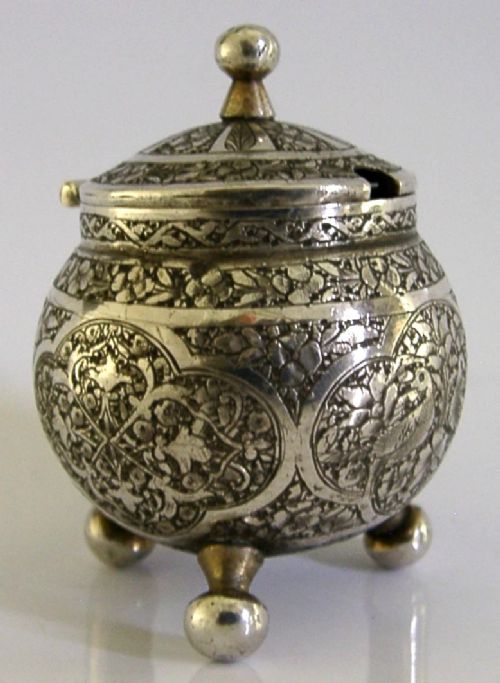
Decorative surface work defines the manufacturing process across multiple periods, incorporating hand chasing, piercing, guilloche enamel, and landscape enamel plaques. Artisans applied patination, gilding, and metal inlay to enhance specific regional styles, from Anglo-Indian animal motifs to Arts and Crafts planished surfaces.
Listings feature items spanning the Victorian era through the Mid-Century Modern period, utilising sterling silver, silver plate, glass, and copper.
What varies in quality
Quality in these items rests on the integrity of the metalwork, the weight of the piece, and the clarity of the maker marks or full hallmarks. Substantial gauge silver and robust construction separate standard commercial production from the output of notable firms.
The refinement of decorative details dictates distinction at the upper end of the range. Hand-applied chasing, crisp piercing, undamaged enamel work, and well-fitted glass liners indicate superior craftsmanship compared to mass-produced plated alternatives.
Mappin and Webb·Viners and Co·Guild of Handicrafts·Walker and Hall·William Neale·Georg Jensen·Goldsmiths and Silversmiths Company·Christofle·Wallace
The Vintage Silver Dishes Glossary
- Hallmark
- Official stamps struck into precious metal indicating the standard of purity, the assay office, and the date letter. These marks allow collectors to date pieces accurately.
- Tazza
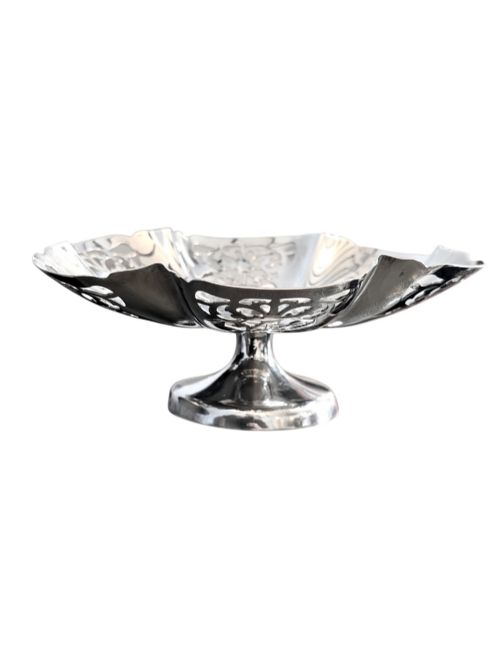
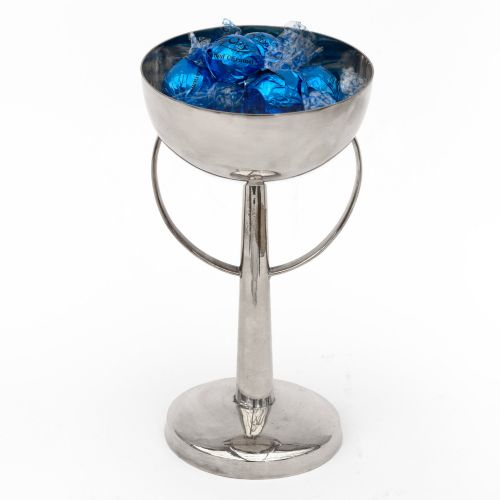
- An ornamental shallow cup or bowl mounted on a stem and foot. They frequently appear in silver or silver plate as centrepieces or bonbon dishes.
- Vide Poche
- A small tray or dish intended for emptying pockets of coins, keys, or jewellery upon entering a room. French designers often shaped these as novelty items.
- Guilloche
- A decorative engineering technique producing a precise, intricate repeating pattern etched into metal beneath a translucent layer of enamel. It appears frequently on Edwardian trinket boxes.
- Planished
- A metalworking finish achieved by hammering a surface with a round-headed hammer to create small, controlled facets. This texture is a hallmark of the Arts and Crafts movement.
- EPNS
- Electroplated Nickel Silver, a common base metal alloy coated with a thin layer of pure silver. It allowed nineteenth and twentieth-century manufacturers to produce affordable tableware.
Vintage Silver Dishes: Frequently Asked Questions
How do I clean vintage silver dishes?
Use a soft microfiber cloth and a mild silver polish designed specifically for the metal type. Avoid abrasive pads that can strip thin silver plate or scratch delicate engraved surfaces.
For pieces with glass liners, enamel, or wooden components, remove the non-metal parts before cleaning to prevent moisture damage. Wash gently by hand and dry thoroughly after polishing.
Are silver plated dishes worth buying?
Silver plated dishes offer an accessible entry point into collecting tableware without the higher cost of solid sterling silver. Many plated items feature exceptional design quality and maker provenance.
Inspect the edges and high-wear areas to ensure the base metal does not show through the plating. Well-maintained electroplate serves dining and display functions admirably.
What is the difference between solid silver and plate?
Solid silver, often marked as sterling, consists of precious metal throughout the object with a standard purity level. Silver plate uses a base metal, such as copper or nickel alloy, coated with a thin layer of silver.
Hallmarks usually confirm solid silver content, whereas plated items carry stamps indicating electroplate or maker marks without standard purity symbols.
How can I date my silver dish?
Examine the base or interior rim for assay office marks, maker initials, and date letters. British hallmarks typically include specific symbols corresponding to exact years of production.
Stylistic indicators, such as Art Deco geometric lines or Victorian chased foliage, help narrow down the period when official hallmarks are absent or worn.