


Vintage Silver Chamberstick
A vintage silver chamberstick is a low, handled bedside candle holder designed to light a path through the dark.
Vintage Silver Chamberstick
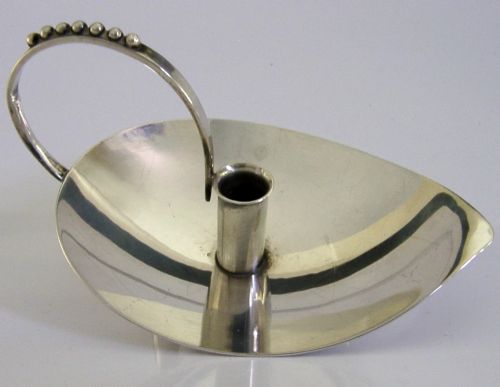
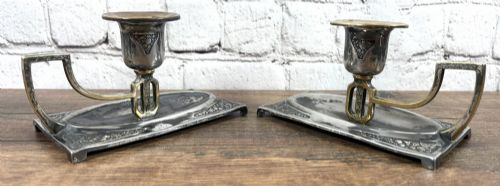
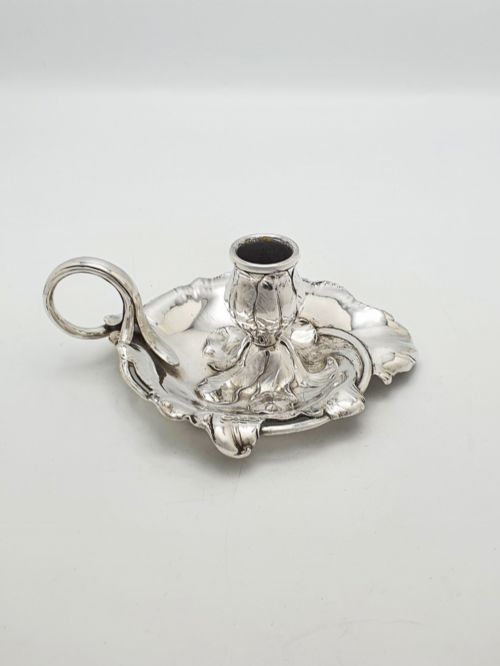
A vintage silver chamberstick takes the form of a low, saucer-like base fitted with a ring handle and a central socket for a candle. These portable lights appear frequently in silver plate and sterling silver across this page.
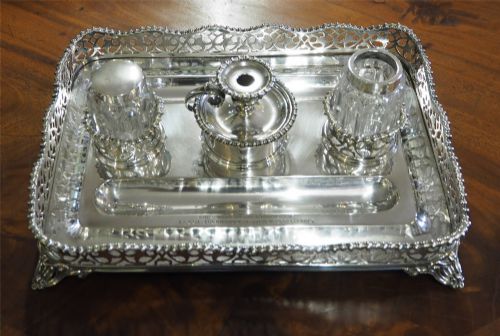
The selections span the nineteenth century through the Edwardian era and into the mid-twentieth century, including items labelled as desk accessories and chamber candlesticks. Certain examples incorporate crests or leaf forms reflecting periods like Art Nouveau and Rococo Revival.
Buyers also encounter related lighting forms such as standard candlesticks, desk sets, and table lamps alongside the core chambersticks. These pieces cross various historical styles from Georgian designs up to mid-century modern interpretations.
Materials and construction
Makers formed these items using traditional metals such as sterling silver, silver plate, EPNS, and old Sheffield plate. Other durable materials like brass, copper, pewter, cut glass, and base metal appear across the inventory.
Construction techniques range from heavy plated metals shaped in Victorian styles to mid-century smithing work. Pieces often incorporate cast handle loops soldered to the main saucer drip pan, alongside applied crests and borders.
Many chambersticks retain their tiny conical snuffers resting neatly on the tray, surviving centuries without getting lost down the back of a drawer.
Judging quality and execution
Quality rests in the weight of the metal and the crispness of applied ornament, such as cast leaf forms or engraved family crests. Heavier gauge silver plate and solid sterling silver demonstrate superior original expense.
The integrity of the soldering around the handle and socket distinguishes careful manufacturing from basic assembly. Superior examples retain their original proportions and balance without distortion in the drip pan.
WMF·GEOFFREY BELLAM·Elkington
The Vintage Silver Chamberstick Glossary
- Chamberstick
- A low portable candle holder featuring a saucer base and a finger loop handle for carrying through a house. These items were traditionally used at bedtime.
- Old Sheffield Plated
- An early method of fusing a thin sheet of sterling silver to a thicker copper base before rolling. This technique produces a warm tone where the underlying copper sometimes subtly shows through highlights.
- EPNS
- Electroplated Nickel Silver, a common nineteenth and twentieth century manufacturing standard. Manufacturers used this process to coat a durable base metal core with a layer of pure silver.
- Rococo Revival
- A nineteenth century decorative style drawing on ornate asymmetry, scrolls, and naturalistic leaf motifs. Objects in this taste display heavy embossing and sculptural curves.
Vintage Silver Chamberstick: Frequently Asked Questions
How were chambersticks used?
Chambersticks were carried by hand through darkened corridors and up staircases at night before electric lighting existed. The wide saucer caught any falling wax while the loop handle kept fingers safely away from the flame.
They sat upon bedside tables ready for the final illumination of the evening or the first light of the morning. Many included a small conical snuffer resting on the tray to extinguish the wick cleanly.
What is the difference between a chamberstick and a candlestick?
A standard candlestick is tall and stands firmly on a dining table, mantelpiece, or desk to illuminate a stationary space. It lacks the low saucer and finger ring characteristic of the portable bedroom design.
A chamberstick sits low to the surface with a wide drip pan specifically to catch melted wax while being carried in hand. This functional difference dictates their distinct shapes across all historical periods.
How do I date a silver chamberstick?
Dating relies on stylistic clues, manufacturing techniques, and any accompanying hallmarks stamped into the metal. Georgian and Victorian pieces show heavy cast ornamentation, while mid-century examples favour clean, unadorned surfaces.
Silver plating methods also shift over time, moving from old Sheffield plate and early heavy plating towards standard electroplate in the later nineteenth century. Comparing form and weight against known period styles clarifies the date of origin.