







Vintage Shop Drawers
Vintage shop drawers are utilitarian storage units salvaged from old commercial premises, prized for their multiple compartments and robust daily utility.
Vintage Shop Drawers
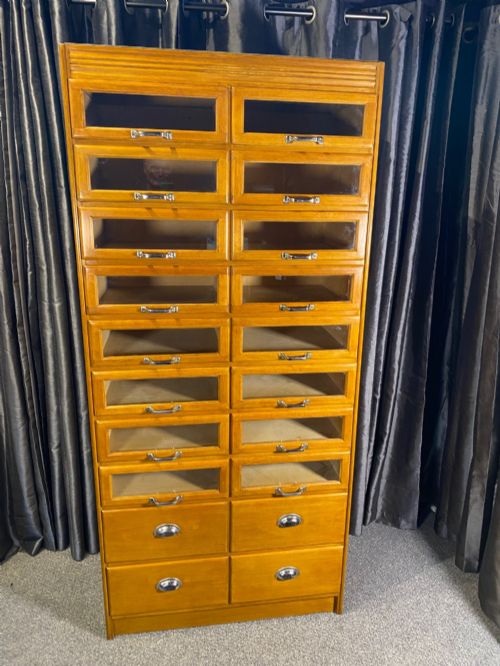
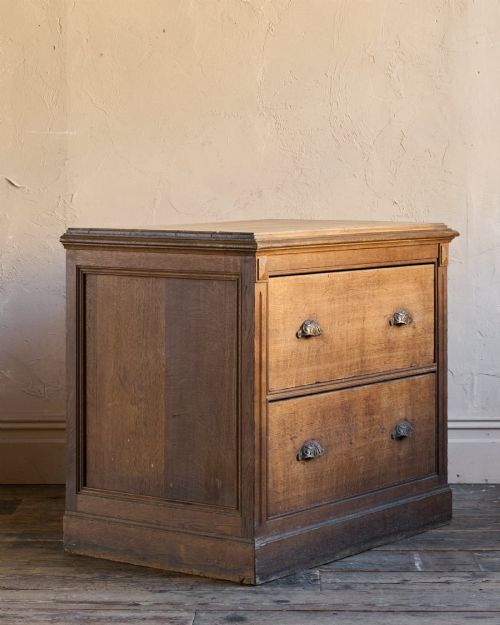
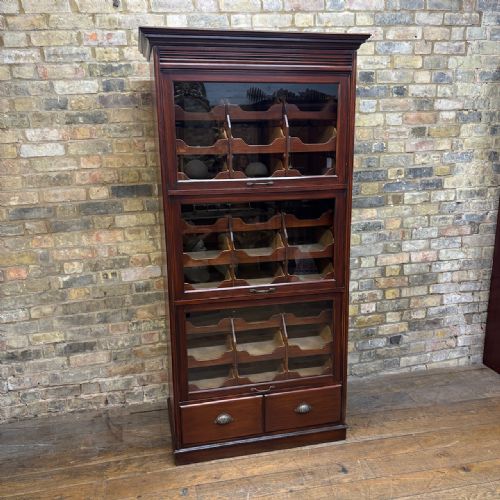
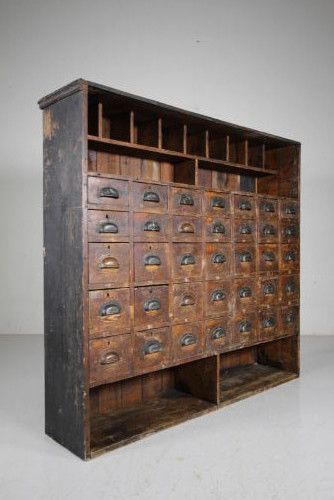
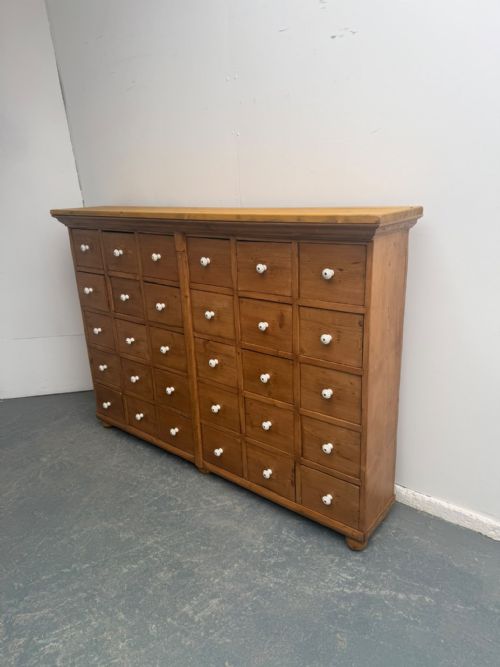
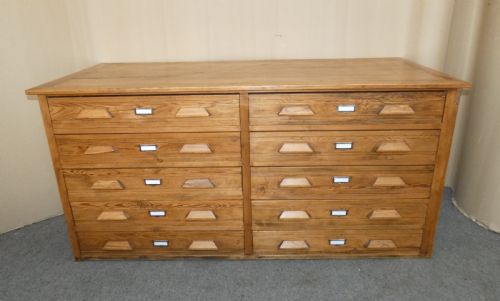
Vintage shop drawers comprise banks of drawers, haberdashery cabinets, shop fittings, and drapers counters originating from the nineteenth and early twentieth centuries. These pieces were built for commercial environments such as drapery stores, agricultural merchants, and hardware shops, where small items required systematic organisation. Buyers encounter everything from massive pine multi-drawer units to oak and chrome haberdashery counters designed for public display and behind-the-counter storage.
The materials reflect heavy commercial use, predominantly employing pine, oak, mahogany, fruitwood, and pitch pine, often paired with brass, glass, metal, and iron hardware. Many examples retain their original painted surfaces in cream, white, or light green, alongside authentic sign-writing from period businesses. Construction styles range from industrial and commercial utility to Victorian, Edwardian, Art Deco, and French provincial designs.
How they were made
Makers built these commercial fixtures to withstand decades of heavy daily operation in retail establishments, utilising solid timbers like pine, oak, and mahogany for structural longevity. Drawer construction typically relied on robust joinery to support the weight of stored stock, while carcasses were braced to endure constant pulling and pushing.
Hardware choices included functional brass card holders, metal pulls, and glass panels for display counters, prioritising visibility and quick access for shop assistants. Original finishes involved oil treatments, French polish, or practical layers of paint, sometimes layered with hand-painted business lettering.
Vintage Shop Drawers Retail Price Guide 2026
Typical asking prices for vintage shop drawers among the pieces listed under this phrase on Sellingantiques today, from the lower quarter to the upper quarter. They describe what is for sale here now, not the wider market.
Listings feature pieces constructed from pine, oak, mahogany, fruitwood, and pitch pine across Victorian, Edwardian, and Art Deco periods.
What varies in quality
The division between standard commercial utility and superior pieces rests upon the scale and integrity of the timber, alongside the preservation of original factory surfaces. Large banks of drawers featuring dozens of matching compartments demand considerable joinery skill and retain higher desirability than smaller domestic adaptations.
Originality of components dictates value, particularly the presence of period brass hardware, glass display panels, and authentic trade sign-writing. Pieces retaining their undisturbed factory paintwork or untouched aged patination stand apart from those stripped or altered during later decades.
Luxmore's of Ilfracombe·Dudley & Co·G H Gledhill Halifax·Trussant & Cie
The Vintage Shop Drawers Glossary
- Haberdashery cabinet
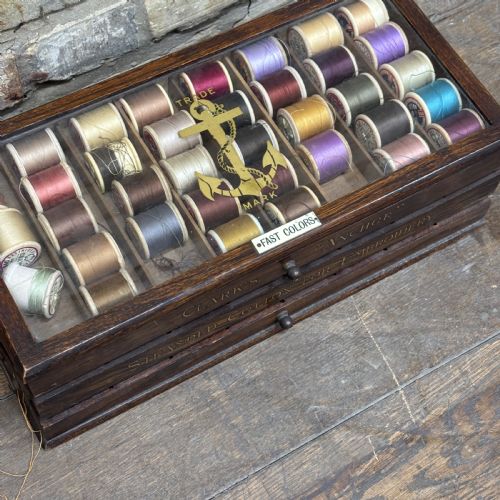
- A glass-fronted or multi-drawer display unit originally utilised in shops selling sewing goods, ribbons, and small textiles. These cabinets allow customers to view wares while keeping delicate stock protected behind glass or neatly sorted in shallow drawers.
- Bank of drawers
- A large, multi-compartment storage carcass housing numerous small drawers arranged in a grid. They were essential in hardware stores and drapers for sorting screws, buttons, or threads.
- Drapers counter
- A long shop table or counter often incorporating drawers and display space beneath the top surface. Staff measured and cut fabrics on these sturdy work surfaces.
- Sign-written
- Hand-painted commercial lettering applied directly to wood or glass to advertise the original proprietor or business. This typography provides historical provenance and confirms commercial utility.
- Campaign chest
- A portable storage chest constructed in sections with brass corners and recessed handles for transport. Though military in origin, robust examples found service in nineteenth-century retail settings.
Vintage Shop Drawers: Frequently Asked Questions
What were vintage shop drawers used for?
These units served as practical storage and display furniture in nineteenth and early twentieth-century retail establishments. Merchants used them to organise ribbons, buttons, hardware, and dry goods behind the counter.
Customers viewed merchandise through glass panels or relied on shop assistants to retrieve items from the countless small compartments. Their compartmentalised design made them ideal for keeping numerous small wares separated and accessible.
How do I fit shop drawers into a home?
Multi-drawer units provide exceptional storage for kitchens, home offices, and utility rooms, easily housing cutlery, stationery, or craft supplies. Their shallow drawers keep small items organised without cluttering living spaces.
Larger counters and cabinets function effectively as kitchen islands, sideboards, or hallway consoles. Placing a piece against a plain wall allows the industrial proportions and aged timber patination to become a focal point.
How do I identify the period of a cabinet?
Examine the construction methods, timber choices, and hardware styles to determine the era of manufacture. Victorian pieces often utilise solid pine or mahogany with hand-cut dovetails and heavy brass pulls, while 1930s examples introduce chrome trim and Art Deco geometric lines.
Original trade sign-writing and maker stamps offer definitive dating clues. Comparing the drawer linings and backboards to known nineteenth and early twentieth-century standards confirms the manufacturing window.
Are painted finishes original?
Many commercial fixtures received utilitarian coats of paint to brighten shop interiors or display company branding. Original paint surfaces typically show authentic wear, layering, and patination consistent with decades of retail use.
Sign-written lettering applied directly to the timber or drawers further indicates period commercial application. Inspecting the edges of the paint layers reveals whether the surface is a contemporary survivor or a later decorative addition.