



Vintage Shop Counter Drawers
Vintage shop counter drawers are sturdy mercantile units built to organise small dry goods, offering practical storage with genuine commercial character.
Vintage Shop Counter Drawers
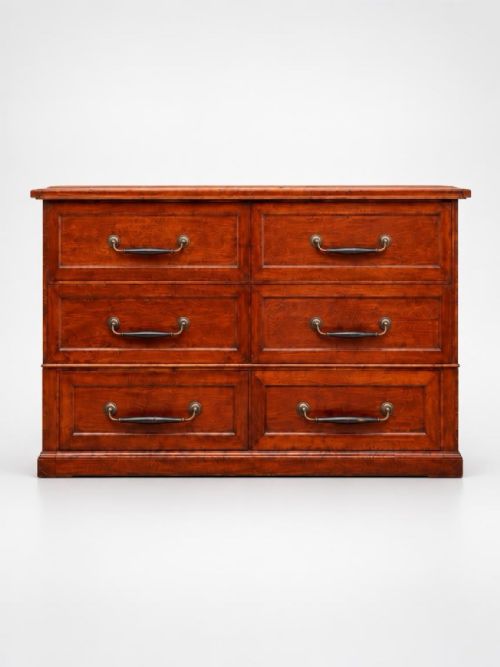
Vintage shop counter drawers comprise banks of multiple small compartments, haberdashery cabinets, and drapers chests originally designed for behind-the-counter trade use. Buyers searching for vintage shop counter drawers will encounter pieces spanning from the Victorian era through to the Art Deco period and the 1930s.
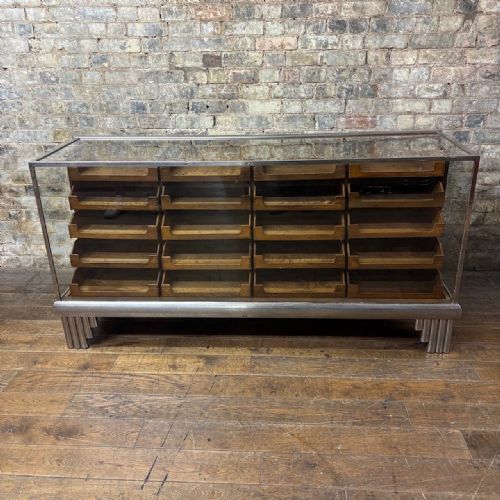
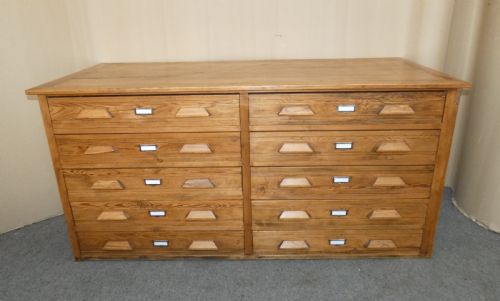
The most common forms on this page include multi-drawer pine shop fittings originating from Hungary alongside British and French oak or mahogany haberdashery units. These vary from counter-top display cases to very large floor-standing banks built to hold cottons, sewing supplies, and hardware.
Alongside dedicated shop fittings, the selection includes related commercial forms such as butchers blocks, drapers consoles, and till bases. Each piece reflects the functional requirements of nineteenth and early twentieth-century retail environments.
Materials and construction methods
Construction relies heavily on durable timbers such as pine, oak, and mahogany, chosen for their strength under daily commercial use. Many pine pieces feature original painted surfaces in white, cream, or light green, whilst oak and mahogany examples are often polished to show the grain.
Hardware details typically include brass drawer pulls, brass label holders, and occasionally chrome elements in later twentieth-century pieces. These metal fittings were specified for robust endurance in busy shops and mercantile settings.
Vintage Shop Counter Drawers Retail Price Guide 2026
Typical asking prices for vintage shop counter drawers among the pieces listed under this phrase on Sellingantiques today, from the lower quarter to the upper quarter. They describe what is for sale here now, not the wider market.
Some multi-drawer units still whisper of past inventory through faint traces of cotton thread tucked behind brass label holders.
Evaluating quality and authenticity
Quality in these commercial units is defined by the integrity of the original hardware, the survival of authentic painted finishes, and the structural soundness of the drawer runners. Pieces retaining their manufacturer plates or branded glass inserts carry greater historical interest.
The scale and proportion of the drawer banks also dictate their standing, with larger fifty-drawer configurations or multi-tier haberdashery cases representing more ambitious commercial commissions than simpler domestic adaptations.
Dudley & Co·G H Gledhill Halifax·Chadwick’s Sewing Cottons·Trussant & Cie
The Vintage Shop Counter Drawers Glossary
- Haberdashery cabinet
- A multi-drawer storage unit specifically designed for selling sewing notions, ribbons, and small textiles. These cabinets often incorporate glass panels for display.
- Drapers chest
- A wide, shallow bank of drawers used in fabric and clothing shops to store folded cloth and garments. They are characterised by numerous wide, low-profile drawers.
- Shop fitting
- A permanent or semi-permanent fixture built into a retail interior to facilitate display and storage. Examples include counter-top units and large wall-mounted banks.
- Graduated drawers
- A series of drawers arranged vertically where each drawer increases in depth from top to bottom. This design balances visual proportion with functional storage capacity.
Vintage Shop Counter Drawers: Frequently Asked Questions
How were shop counter drawers originally used?
Shop counter drawers were deployed behind retail counters to sort and store small stock items such as buttons, threads, lace, and stationery.
Shop assistants could quickly locate goods for customers without leaving the service area, maintaining an efficient retail workflow.
Can I use a haberdashery cabinet in a modern kitchen?
These cabinets work exceptionally well in contemporary kitchens for organising cutlery, spices, and small utensils.
The shallow drawers of drapers chests and haberdashery units suit domestic storage needs remarkably well.
How do I distinguish Victorian from Edwardian drawer units?
Victorian pieces often feature heavy timber construction with darker polished finishes or early painted surfaces, reflecting nineteenth-century retail utility.
Edwardian and later 1930s examples frequently introduce lighter oak timbers, chrome hardware, and cleaner architectural lines.
Are painted finishes on these drawers original?
Many pine shop fittings retain their original paint layers, which often show natural wear, chipping, and patination acquired through decades of commercial use.
Listings specifically note whether a painted surface is an original factory or shop application.