



Vintage Ship Portrait
A vintage ship portrait captures the character of named vessels on canvas or paper, offering a direct link to maritime history.
Vintage Ship Portrait
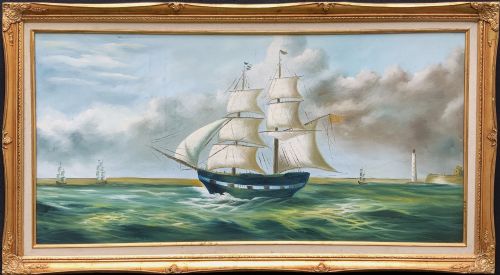
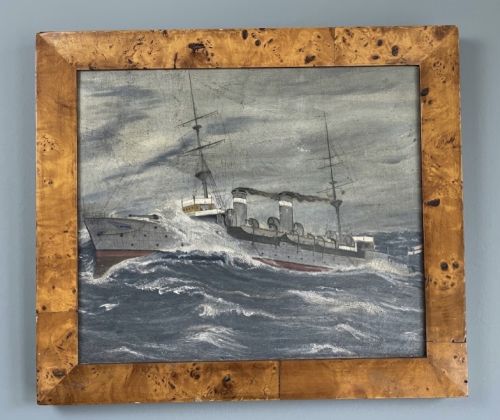
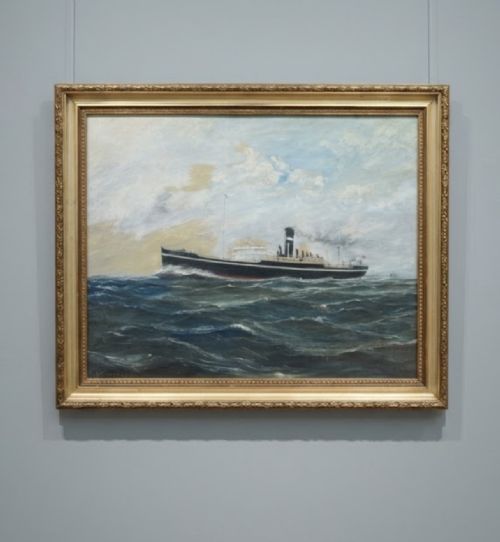
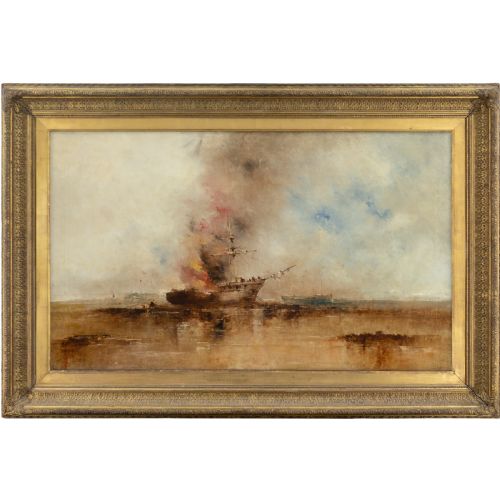
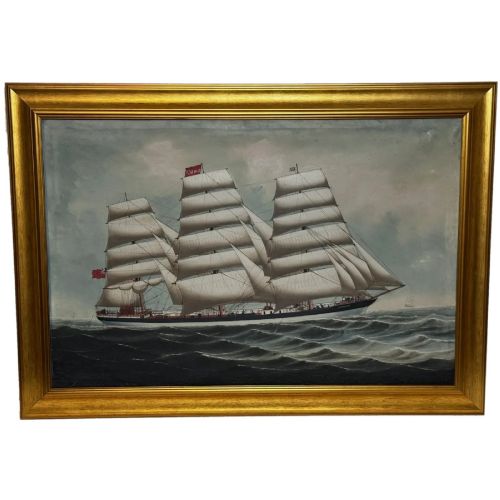
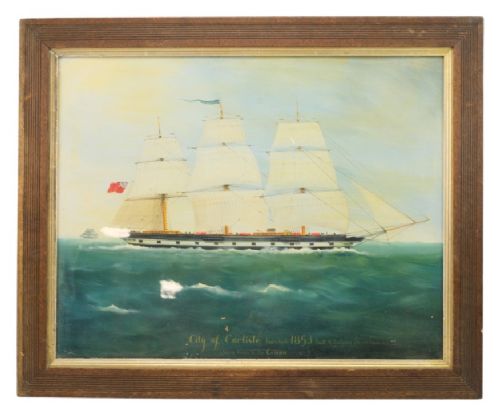
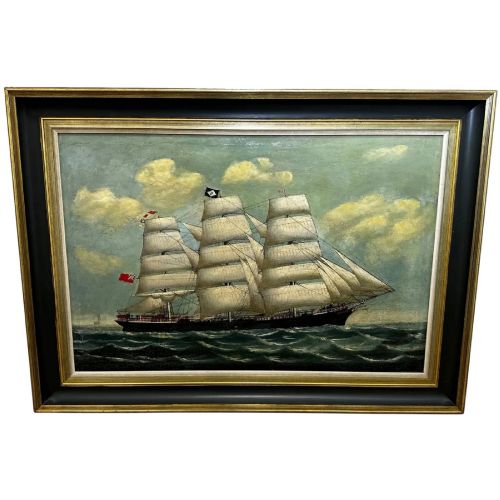
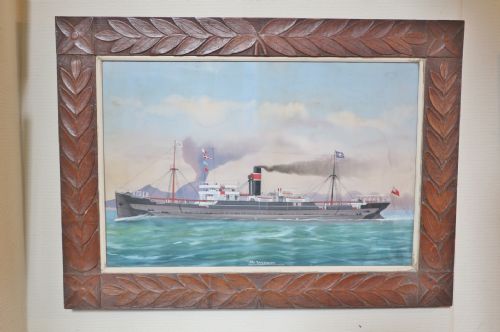
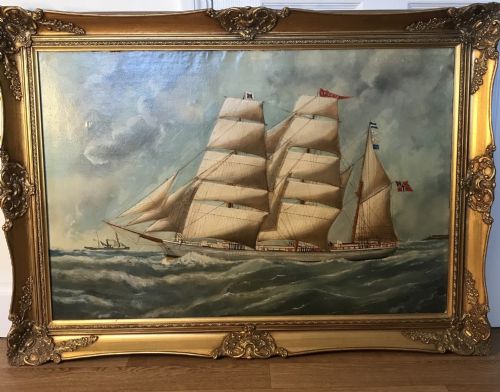
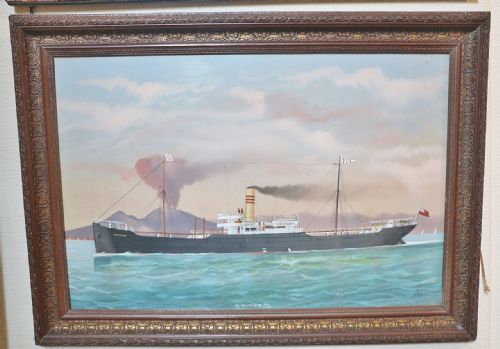
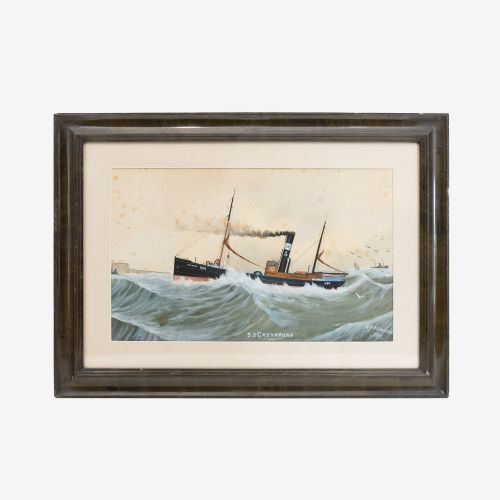
A vintage ship portrait documents named vessels across the nineteenth and early twentieth centuries, including steamships, barques, and naval ironclads. These works record specific watercraft rather than generic seascapes, often showing vessels in coastal waters, heavy seas, or foreign ports.
The selections on this page span Victorian and Edwardian maritime traditions, alongside works from the early nineteen-hundreds. Formats range from framed oil paintings on canvas to watercolours, gouache, and period photographs housed in original wooden frames.
Materials and techniques
Artists painted primarily in oil on canvas or wood panels, applying pigment to capture the rigging, hulls, and turbulent water surrounding each vessel. Watercolour and gouache on paper appear frequently in pierhead paintings and sentimental tributes produced around the early twentieth century.
Framing materials reflect the period of production, utilising wood, glass, and occasional giltwood or gold leaf surrounds to protect the paper or canvas supports.
Vintage Ship Portrait Retail Price Guide 2026
Typical asking prices for vintage ship portrait among the pieces listed under this phrase on Sellingantiques today, from the lower quarter to the upper quarter. They describe what is for sale here now, not the wider market.
Sailors occasionally commissioned portraits as sentimental tributes to their vessels, ensuring every rope and flag matched the beloved ship.
Assessing quality in maritime art
Quality rests upon the precision of the vessel's rigging, hull construction, and architectural details, which reveal whether the creator understood maritime engineering. Works attributed to named pierhead artists or skilled regional schools typically display superior command of perspective and sea conditions.
The integrity of the original support, the preservation of the pigment, and the presence of contemporary framing contribute significantly to the standing of an individual work.
William McAlpine·Reginald Arthur Borstel·Lai Fong·Alexander Harwood·Vincenzo D’Esposito·Joseph Heard·Samuel John Milton Brown·Johan Jens Neumann
The Vintage Ship Portrait Glossary
- Pierhead painting
- A genre of ship portraiture produced in major ports, depicting specific vessels for crews or owners.
- Barque
- A sailing vessel with three or more masts, where the aft mast is rigged fore-and-aft and the others are square-rigged.
- Gouache
- An opaque water-based medium frequently combined with watercolour in early twentieth-century maritime works.
- Ironclad
- A steam-propelled warship protected by iron or steel armour plates, common in late nineteenth and early twentieth-century naval imagery.
Vintage Ship Portrait: Frequently Asked Questions
What is a ship portrait?
A ship portrait is a specialised painting, watercolour, or photograph created to record the precise appearance of a named vessel. These works served as personal records for captains, crew members, and shipping lines.
Unlike general marine landscapes, the primary subject is the watercraft itself, often shown with identifying flags, riggings, and port locations.
How can I tell the period of a ship painting?
Dating relies on identifying the type of vessel depicted, such as nineteenth-century wooden barques, Edwardian steamships, or early twentieth-century ironclads. Costume details in crew figures and framing styles also provide clear chronological indicators.
Signatures, artist attributions, and titled inscriptions on the canvas or mount further narrow down the date of creation.
Where were pierhead paintings made?
Pierhead paintings were produced in bustling commercial ports around the world, where artists set up studios near the docks to cater to visiting sailors and shipping merchants. Common production centres included European harbours, British coastal towns, and treaty ports in East Asia.
These local artists specialised in capturing the exact specifications of visiting merchant ships and naval vessels.
How do I care for a vintage maritime painting?
Preserve these works by keeping them away from direct sunlight and maintaining stable indoor humidity levels to protect canvas, paper, and wooden frames. Avoid using liquid cleaners on exposed oil paint or delicate watercolours.
Consult a professional conservator if the canvas requires cleaning or if the original frame needs structural stabilization.