




Vintage Shaving Table
A vintage shaving table offers a practical surface and mirror for morning routines, spanning Georgian mahogany designs to 1930s chrome.
Vintage Shaving Table
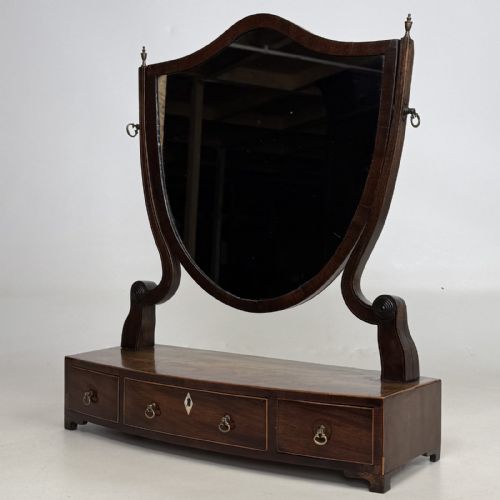
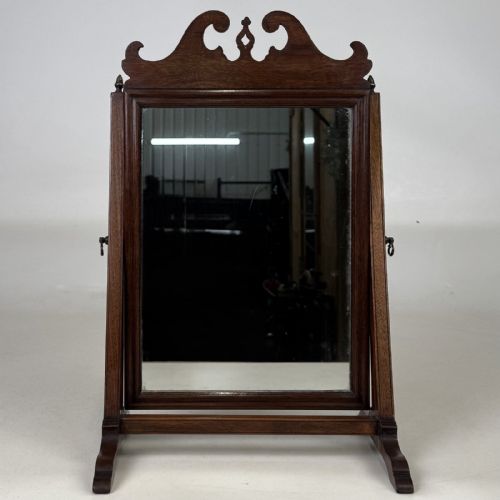
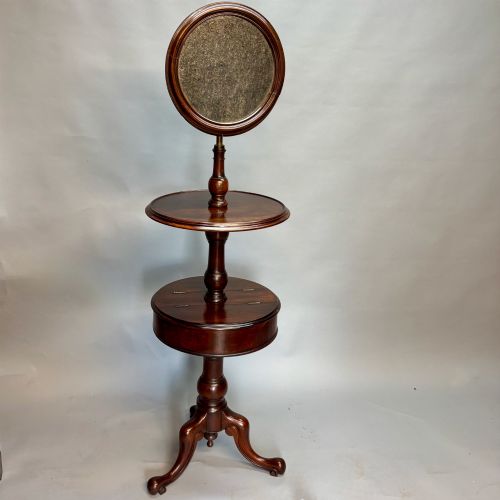
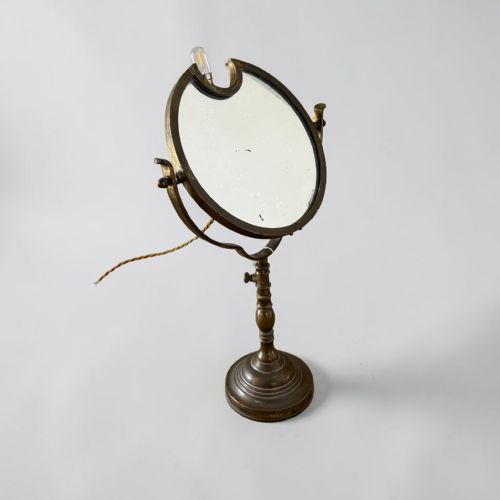
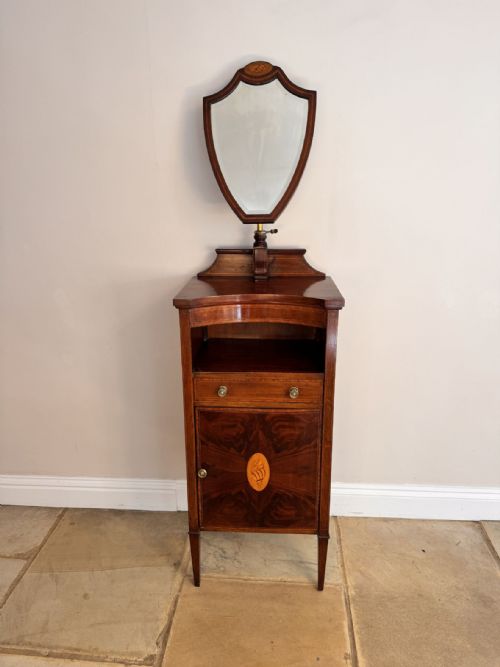
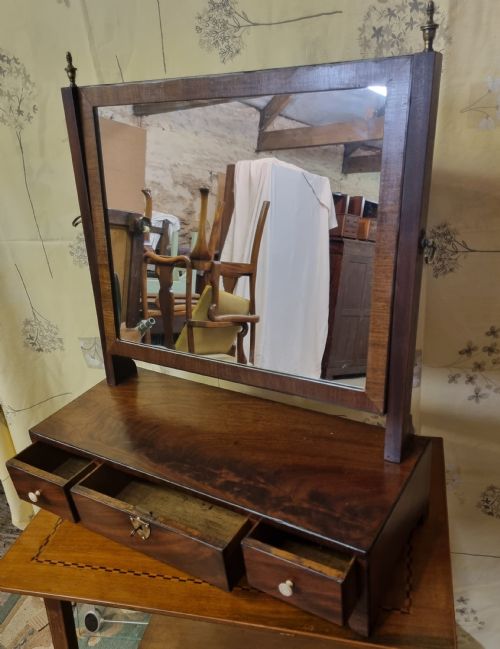
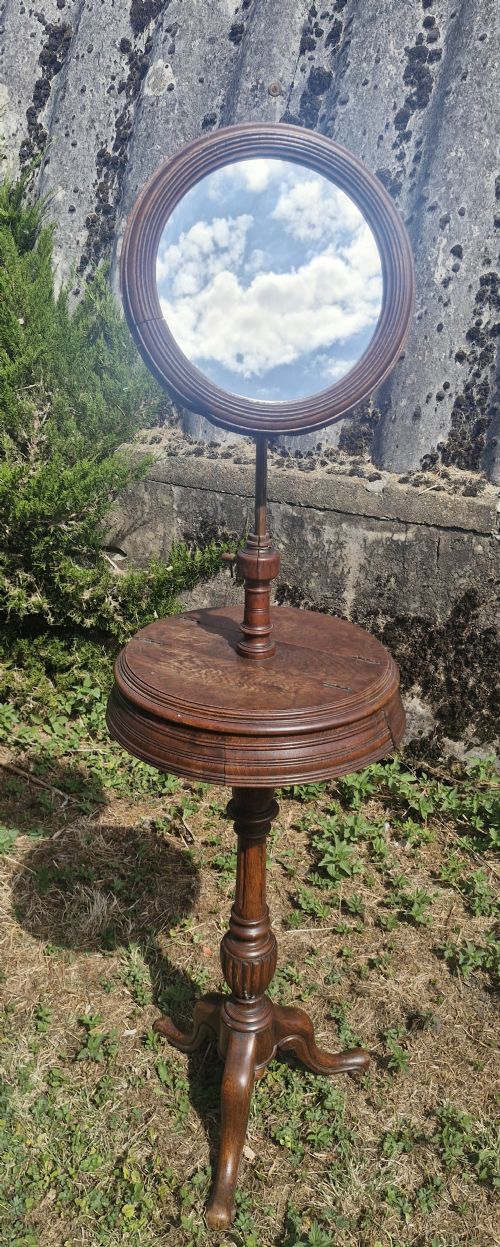
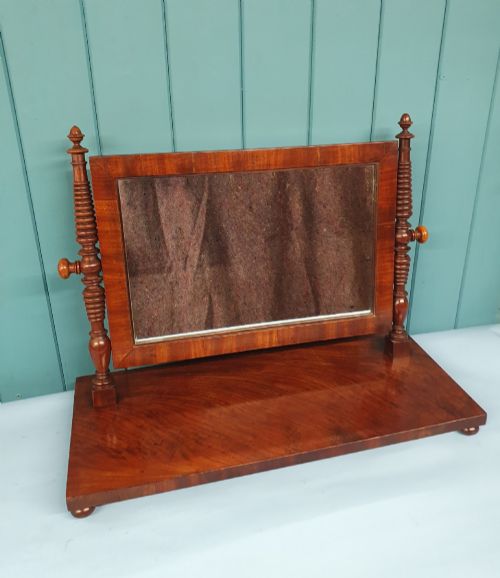
A vintage shaving table encompasses various forms designed for personal grooming, including dedicated shaving stands, dressing mirrors, and toilet swing mirrors. The pieces on this page range from Georgian and Victorian examples to Edwardian and Art Deco iterations.
Buyers frequently encounter mahogany and oak constructions featuring adjustable mechanisms, glass mirrors, and specialised compartments such as shaving cupboards. These objects bridge functional utility and period craftsmanship across the eighteenth, nineteenth, and early twentieth centuries.
Materials and construction methods
Cabinetmakers utilised dense timbers like mahogany, walnut, and oak for stability, often applying satinwood inlay or Dutch marquetry decoration to surfaces. Brass fittings provide adjustable pivots and supports for the glass mirrors.
Later pieces incorporate chrome and silver alongside traditional wood frames, reflecting the material shifts of the early twentieth century. Joinery methods ensure the upright standards and swing frames support the weight of the tilting mirror glass.
Vintage Shaving Table Retail Price Guide 2026
Typical asking prices for vintage shaving table among the pieces listed under this phrase on Sellingantiques today, from the lower quarter to the upper quarter. They describe what is for sale here now, not the wider market.
Listings feature periods from the Georgian era through to the 1930s, utilising mahogany, oak, walnut, brass, and chrome.
Assessing quality in construction and design
Quality rests on the integrity of the timber selection, the crispness of any inlay work, and the smooth operation of adjustable mirror brackets. Heavier woods and sophisticated mechanisms indicate superior workshop output.
The clarity of the glass, the precision of brass thumb screws, and the condition of original polish distinguish standard utilitarian items from finer examples produced by established makers.
Flashman & Co·Thomas Rubergall·James Shoolbred·Mirror Brot
The Vintage Shaving Table Glossary
- Toilet mirror
- A small mirror designed to sit atop a dressing chest or table, often supported by upright arms on a box base. These mirrors usually feature small drawers for storage.
- Cheval mirror
- A full-length plate glass mirror supported in a free-standing frame that allows it to tilt. They appear in table top and full floor-standing formats.
- Marquetry
- An art form where pieces of wood veneer are fitted together to form decorative patterns on a surface. Dutch marquetry often displays elaborate floral designs.
- Serpentine
- A furniture contour characterised by a curved front with a convex centre flanked by concave ends. This shaping requires skilled woodworking.
- Adjustable mirror
- A looking glass mounted on pivots or ratchets that allows the user to alter the viewing angle. These mechanisms utilise brass screws or side arms.
Vintage Shaving Table: Frequently Asked Questions
What is a vintage shaving table?
A vintage shaving table is a piece of furniture designed for grooming, typically combining a surface, storage compartments, and an adjustable mirror.
These items range from compact tabletop toilet mirrors to taller freestanding stands with integrated cupboards and shaving gear storage.
How do I date a shaving table?
Dating relies on timber choices, construction techniques, and hardware styles. Georgian and Victorian pieces frequently utilise solid mahogany or oak with hand-cut dovetails.
Later Edwardian and 1930s examples introduce materials like chrome, alongside distinct Art Deco geometric lines and lighter woods.
Where should I place a shaving mirror?
These mirrors suit dressing rooms, bedrooms, or bathrooms where natural light aids morning routines. Tabletop versions require a stable surface like a chest of drawers or a dedicated vanity.
Freestanding stands can function independently in a corner or alongside other period bedroom furniture.
How do adjustable mirrors work?
Adjustable mirrors typically use side pivots or brass thumb screws that tighten to hold the glass at a preferred angle. Some Victorian and Edwardian stands employ ratcheted arms for tilting.
Users simply loosen the side fittings, adjust the tilt of the glass, and retighten the hardware to secure the position.