



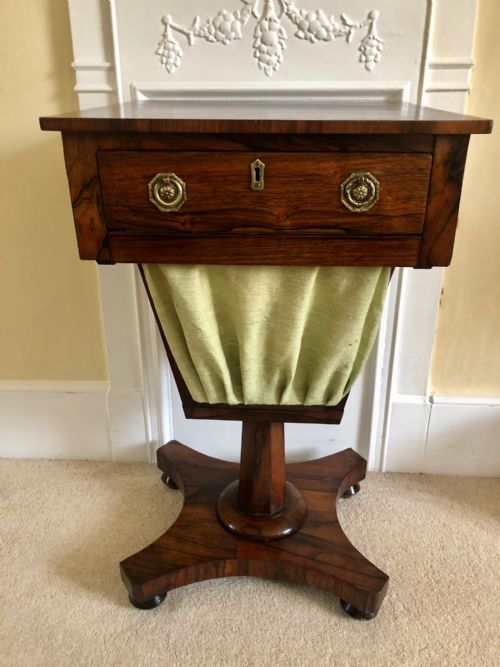


Vintage Sewing Basket
These vintage sewing basket pieces span the nineteenth and early twentieth centuries, bringing practical needlework storage and elegant side tables into modern rooms.
Vintage Sewing Basket
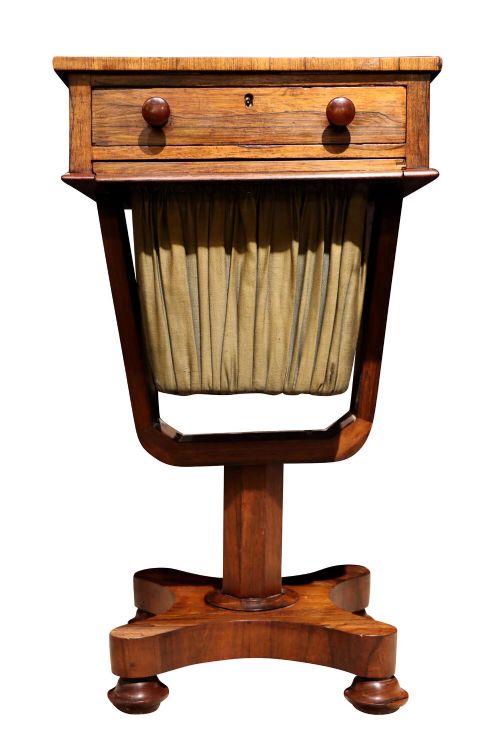
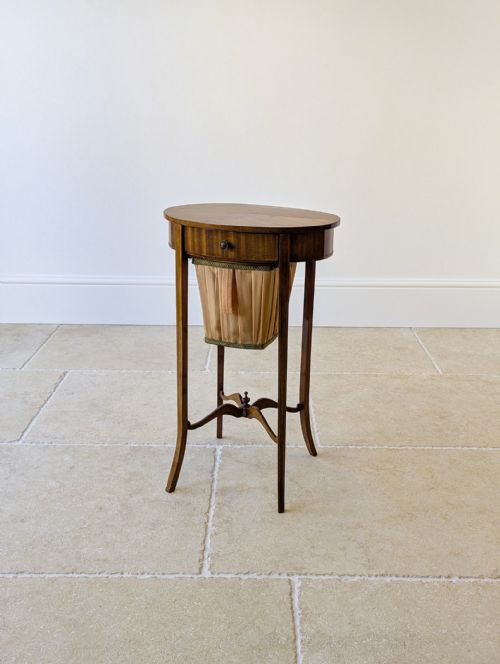
A vintage sewing basket or work table combines surface utility with fitted compartments for domestic needlework and crafts. These pieces frequently manifest as side tables or work tables originating from the Regency, Victorian, and Edwardian eras.
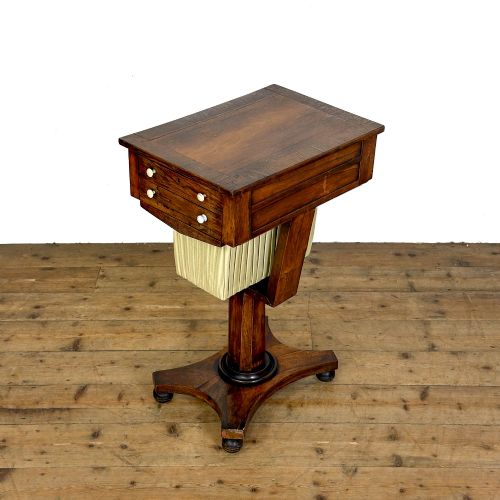
Buyers encounter forms ranging from freestanding mahogany work tables with silk underslung compartments to burr walnut cabinets and small pin cushions. Rosewood and mahogany predominate among timber examples from the nineteenth century, whilst lighter satinwood and pine appear in later designs.
The selection includes specialised variations such as games tables adapted for dual purposes and tiered stands utilising woven pine. Each format reflects the domestic requirements of its period, balancing display surfaces with concealed storage.
Materials and construction
Cabinetmakers utilised dense hardwoods such as rosewood, mahogany, and burr walnut to construct the primary carcases and tables. These timbers offered stable foundations that accepted fine polishing and inlay work.
Underslung storage relied on gathered silk and fabric to create soft hanging baskets beneath wooden frames. Artisans also incorporated brass hardware, marquetry inlay, and woven pine elements depending on the prevailing style of the decade.
Vintage Sewing Basket Retail Price Guide 2026
Typical asking prices for vintage sewing basket among the pieces listed under this phrase on Sellingantiques today, from the lower quarter to the upper quarter. They describe what is for sale here now, not the wider market.
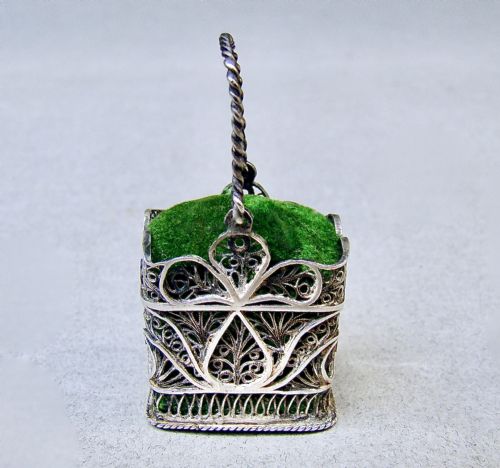
Silver novelty pin cushions fashioned into charming miniature shapes ensured that even the smallest sewing accessories possessed grand character.
Factors of distinction
Quality rests upon the selection of timber veneers, such as figured burr walnut or rich rosewood, and the precision of cabinet joinery. Pieces exhibiting finely figured grain patterns and tight structural joints demonstrate superior craftsmanship.
The Vintage Sewing Basket Glossary
- Work table
- A small freestanding table equipped with drawers, compartments, or fabric bags designed to hold needlework supplies. These items served both decorative and utilitarian functions in domestic parlors.
- Silk basket
- An underslung fabric receptacle attached to a wooden or metal frame beneath a work table. It provides flexible storage for textiles and sewing accessories.
- Marquetry
- Decorative veneer work formed by fitting pieces of various coloured woods into a design. This technique adorned the tops of tables from the Edwardian and Victorian periods.
- Lyre-ended
- A furniture support shaped in the stylized form of a classical lyre instrument. Regency cabinetmakers frequently employed this motif on the pedestals of work tables.
- Burr walnut
- Timber taken from the warted growths on walnut trees, yielding highly figured and swirling grain patterns. It was prized for luxury table tops during the nineteenth century.
Vintage Sewing Basket: Frequently Asked Questions
What is a work table?
A work table is a specialised piece of antique furniture designed specifically to hold sewing materials, thread, and needles. They usually feature internal compartments and a hanging fabric bag beneath the main surface.
Historically, they functioned as portable hobby desks where ladies could practice needlecraft in the main living spaces of the house without needing a dedicated sewing room.
How do I date a sewing table?
Dating relies on identifying the primary wood species, construction methods, and stylistic cues such as Regency lyre supports or Edwardian marquetry inlay. Earlier nineteenth-century examples tend to use heavy rosewood or mahogany.
Later pieces from around nineteen hundred often feature lighter satinwood, pine, or simpler turned legs. Comparing the hardware and internal compartment layout against documented historical periods confirms the era.
Are these tables sturdy enough for daily use?
Most antique work tables are structurally robust enough to function as everyday side tables or lamp stands in a modern home. Their original solid hardwood construction ensures long-term durability.
Care should be taken with delicate hanging silk bags and older veneer surfaces to avoid moisture and excessive weight. Gentle handling preserves the original fabric components where they survive intact.
How were sewing baskets used historically?
In nineteenth-century households, these tables sat beside chairs in drawing rooms and parlors to keep ongoing embroidery and mending organised. The compartmentalized top kept small tools separate from larger fabric pieces.
They allowed individuals to keep their needlework tidy and easily transportable within the home while maintaining a polished appearance for visitors.