

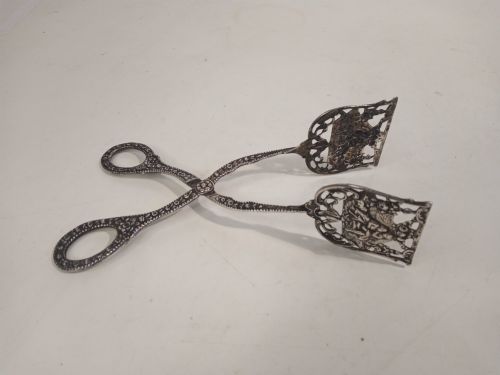


Vintage Serving Tongs
These vintage serving tongs span the Georgian, Victorian, Edwardian and 1930s periods, offering practical elegance for the dining table.
Vintage Serving Tongs
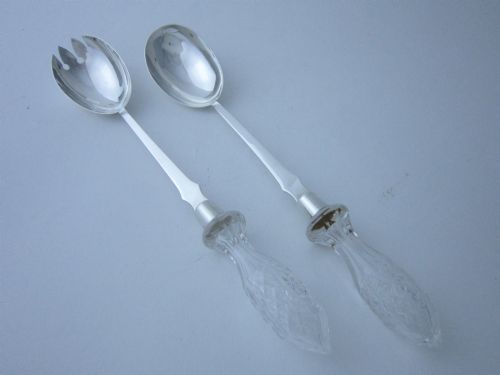
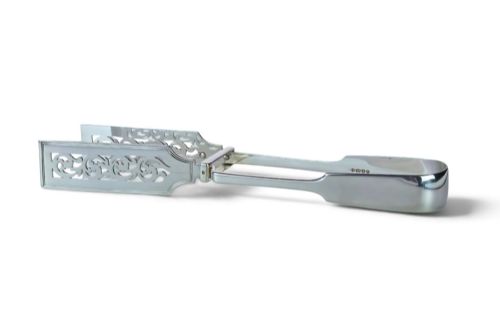
The assortment reaches from Georgian Scottish sugar tongs through mid-Victorian sterling silver asparagus tongs down to Art Deco designs from the 1930s. Alongside dedicated serving tongs, you find related serveware including serving dishes and utensils with cut glass elements.
You are most likely to meet silver-plated and sterling silver examples spanning the Victorian and Edwardian eras, often featuring ornate pierced ends or classical revival styling. Continental European makers also contribute German silver cake tongs to the mix.
How they were made
The materials recorded in these pieces rely heavily on sterling silver, silver plate and electroplated nickel silver as bases for shaping and piercing. Workshops also employed silver gilt and cut glass to add contrast and texture to serving utensils.
Techniques range from hand-forged Scottish silver to intricate piercing on silver-plated asparagus tongs and cast components on Continental cake tongs. Silversmiths utilised traditional hammering, soldering and chasing methods appropriate to each period style.
Vintage Serving Tongs Retail Price Guide 2026
Typical asking prices for vintage serving tongs among the pieces listed under this phrase on Sellingantiques today, from the lower quarter to the upper quarter. They describe what is for sale here now, not the wider market.
What varies in quality
Quality in these pieces is dictated by the weight of the metal, the crispness of any pierced or chased decoration, and the integrity of the hinge or spring action. Substantial gauge sterling silver commands greater attention than thin electroplate, though renowned makers elevate silver-plated work considerably.
The distinction between standard commercial production and fine workshops lies in the detail of the handle design and the balance of the utensil in the hand. Maker marks from established silversmiths provide an additional indicator of refined manufacturing standards.
Elizabeth Eaton·Tiffany and Company·Georg Jensen·Walker and Hall·Mappin and Webb
The Vintage Serving Tongs Glossary
- Sterling silver
- An alloy containing 92.5 percent silver by mass, widely used by British silversmiths for durable tableware. It carries distinct hallmarks for town, maker and year.
- Silver gilt
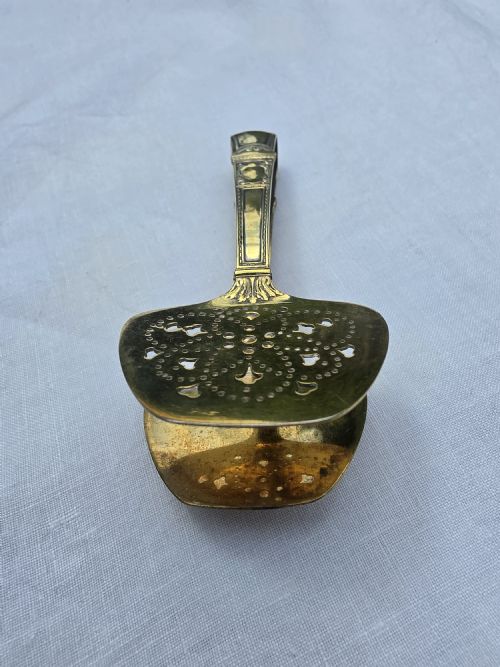
- Silver that has been coated with a thin layer of gold on its surface. This technique provides a rich two-tone appearance, visible on specific pastry and sandwich servers.
- Electroplated nickel silver
- A base metal alloy of copper, nickel and zinc coated with a layer of pure silver through electrolysis. It served as a durable and affordable alternative to solid silver during the Victorian and Edwardian periods.
- Asparagus tongs
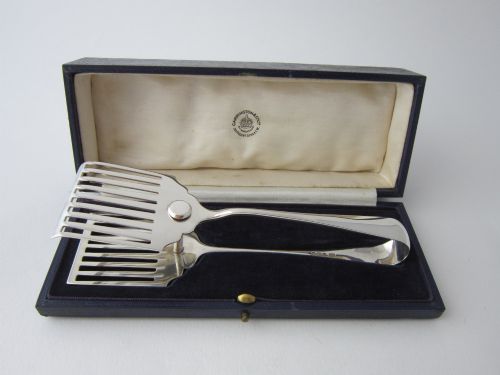
- Specialised serving utensils featuring a broad, flat blade and an upper spring arm designed to grip delicate stalks without damage. They emerged as a dining table essential in the Victorian era.
- Sugar nips
- Small handheld tongs used for transferring sugar lumps into tea or coffee cups. Art Deco examples often display stylised geometric patterning.
Vintage Serving Tongs: Frequently Asked Questions
What are vintage serving tongs used for?
These utensils were created to serve specific foods at the dining table, including asparagus, pastries, cakes and sugar lumps. Their specialised shapes prevented damage to delicate items during formal meals.
Today, collectors use them for their original purpose during dinner parties or display them alongside period tableware collections.
How do I identify a Victorian pair?
Victorian examples often feature heavy sterling silver construction with ornate pierced ends, floral motifs, or classical revival styling. Examining the piece for British hallmarks provides the exact year of assay and the maker's mark.
Stylistic cues such as heavy ornamentation and specific asparagus or salad set configurations typically point to the nineteenth century.
What is the difference between silver and silver-plated tongs?
Solid silver pieces are made from sterling silver throughout and carry official hallmarked stamps indicating metal purity. Silver-plated items use a base metal, such as electroplated nickel silver, covered with a thin outer layer of pure silver.
Both materials appear frequently across these listings, with plated items offering the decorative appeal of silver at a different scale of production.
How should I clean antique silver serving utensils?
Cleaning requires a soft cloth and a reputable silver polish formulated to remove tarnish without abrading the metal surface. Care must be taken around hinges and intricate pierced areas to avoid bending the springs.
Store them in a dry environment away from direct sunlight to preserve the finish on both solid silver and silver-plated items.