





Vintage Serving Ladles
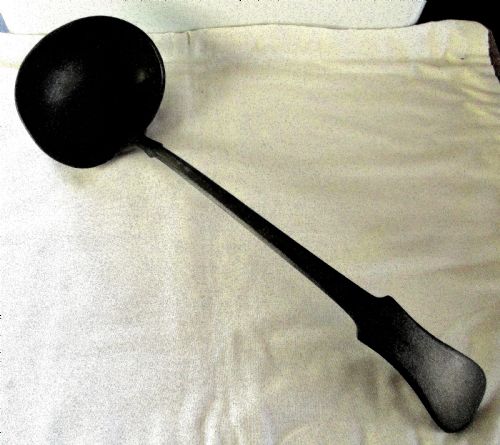
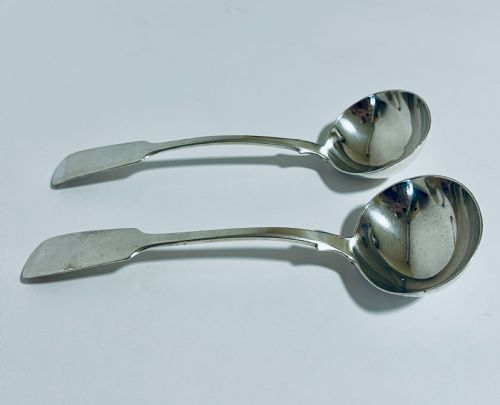
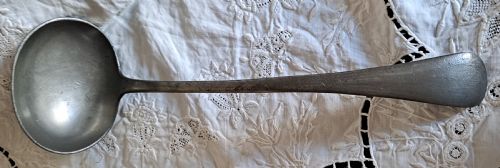
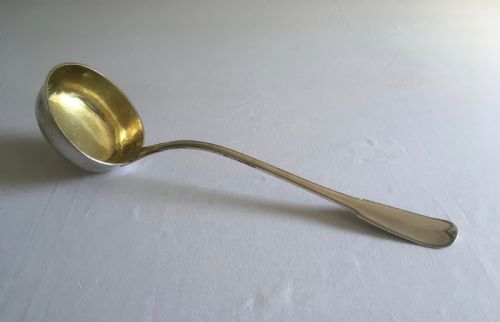
These vintage serving ladles bring functional elegance to the table, spanning centuries of craftsmanship in silver, pewter, and carved wood.
Vintage Serving Ladles
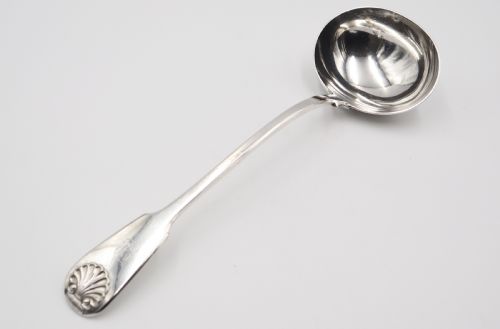
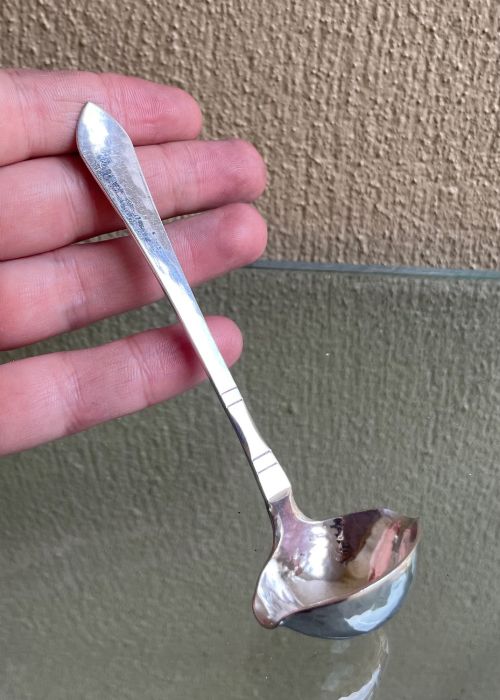
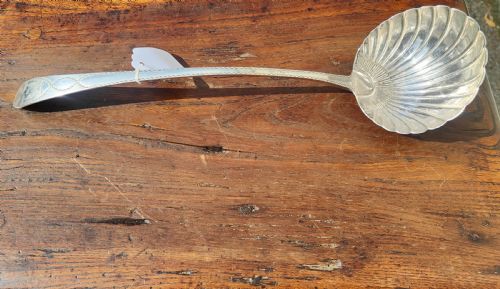
Vintage serving ladles comprise a diverse array of deep-bowled utensils designed for dishing soups, sauces, gravies, and sugar at the table. The selection spans utilitarian kitchen tools to formal dining table showpieces, reflecting domestic habits across multiple eras.
The pieces on this page are predominantly fashioned from sterling silver, solid silver, and pewter, originating from periods such as the Georgian, Victorian, and Edwardian eras. Buyers will encounter specialised forms including soup ladles, sauce ladles, straining ladles, and sugar sifters.
Continental, Scandinavian, and British origins dominate the selection, offering everything from heavy Georgian silver pairs to early twentieth-century Danish and Swedish modernist spoons. Earthenware tureen and ladle sets alongside carved beechwood basting spoons further expand the domestic utility represented.
How they were made
Makers utilised traditional metalworking techniques, casting and hammering sterling silver, solid silver, and silver gilt into balanced, ergonomic forms. Pewter basting ladles demonstrate distinct casting and finishing methods characteristic of nineteenth-century metal workshops.
Vintage Serving Ladles Retail Price Guide 2026
Typical asking prices for vintage serving ladles among the pieces listed under this phrase on Sellingantiques today, from the lower quarter to the upper quarter. They describe what is for sale here now, not the wider market.
An unexpected nineteenth-century Inuit antler spoon sits alongside formal silver soup ladles, proving utilitarian dining took diverse natural forms.
What varies in quality
The distinction between standard utility items and superior examples lies in the weight of the metal and the crispness of decorative engraving or pattern work. Heavier solid silver gauges and finely executed hallmarks indicate higher manufacturing standards.
Design sophistication also dictates the grade of a piece, separating utilitarian pewter or wooden basting spoons from intricate Edwardian silver-plated tureens or specialised silver straining ladles.
Georg Jensen·John Yates·Dixon And Son·Mappin And Webb·Tiffany And Co
The Vintage Serving Ladles Glossary
- Basting ladle
- A large utensil originally used for spooning juices over roasting meat. These feature deep bowls and extended handles to keep hands away from heat.
- Sugar sifter
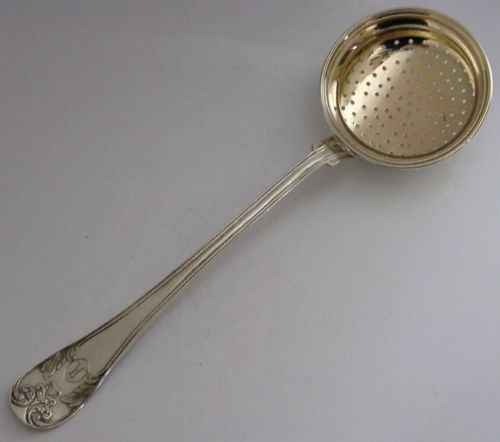
- A specialised spoon with a perforated bowl designed for dusting powdered sugar over desserts. They frequently appear in ornate Edwardian and Continental silver patterns.
- Silver gilt
- Silver that has been coated with a thin layer of gold on the surface. This technique provides a rich interior finish to the bowls of certain serving spoons.
- Transfer print
- A pottery decoration method where an engraved design is transferred via tissue paper onto ceramicware. This appears on earthenware tureens complete with matching ladles.
- Hallmark
- An official stamp applied to precious metals indicating purity, maker, and assay office. These marks help verify the age and origin of silver ladles.
Vintage Serving Ladles: Frequently Asked Questions
What is the difference between a soup ladle and a sauce ladle?
Soup ladles possess much larger bowls and longer handles to reach deep into tureens and punch bowls during formal service. Sauce ladles are scaled down significantly, proportioned for smaller gravy boats and sauce jugs.
Selecting the correct ladle depends on the vessel it accompanies and the volume of liquid served at the table. Both forms share similar stylistic patterns within specific historical periods.
How do I care for antique silver ladles?
Regular washing in warm, soapy water with a soft cloth preserves the surface of silver and silver gilt utensils. Avoid harsh abrasive cleaners that wear down fine engraving and historic hallmarks.
Store pieces in tarnish-resistant cloths or specialised flatware rolls when not in active use. Proper handling prevents unnecessary scratching of the softer metal.
Can I use pewter ladles for food service?
Historical pewter utensils served everyday domestic dining and kitchen preparation roles. Modern users often continue this tradition for cold or room-temperature foods.
Historic pewter compositions require gentle hand washing rather than automated dishwashing. Inspecting the surface ensures the metal remains stable for contemporary use.
What period do most silver serving spoons belong to?
The selection includes substantial representation from the Georgian and Victorian periods, alongside Edwardian and early twentieth-century designs. Each era introduced distinct handle patterns and bowl shapes reflecting prevailing dining fashions.
Stylistic cues such as Colonial Revival motifs or Scandinavian art nouveau help date individual pieces. Hallmarks and maker stamps provide precise chronological markers where present.