

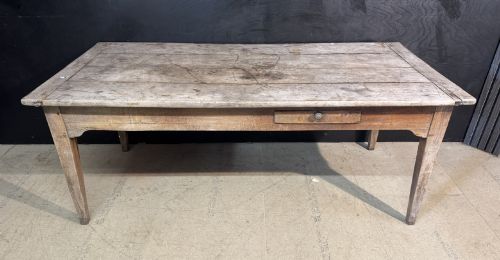
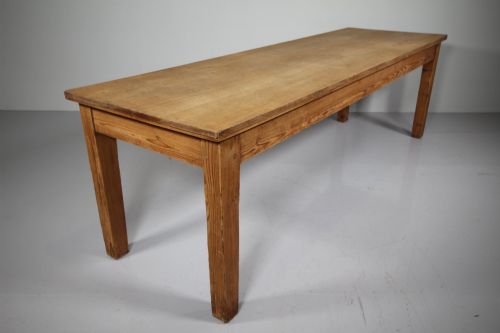
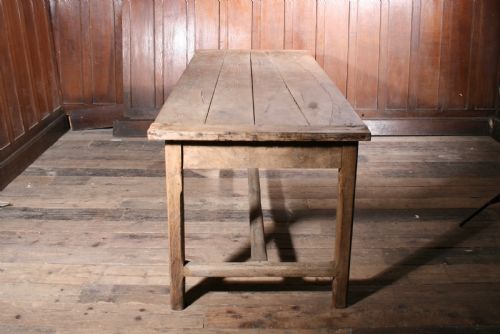
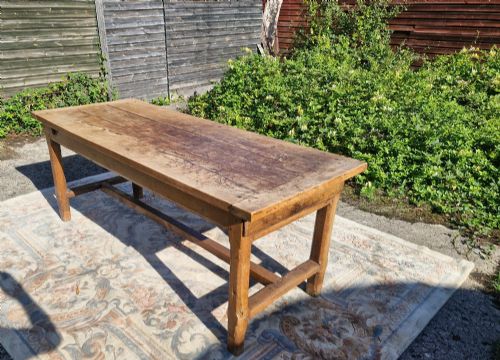
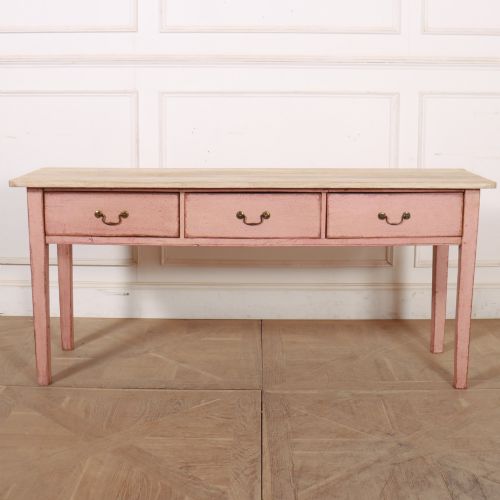

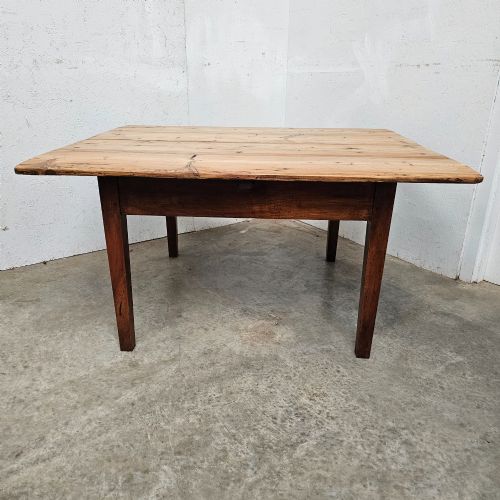
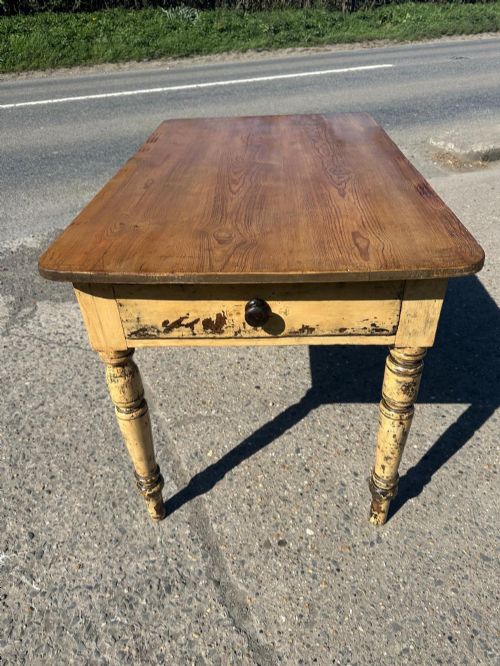


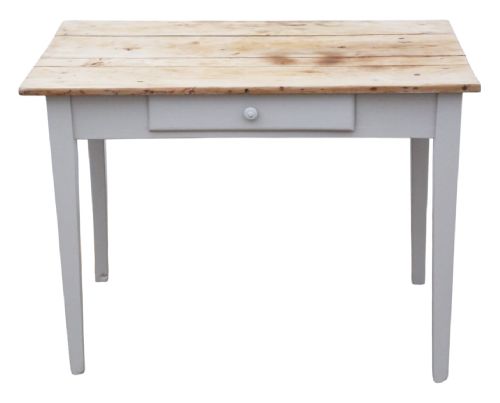

Vintage Scrub Top Table
A vintage scrub top table brings practical utility and honest craftsmanship into a room, offering a durable surface built from timber and pine.
Vintage Scrub Top Table
When you search for a vintage scrub top table, you are looking at utilitarian furniture originally designed for heavy daily work in domestic and commercial kitchens, dairies, and pantries. These pieces typically feature a clean, unpolished wooden top intended for rigorous scrubbing alongside a supportive base.
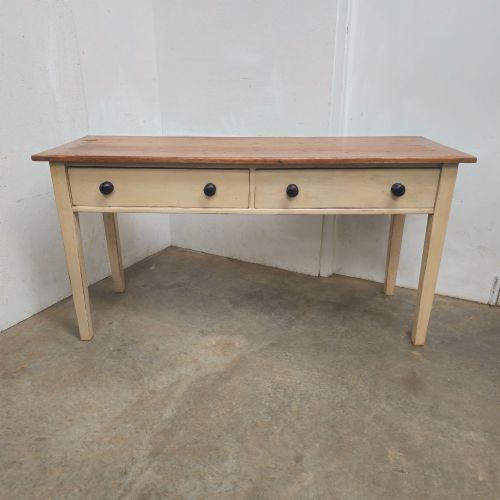
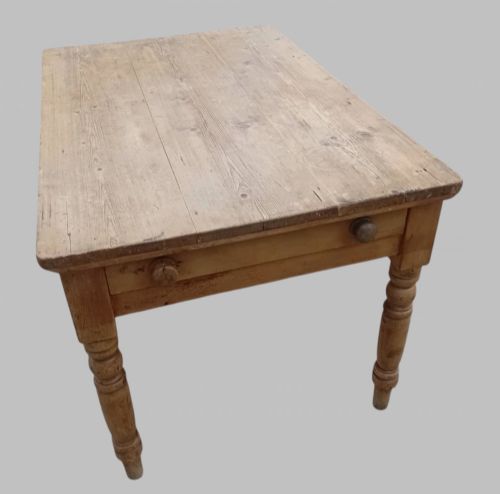
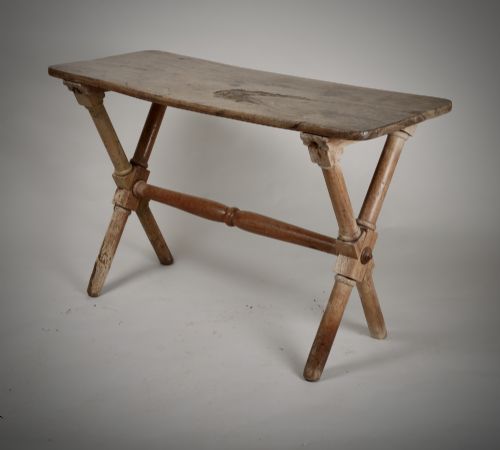
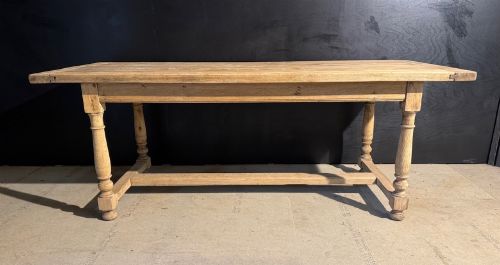
The versions you are most likely to meet on this page span the nineteenth century and the early twentieth century, originating from English, French, and Scottish country workshops. They appear primarily as dining tables, kitchen tables, work tables, and tavern tables, often accompanied by painted pine or oak bases.
Makers constructed these tables for function rather than display, utilising robust timbers like pine, oak, sycamore, and elm. Many examples retain the character of their working past through layers of old paint on the legs and aprons, contrasting with the pale, scrubbed surface above.
Materials and construction methods
Makers built these tables using solid timbers such as pine, oak, fruitwood, sycamore, and elm, selecting each wood for its strength and local availability. Carpenters joined heavy planks for the tops and secured sturdy legs and aprons with traditional joinery.
Many bases received coats of oil-based paint in various colours, while tops remained bare wood to withstand repeated scrubbing with water and stone. Brass fittings occasionally appear on drawers, providing simple hardware for storage compartments.
Vintage Scrub Top Table Retail Price Guide 2026
Typical asking prices for vintage scrub top table among the pieces listed under this phrase on Sellingantiques today, from the lower quarter to the upper quarter. They describe what is for sale here now, not the wider market.
Listings feature pine, oak, sycamore, and elm timbers across nineteenth-century and early twentieth-century periods.
Differentiating quality across examples
The distinction between standard examples and finer pieces lies in the choice of timber and the integrity of the original structure. Tables constructed from dense hardwoods like oak, sycamore, or elm generally represent a higher grade of manufacture than basic softwood versions.
Proportions and regional details also influence the character of each piece, from French trestle constructions to English farmhouse designs with integrated drawers. Surviving layers of original paint on the base add significant depth of character to the overall object.
The Vintage Scrub Top Table Glossary
- Scrub top
- A wooden table top left unfinished so it can be repeatedly scrubbed clean with water and sand or stone. This process creates a pale, smooth surface with a distinct tactile grain.
- Dairy table
- A specialised functional table used in butter and cheese making, often featuring scrubbed wooden tops and slatted lower shelves for ventilation. These pieces originate from nineteenth-century farmhouses.
- Tavelling table
- A sturdy wooden table utilised in taverns and public houses for serving food and drink. They often feature robust legs and solid timber construction designed to withstand heavy communal use.
- Trestle table
- A table supported by two or more upright frames connected by a horizontal beam rather than four corner legs. This design provides stability and maximises legroom beneath the top.
Vintage Scrub Top Table: Frequently Asked Questions
What is a scrub top table?
A scrub top table is a utilitarian work table featuring an unfinished wooden surface designed to be scrubbed clean after food preparation. They originated in farmhouses, dairies, and kitchens where hygiene required aggressive daily washing.
Over decades of scrubbing, the soft grain wears away to leave the harder growth rings raised, creating a characteristic textured surface. Today they serve primarily as kitchen and dining tables.
How do I clean a scrub top?
Cleaning a scrub top involves using warm water, a stiff bristle brush, and mild soap or traditional soda to lift grease and food residue. Scrubbing along the grain prevents damage to the timber fibres.
Allowing the wood to dry naturally preserves the pale, matte finish associated with genuine nineteenth-century working surfaces. Avoid harsh chemical sealants if you want to maintain the authentic dry texture.
Where were these tables made?
These tables were made in local workshops across England, France, Scotland, Sweden, and the Netherlands during the nineteenth and early twentieth centuries. Regional vernacular styles reflect the available local timbers, such as pine in northern Europe and oak or fruitwood further south.
Country joiners built them for domestic utility rather than specific designer attribution. Each piece carries the distinct regional joinery traditions of its origin.
Are painted bases original?
Painted bases on nineteenth-century tables are frequently original or applied during the working life of the furniture. Painters used oil-based pigments to protect the pine framework from moisture in damp farmhouse kitchens.
Layers of old paint often accumulate over decades, showing wear that records the history of the object. Surviving original paint adds substantial character compared to modern stripping and repainting.