




Vintage Rural Watercolours
These vintage rural watercolours capture the quiet cadence of the countryside through pigment on paper.
Vintage Rural Watercolours
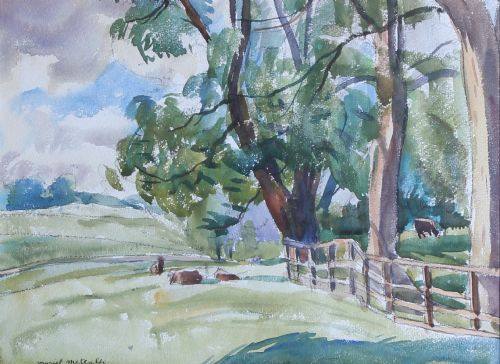
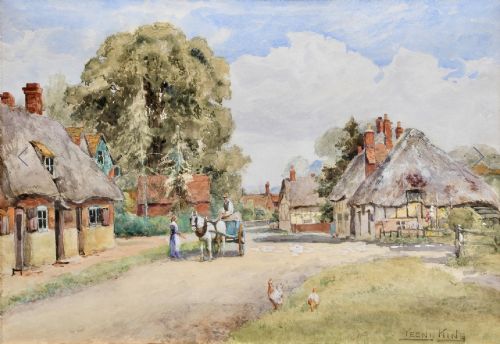
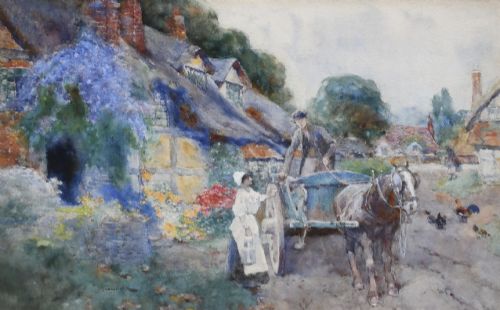
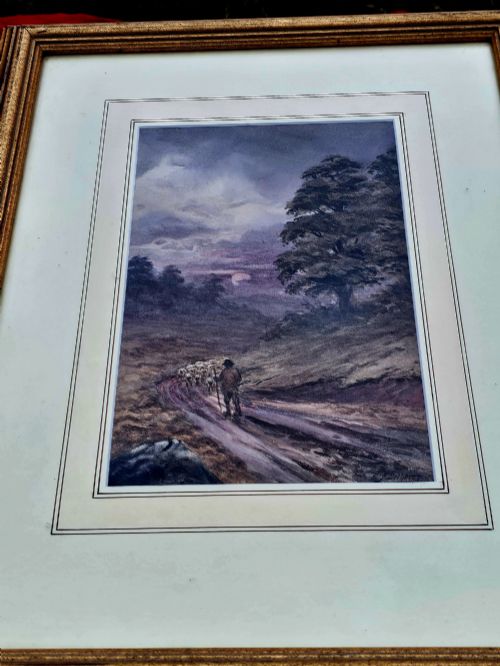
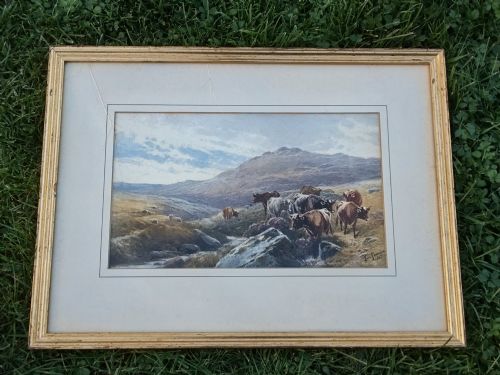
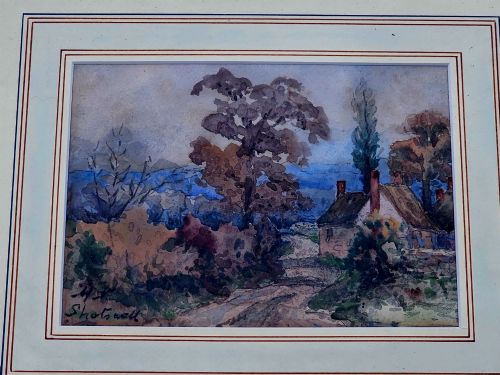
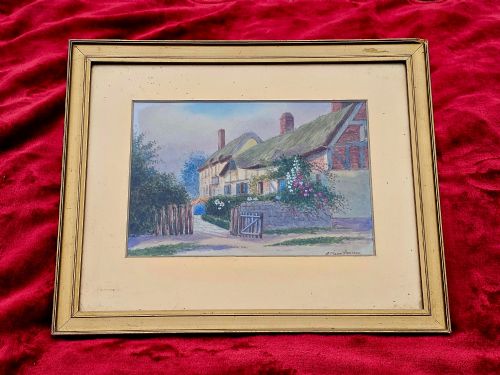
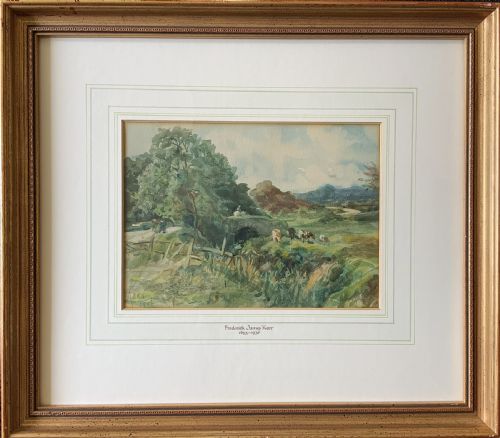
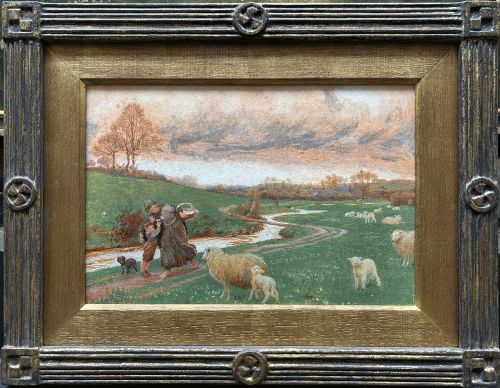
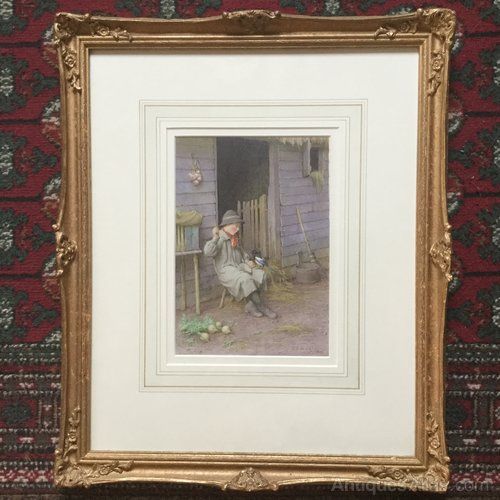
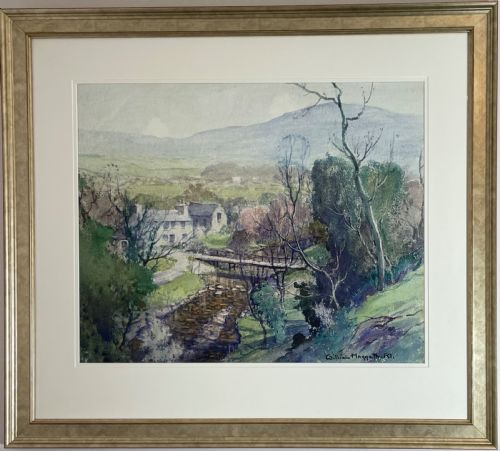
When you search for vintage rural watercolours, you encounter paintings depicting country lanes, farmyards, and pastoral landscapes. The pieces on this page span the Victorian era, the Edwardian period, and the early twentieth century. Works frequently record agricultural scenes such as hay cutting, herding sheep, and cottages by streams.
Most examples originate from British artists working within schools of realism and impressionism. You will find framed watercolours signed by named painters alongside unsigned atmospheric studies of English and Welsh scenery. The subjects emphasise traditional rural labour and domestic cottage life before mechanisation.
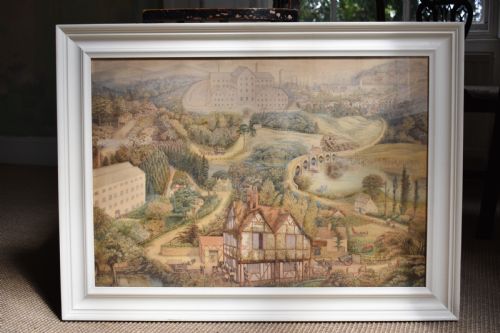
Compositions range from intimate watercolours on paper to larger framed wall art. The palette relies on watercolour pigment applied to support paper, often preserved beneath glass within wood or gilt frames. These paintings document local topography from Yorkshire and Lancashire to the Isle of Man and Dorset.
Materials and technique
Painters applied watercolour pigment directly onto prepared paper supports, utilising washes to build atmosphere and fine brushwork for detail. Many sheets remain housed in their original wood or gilt wood frames behind glass protection.
Selected works incorporate gold leaf highlights or subtle bodycolour to catch the light within a cottage interior or a sunset sky. The combination of water-soluble pigment and absorbent paper required swift, sure handling by the artist.
Vintage Rural Watercolours Retail Price Guide 2026
Typical asking prices for vintage rural watercolours among the pieces listed under this phrase on Sellingantiques today, from the lower quarter to the upper quarter. They describe what is for sale here now, not the wider market.
Several sheep painted over a century ago still stubbornly refuse to go to market.
Evaluating quality
Quality rests on the confidence of the brushwork and the artist's command of light across an open landscape or farmyard. Stronger compositions balance the expanse of the sky with detailed figures or livestock, avoiding a static layout.
The preservation of the pigment also dictates value, as prolonged exposure to sunlight can fade watercolour washes. Intact period frames and clear signatures by recorded painters elevate the standing of an individual sheet.
A Marie Parsons·EJ Letheren·Frederick Walker·Frederick James Kerr·Herman S Melville·Charles Edward Wilson·Henry Charles Fox·Cuthbert Crossley·Fred Lawson·James William Booth·William Hoggatt·Ernest Pile Bucknall·James Orrock·James Hardy Junior·John Atkinson·Linnie Watt·George Soper·William Joseph Boyes·Harry Sylvester Stannard·John Hobson Nicholson·George Kilburne·B Kaufmann·W Tatton Winter·Rowland Henry Hill·Frederick William Jackson
The Vintage Rural Watercolours Glossary
- Watercolour pigment
- Finely ground colour mixed with a water-soluble binder for painting on paper. This medium allows for transparent washes and luminous atmospheric effects.
- Gilt wood
- Timber frames covered with a thin layer of gold leaf or metallic paint. These ornate surrounds were often chosen to complement pastoral landscapes.
- British Impressionism
- A late nineteenth and early twentieth century painting style focusing on natural light and everyday scenes. Practitioners prioritized loose brushstrokes over rigid academic precision.
- Pastoral landscape
- Artwork depicting rural scenery, farming life, and idealized agrarian views. These subjects celebrate the peace and labour of the countryside.
- Bodycolour
- Watercolour paint rendered opaque by the addition of white pigment. Artists used this technique to add highlights to clouds, water, and clothing.
Vintage Rural Watercolours: Frequently Asked Questions
How do I date these watercolours?
You can date many pieces by the artist's lifespan or a signature and year inscribed on the mount or paper. Costume details on figures and farming methods also point to specific decades.
Victorian works tend toward tighter detail, while early twentieth-century examples lean into looser impressionistic brushwork.
Where should I hang these paintings?
Watercolours require careful placement away from direct sunlight to prevent the pigments from fading over time. Interior walls with indirect ambient light suit them best.
Pairing a framed rural scene with traditional wooden furniture complements the agrarian subject matter.
Are these watercolours original works?
The majority of pieces listed are original hand-painted watercolours on paper rather than mass-produced prints. Close inspection reveals brush texture and variations in pigment density.
Signatures are typically handwritten directly by the artist in pencil or ink.
What subjects are most common?
Scenes of farmyards, cottages by streams, and agricultural workers harvesting crops dominate the selection. Animals such as sheep, cattle, and horses feature frequently in the landscape.
These motifs reflect a widespread artistic interest in traditional rural life during the late nineteenth and early twentieth centuries.