



Vintage Rotating Rack
A vintage rotating rack organises volumes within arm's reach through a clever pivoting action that suits any corner or desk.
Vintage Rotating Rack
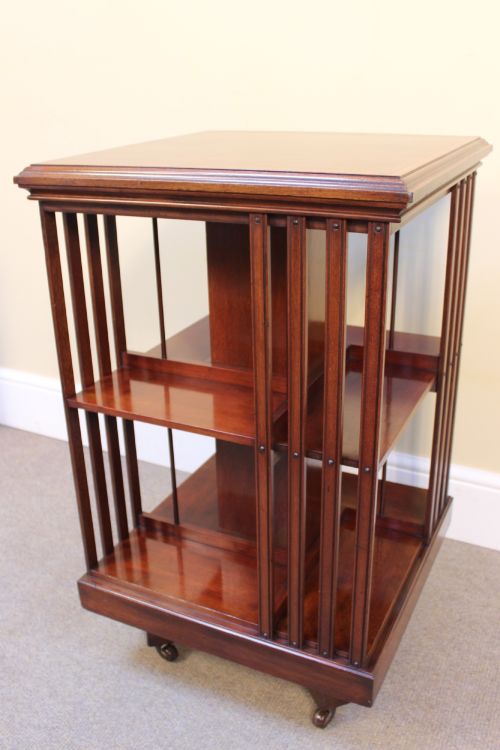
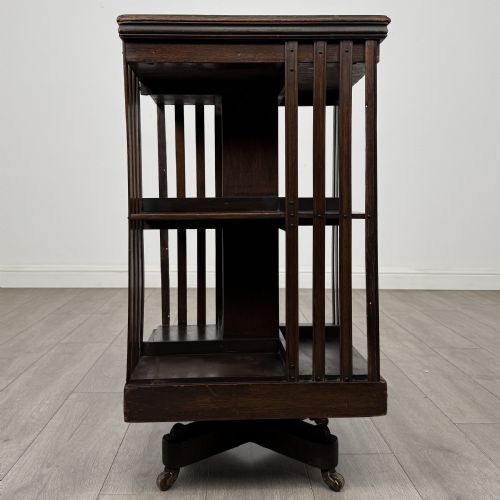
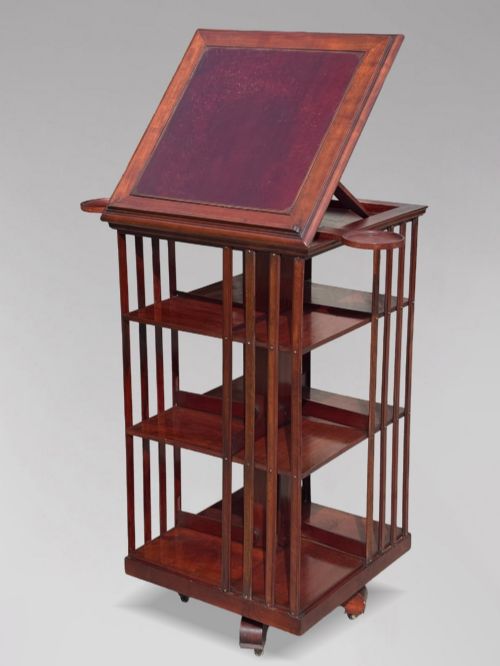
A vintage rotating rack typically takes the form of a revolving bookcase or bookstand designed to hold a curated selection of reading material. These pieces turn smoothly on a central pivot, allowing access to volumes from a single seated position.
Most examples found here date from the Edwardian period or the nineteenth century, reflecting standard domestic library furniture of those eras. Common formats range from compact tabletop bookstands to taller freestanding bookcases with two shelves.
The objects serve primarily as functional furniture for studies and living spaces, combining accessible storage with traditional cabinetmaking. The form prioritises utility alongside timber presentation, making them practical additions to contemporary rooms.
Materials and construction
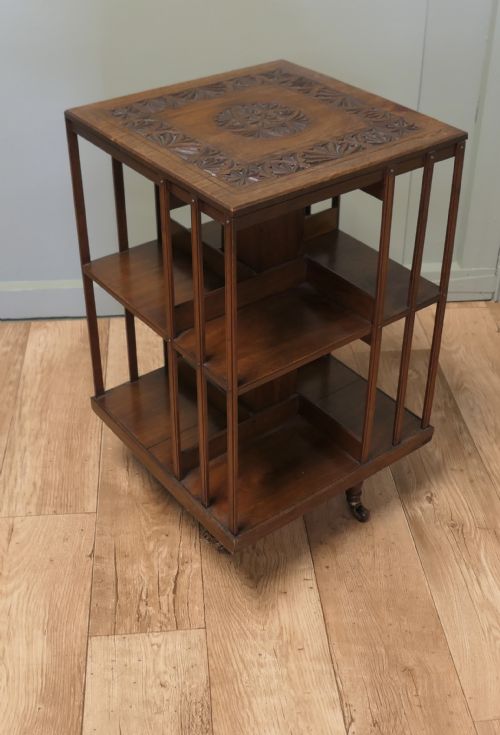
Construction relies heavily on timbers such as mahogany, oak, and walnut, often selected for their grain pattern and durability. Cabinetmakers shaped these woods into slatted sides and panelled bodies designed to withstand regular turning.
Internal mechanisms frequently incorporate iron or brass components to ensure the revolving action remains balanced and stable under weight. Carved details and turned columns appear on specific examples, adding traditional ornamentation to the structural framework.
Vintage Rotating Rack Retail Price Guide 2026
Typical asking prices for vintage rotating rack among the pieces listed under this phrase on Sellingantiques today, from the lower quarter to the upper quarter. They describe what is for sale here now, not the wider market.
Early owners discovered that a spinning bookstand doubles as an effective desktop entertainment device during long Victorian afternoons.
Judging quality and finish
Quality rests primarily on the smoothness of the pivoting mechanism and the stability of the central axis under load. Finer pieces maintain an even balance during rotation without wobbling or sticking.
The choice of timber and the precision of the joinery further distinguish standard examples from finer productions. Carved accents and well-fitted slatted sides indicate careful attention by the original cabinetmaker.
The Vintage Rotating Rack Glossary
- Revolving bookcase
- A freestanding or tabletop case mounted on a pivot mechanism that allows the entire structure to turn. This design provides immediate access to books from multiple angles.
- Slated sides
- Vertical wooden slats forming the exterior walls of the bookcase compartments. This construction method reduces weight while keeping volumes visible.
- Bookstand
- A compact version designed to sit upon a desk or table surface rather than standing on the floor. These hold a smaller selection of daily reference books.
- Edwardian
- Pertaining to the period of the British monarchy from nineteen hundred to nineteen ten. Furniture from this era often lighter proportions and simplified ornamentation.
Vintage Rotating Rack: Frequently Asked Questions
How do I care for the wood?
Dust the timber regularly with a soft, dry cloth to prevent the accumulation of grit in the grain.
Apply a traditional wax polish occasionally to nourish the surface and maintain the natural lustre of the mahogany or oak.
Can these hold heavy books?
Most revolving bookcases handle standard octavo volumes and novels comfortably without straining the internal pivot mechanism.
Heavier folios and reference tomes should be placed on the lower shelves to maintain balance during rotation.
Where should I place one?
These pieces fit well beside an armchair or adjacent to a desk where regular reading materials are required.
Because they rotate through a full circle, ensure there is adequate clearance around the perimeter for easy access.
How do I identify the period?
Examine the timber selection, hardware, and structural proportions alongside stylistic cues like slatted sides or carved details.
Edwardian examples often display lighter timbers and simpler lines compared to heavier Victorian and nineteenth-century precedents.