


Vintage Rosewood Sideboard
A vintage rosewood sideboard brings rich timber and refined storage to a room, spanning styles from Regency to Art Deco.
Vintage Rosewood Sideboard
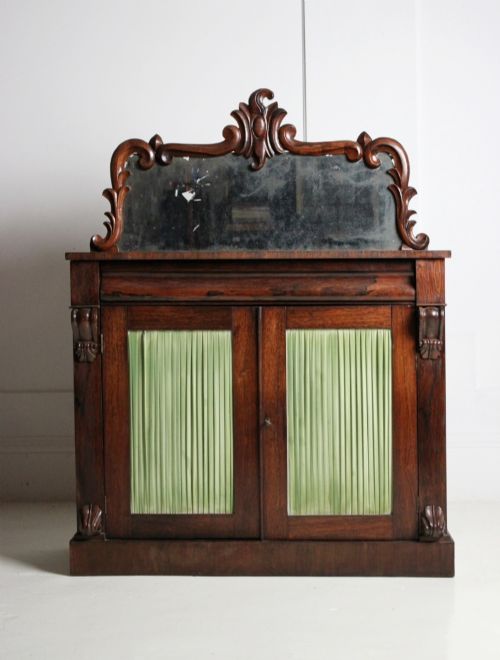
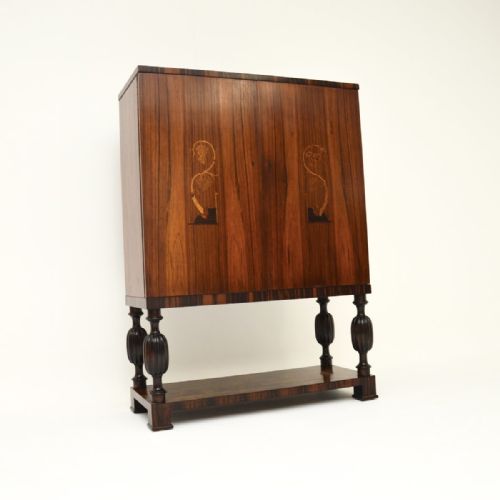
The selections available here lean heavily toward Regency chiffoniers with brass inlay and 1930s continental cabinets featuring marquetry. Buyers will also encounter Victorian side cabinets and Edwardian inlaid examples alongside larger cupboards.
Forms range from compact chests of drawers and demi-lune cabinets to grand four-door buffets and secretaire chiffoniers. Each piece utilises rosewood as the primary visible surface, often accented with contrasting boxwood, satinwood, or brass details.
What varies in quality
Quality reveals itself in the depth of the rosewood grain, the precision of the marquetry or brass inlay, and the crispness of any carved detailing. Finer examples display harmonious figure matching across doors and drawers rather than arbitrary timber placement.
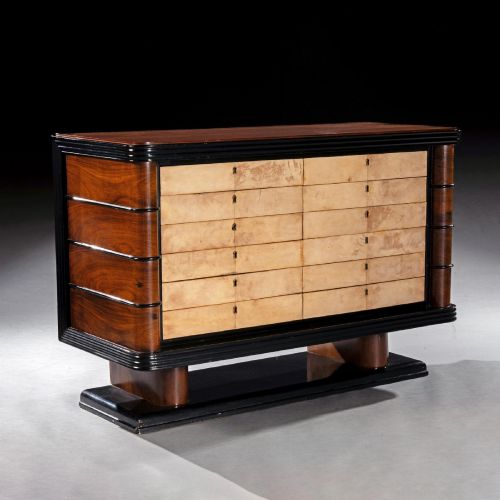
The sophistication of internal fittings, such as secretaire drawers, fitted shelving, and original glazing, distinguishes standard utilitarian storage from superior cabinetmaking. Superior proportions and unusual forms, including demi-lune shapes or parchment-covered drawer fronts, indicate higher workshop ambition.
Edwards and Roberts
The Vintage Rosewood Sideboard Glossary
- Chiffonier
- A low cabinet featuring a two-door cupboard beneath a drawer or open shelf, popular during the Regency and Victorian periods. These pieces frequently incorporate a raised mirrored or shelved superstructure.
- Marquetry
- The art of applying small pieces of veneer to a structure to form decorative patterns or pictures. Craftsmen used contrasting woods such as satinwood and boxwood to achieve detailed pictorial designs.
- Palisander
- A term frequently applied to heavy, richly figured tropical rosewoods. This dense timber exhibits deep brown and dark purple grain patterns highly prized in continental furniture.
- Secretaire
- A cabinet or chest incorporating a pull-down writing flap concealing small drawers and pigeonholes. This dual-purpose feature allows a sideboard to function as a compact desk.
- Simulated rosewood
- Timber painted or stained to imitate the appearance of genuine rosewood. Makers utilised this technique during periods when exotic hardwoods were scarce or expensive.
Vintage Rosewood Sideboard: Frequently Asked Questions
How do I identify a Regency rosewood sideboard?
Regency pieces often display classical architectural proportions, brass stringing, and gilt-metal mounts. They frequently take the form of chiffoniers with fabric-backed grilles or raised shelves supported by columns.
Look for flame mahogany or rosewood veneers combined with sabre feet or plinth bases. The hardware and joinery methods align with early nineteenth-century cabinetmaking standards.
Can I use a chiffonier as a media unit?
Many vintage sideboards and chiffoniers provide suitable dimensions for modern living spaces and electronics storage. Lower cabinet heights accommodate media equipment while maintaining traditional room aesthetics.
Consider internal shelf depths and cable management before placement, as older cabinets were built for different storage requirements.
What is the difference between a sideboard and a chiffonier?
A sideboard is typically a longer dining room piece designed for serving food and storing tableware. A chiffonier is generally more compact and often includes a raised back tier with small shelves.
Chiffoniers emerged primarily in the nineteenth century as versatile sitting room or parlour cabinets rather than formal dining furniture.
How do I care for rosewood furniture?
Maintain rosewood surfaces by dusting with a soft cloth and avoiding exposure to direct sunlight or extreme humidity changes. Excessive heat can dry out older veneers and cause lifting.
Apply specialist furniture wax sparingly to nourish the timber grain without building up heavy residues that obscure the finish.