



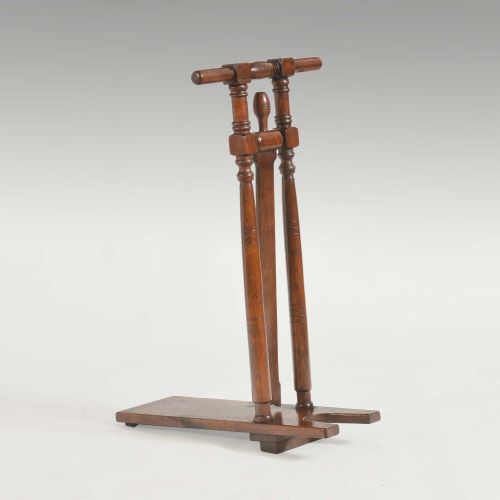

Vintage Riding Boot Stand
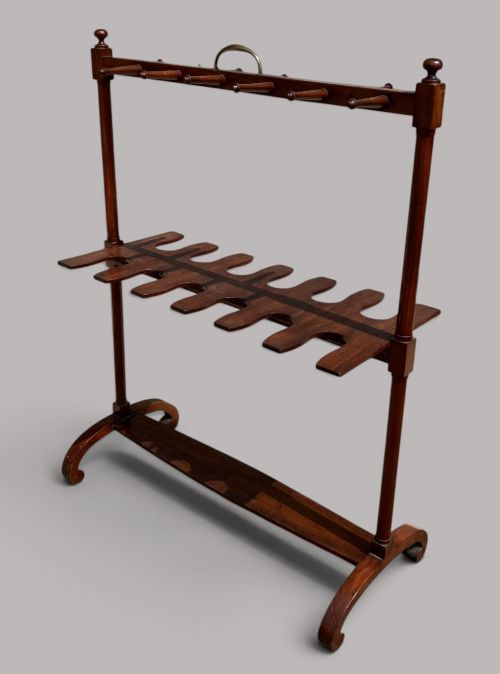
A vintage riding boot stand keeps expensive footwear upright and dry after a ride, combining utilitarian oak, mahogany and brass for the country house hall.
Vintage Riding Boot Stand
When you search for a vintage riding boot stand, you are looking at practical hall furniture designed to store and dry tall boots after a day in the saddle. These pieces range from simple boot jacks for pulling off footwear to combined boot and whip racks built for country house utility. Most examples met on this page date from the nineteenth century, spanning the Georgian, Regency and Victorian periods.
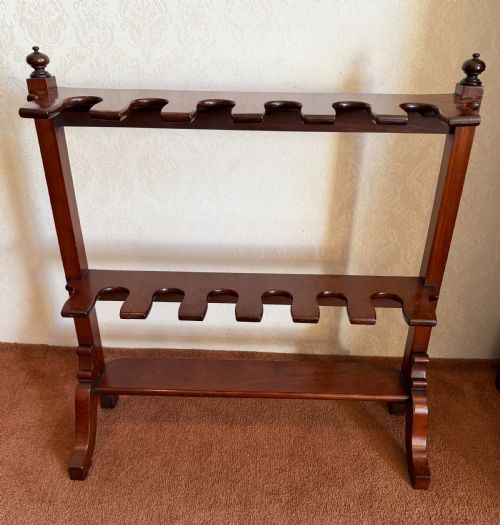
The forms vary from simple floor-standing timber racks to dedicated hall stands equipped to hold riding crops alongside footwear. Mahogany and oak dominate the selection, often finished with brass mountings or hand-carved details suited to a boot room. English country house style defines the aesthetic, prioritising robust function over delicate ornamentation.
How they were made
Carpenters built these stands from dense hardwoods like mahogany, oak and ash to withstand the heavy damp weight of mud-caked riding boots. Timber construction often involved hand-carving techniques, shaping sturdy uprights and shaped foot-boards designed for daily equestrian use.
Metal components added necessary reinforcement, utilising brass mounts and fittings to secure racks and prevent splitting in damp boot rooms. Stained timber finishes protected the wood from moisture exposure while preserving the natural grain of the oak and mahogany.
Many a Victorian boot jack still bears the faint muddy scuff marks left by horses and riders over a century ago.
What varies in quality
Quality in a riding boot stand rests on the selection of timber and the integrity of the joinery rather than surface decoration. Dense, well-figured mahogany or quarter-sawn oak indicates a piece commissioned for the main house rather than basic utilitarian service.
The inclusion of integrated whip racks and solid brass mountings separates more ambitious country house pieces from standard domestic boot jacks. Well-executed hand-carved details elevate simpler forms into distinct examples of nineteenth-century functional design.
The Vintage Riding Boot Stand Glossary
- Boot jack
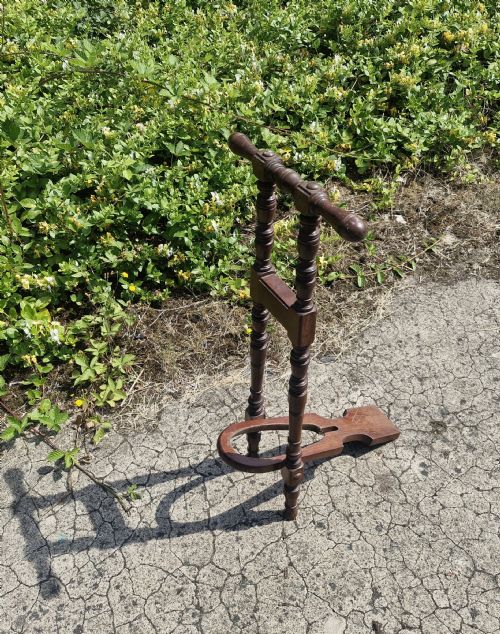
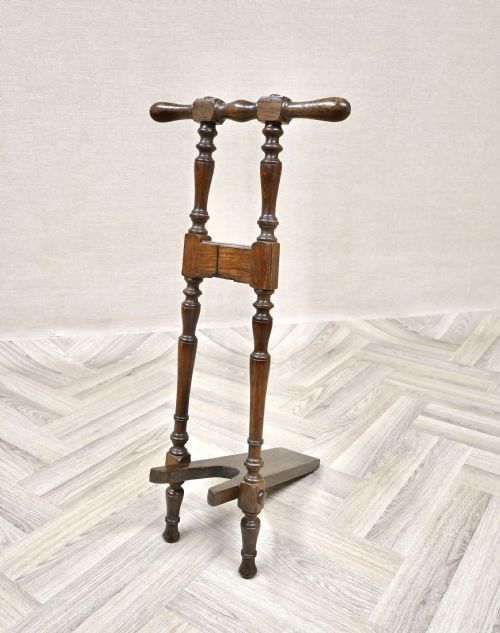
- A V-notched device used for pulling off riding boots without bending down. It forms the base of many smaller stands.
- Regency
- An architectural and decorative style spanning the early nineteenth century, known for clean lines and classical restraint. Pieces from this period often display refined mahogany proportions.
- Hall stand
- A piece of furniture placed in an entrance hall for coats, hats and boots. Larger examples incorporate racks specifically for whips and riding gear.
- Country house
- A style associated with large English estates, where furniture prioritised durability and practical service in boot rooms and corridors.
Vintage Riding Boot Stand: Frequently Asked Questions
What is a riding boot stand used for?
These stands hold tall leather riding boots upside down or upright to maintain their shape and dry the interiors properly after use. Many designs also incorporate built-in slots or hooks for organising riding crops and whips.
Traditionally kept in the boot room or entrance hall, they provided a designated place for heavy equestrian footwear. This kept mud off the main carpets and ensured boots were ready for the next ride.
How do I date a vintage boot stand?
Dating relies on identifying the primary wood species, construction methods, and stylistic markers associated with specific periods like the Regency or Victorian eras. Earlier pieces often feature hand-carved mahogany, while later nineteenth-century examples frequently utilise oak and brass mounts.
Examining the wear patterns on the footboards and the type of fixings used provides further clues to age. Country house pieces from the eighteen-eighties often show heavier utilitarian construction.
Where were these stands kept?
They belonged in the boot room, scullery or back entrance of large country houses where outdoor gear was stored. They were working items placed near exterior doors for immediate access upon returning from stables.
Because they handled wet leather and mud, they needed to be durable and easy to clean. This practical placement explains why many surviving examples show robust timber construction.
What is the difference between a boot jack and a rack?
A boot jack is a low board with a V-shaped notch designed purely to grip the heel and pull off a tight riding boot. A boot rack is a larger upright frame or stand designed to store multiple pairs of boots off the floor.
Some pieces combine both functions, featuring a boot jack base beneath vertical timber supports for boots and whips. Combination stands are typically larger and stood freely against a wall.