

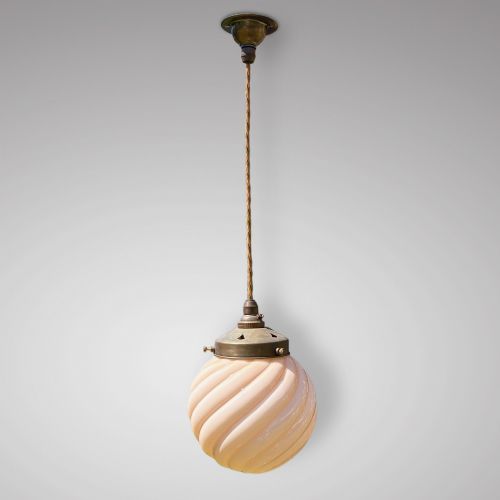


Vintage Ribbed Glass Shade
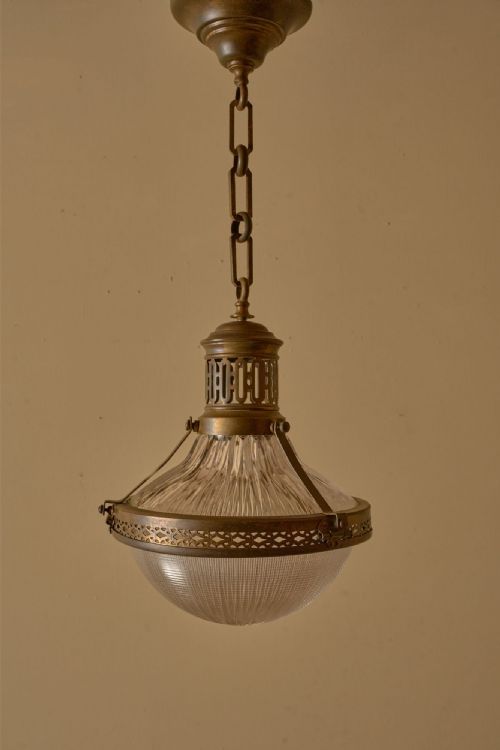
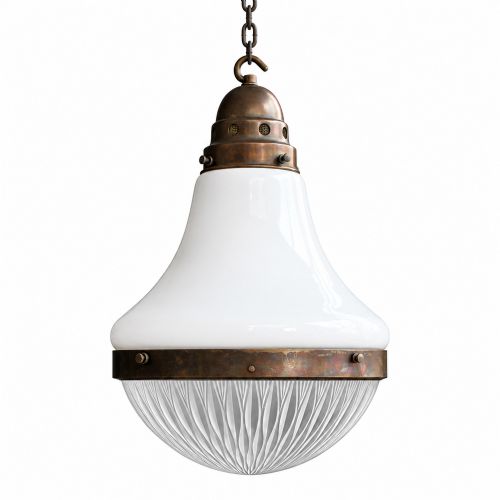
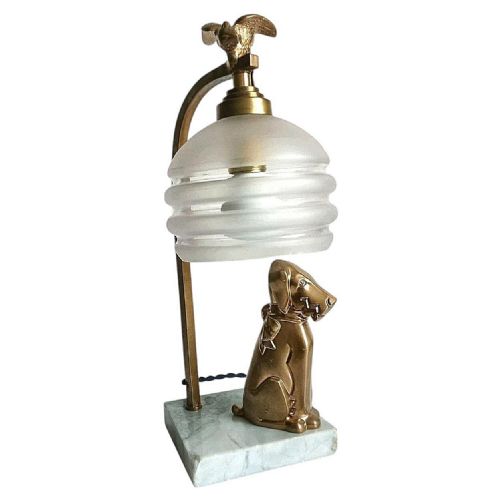
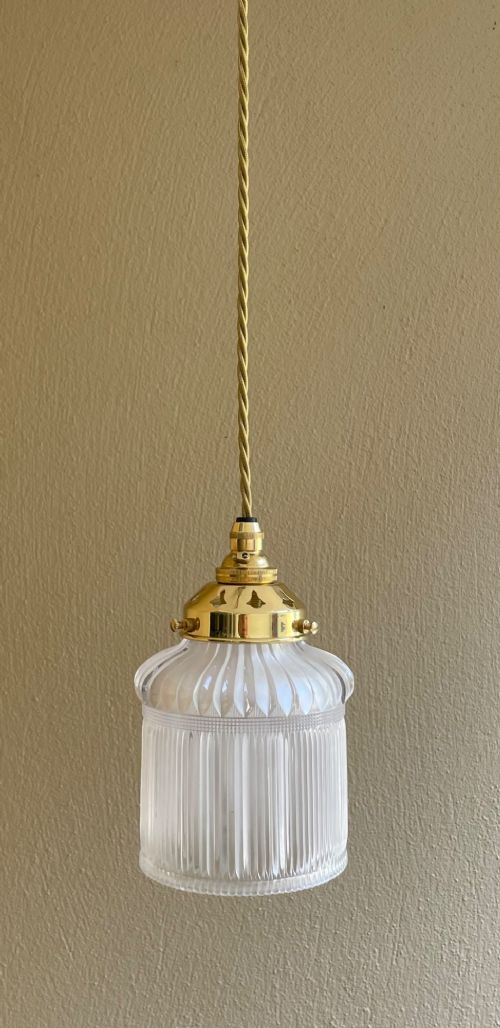
These vintage ribbed glass shade examples bring honest utility and diffused light to a room, driven by early industrial design.
Vintage Ribbed Glass Shade
A vintage ribbed glass shade sits primarily among pendant lights and ceiling light shades originating from the Victorian, Edwardian, and early twentieth-century periods. These fittings provide focused yet softened illumination suited to functional spaces, combining glass optics with metal galleries.
The dominant forms found here include prismatic, opaline, moonstone, and clear glass configurations, often associated with industrial, Art Deco, and Arts and Crafts styles. They span simple bell profiles to specialised optical designs engineered for commercial and domestic interiors.
How they were made
Makers utilised pressed and moulded glass techniques to create the characteristic linear ribs and prismatic patterns designed to refract and scatter light efficiently. These glass elements were then paired with metal components such as brass galleries and chrome fixtures.
Production methods prioritized durability and optical performance, resulting in heavy, robust shades intended for endurance in pharmacies, workshops, and early public lighting schemes.
Vintage Ribbed Glass Shade Retail Price Guide 2026
Typical asking prices for vintage ribbed glass shade among the pieces listed under this phrase on Sellingantiques today, from the lower quarter to the upper quarter. They describe what is for sale here now, not the wider market.
Listings feature materials including brass, prismatic glass, opal glass, opaline glass, clear glass, frosted glass, and marble across multiple decades.
What varies in quality
Quality rests in the precision of the glass moulding, the sharpness of the ribs, and the presence of specialised optical properties such as double prismatic refraction. Heavier, uniform glass with clean edges distinguishes better utilitarian production.
The integrity of accompanying hardware, including period brass or chrome galleries, influences the overall coherence of the piece, separating standard utility items from more refined architectural examples.
The Vintage Ribbed Glass Shade Glossary
- Holophane
- A proprietary type of prismatic glass designed to direct and diffuse light efficiently. It remains a defining mark of early twentieth-century industrial lighting.
- Prismatic glass
- Glass moulded with geometric prisms on the surface to control glare and distribute illumination evenly. This material is central to many industrial pendant lights.
- Opaline glass
- A milky, semi-translucent glass that softens light output while maintaining a bright appearance. It is frequently seen in twentieth-century ceiling light shades.
- Gallery
- The metal collar or mount that grips the upper part of the glass shade and connects it to the suspension wiring. Brass and chrome are common metals used for this component.
Vintage Ribbed Glass Shade: Frequently Asked Questions
Where were these shades used originally?
These ribbed glass shades were primarily installed in commercial, industrial, and municipal buildings where efficient, glare-free illumination was required for work.
Over time, their robust construction and practical aesthetic led to their adoption in domestic settings, particularly kitchens, hallways, and utility spaces.
How do I hang a pendant light shade?
Hanging a pendant light typically involves securing a compatible metal gallery to a wired suspension cord or chain, ensuring the collar grips the top rim of the glass securely.
It is advisable to consult a qualified electrician to ensure the vintage wiring and galleries meet current safety standards before installation.
Can I use modern bulbs in these vintage lights?
Modern LED bulbs work well inside these shades, provided the physical dimensions and wattage match the capacity of the original vintage gallery and holder.
Selecting a warm LED filament bulb helps replicate the original quality of light emitted by early twentieth-century electric fittings.