







Vintage Reverse Painting
Vintage reverse painting comprises decorative glass panels worked from behind, offering collectors a striking depth of detail and preserved surface brilliance.
Vintage Reverse Painting
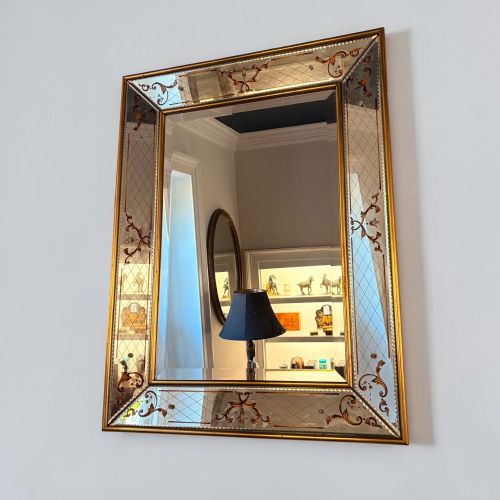
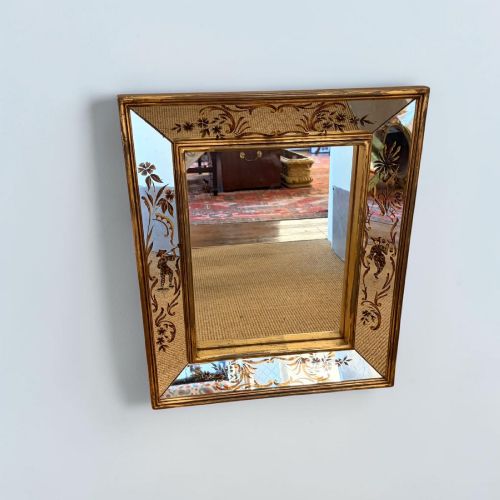
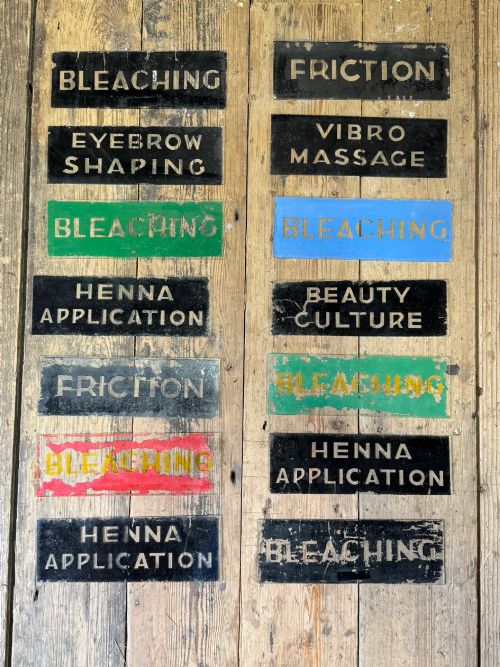
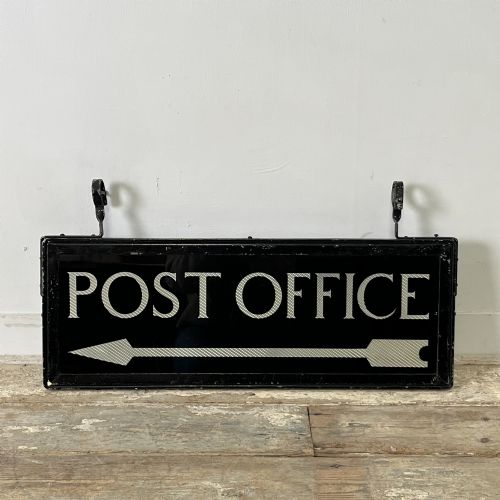
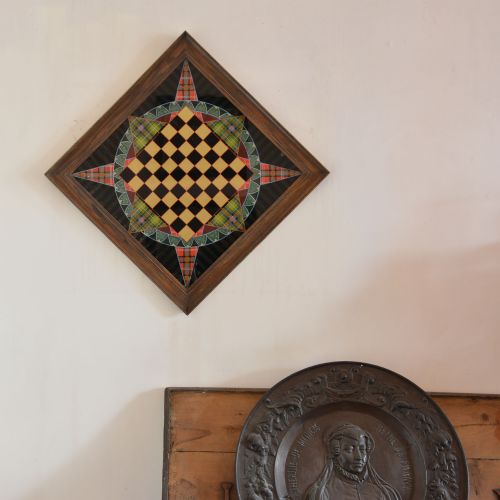
Vintage reverse painting covers a broad spectrum of decorative objects, ranging from Georgian and Victorian prints to 1920s advertising signs, games boards, and mirrors. Buyers exploring this category frequently encounter pieces executed on glass, rock crystal, or paper, often housed in period wooden frames.
The aesthetic stretches from Venetian and French Chinoiserie styles to domestic folk art and Taisho Roman works. Wall mirrors, wall art, and shop signage dominate the forms available in this selection.
Origins span British, American, French, Scandinavian, and Japanese workshops, reflecting a diverse international tradition of back-painted or églomisé techniques.
Materials and construction methods
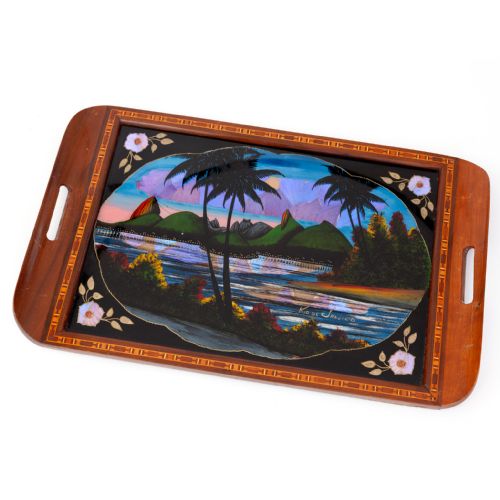
Makers applied oil paint, water-based media, gold leaf, or paper transfers directly to the rear side of glass or rock crystal. This method required artists to paint foreground elements before background details so the composition appeared correctly oriented when viewed from the front.
Support materials include clear or bevelled glass panes, maple and mahogany frames, sterling silver, and fourteen or eighteen-carat gold mountings. Crystoleum techniques involved hand-colouring albumen prints placed behind concave glass, while églomisé work utilised gold leaf applied to glass and scratched for linear detail.
Vintage Reverse Painting Retail Price Guide 2026
Typical asking prices for vintage reverse painting among the pieces listed under this phrase on Sellingantiques today, from the lower quarter to the upper quarter. They describe what is for sale here now, not the wider market.
Listings feature reverse painted items executed on glass, rock crystal, and paper, spanning Georgian, Victorian, Edwardian, and Art Deco periods.
Assessing quality and craftsmanship
The distinction between standard commercial pieces and superior examples lies in the precision of the brushwork and the preservation of the original gilt or pigment layers behind the glass. Intricate detailing in portraiture, signage lettering, or scenic views signals a higher tier of artistry.
Frame originality and the stability of the backing materials strongly influence the integrity of the piece. Items retaining their untouched wooden surrounds, original trade labels, or maker inscriptions command greater respect among collectors.
Thomas L Mott·Frank Owen Salisbury·William Henry Knight·Rolinda Sharples
The Vintage Reverse Painting Glossary
- Eglomise
- A technique of applying gold or silver leaf to the reverse of glass, often combined with painted or etched decoration. The method dates back to antiquity but saw significant revival during the Victorian and Art Deco periods.
- Crystoleum
- A method popular in the nineteenth and early twentieth centuries for producing hand-painted photographs. A coloured print was pasted face down to convex glass, the paper backing rubbed away, and oils or watercolours applied to the reverse.
- Essex Crystal
- A form of reverse-intaglio carving on rock crystal, where a concave motif is carved into the back of a crystal dome, painted to appear three-dimensional, and backed with mother-of-pearl. These cabochons were commonly mounted in pins, brooches, and cufflinks.
- Chinoiserie
- A European stylistic interpretation of Chinese and East Asian artistic traditions. It frequently appears on mirrors and decorative panels featuring pavilions, figures, and exotic landscapes.
Vintage Reverse Painting: Frequently Asked Questions
What is a vintage reverse painting?
A vintage reverse painting is an artwork or sign created by applying pigments, gold leaf, or prints to the back of a glass panel. Viewers observe the finished composition through the front surface, which protects the paint layers from atmospheric wear.
This technique produces a distinct glossy sheen and depth not found in standard surface paintings. The category includes wall art, mirrors, advertising signs, and games boards.
How do I care for glass paintings?
Care requires keeping pieces away from direct sunlight and excessive moisture to prevent the backing adhesives and pigments from lifting. Dust gently with a dry microfiber cloth rather than liquid cleaners.
Ensure that the framing remains secure, as movement in the wooden surround can put pressure on the fragile glass panel behind.
How are antique signs different from art?
Antique signs served commercial purposes for shops, post offices, and trade establishments, featuring bold lettering or brand names. Fine art reverse paintings typically depict portraits, domestic interiors, or scenic landscapes intended solely for domestic display.
Both categories share the same back-painted glass technique, but trade signs often carry makers' marks or business names relating to their original municipal use.
What is an Essex crystal?
Essex crystal refers to a domed piece of rock crystal with a carved and painted intaglio on the reverse side. The artisan carves the design into the back so that it creates an illusion of a three-dimensional object when viewed from the front.
These carved crystals appear frequently in nineteenth and early twentieth-century jewellery, including brooches, stick pins, and cufflinks.