

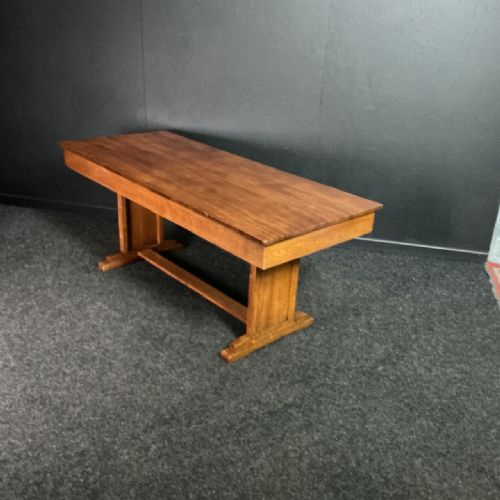


Vintage Refectory Desk
These vintage refectory desk pieces bring honest timber and sturdy craftsmanship into modern rooms.
Vintage Refectory Desk
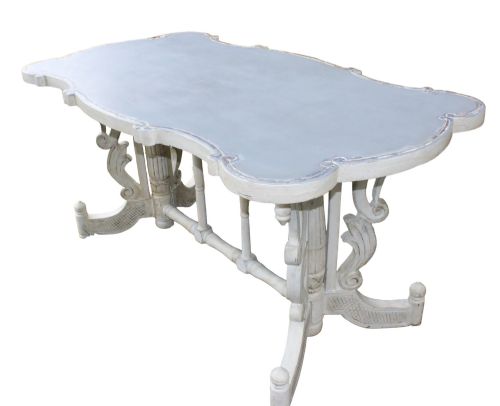
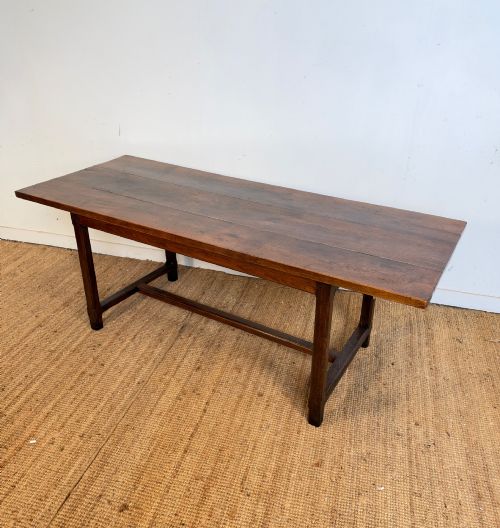
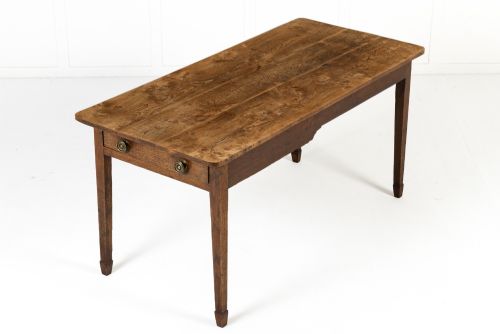
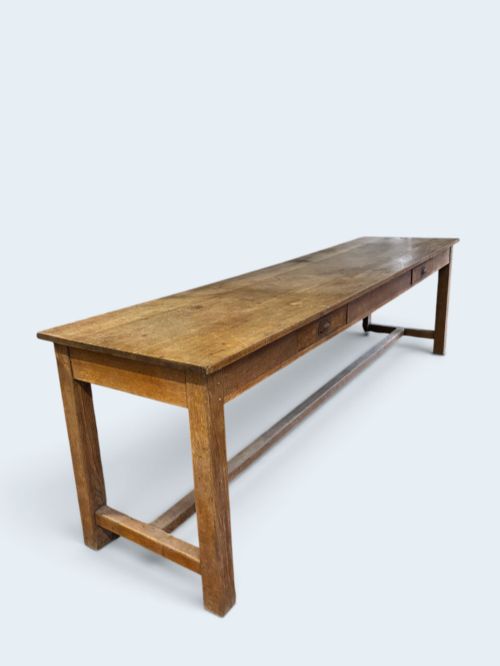
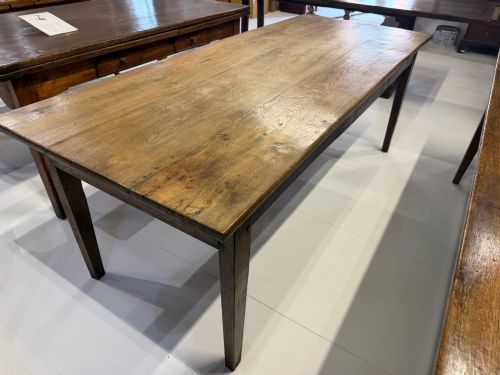
A vintage refectory desk draws on long table forms adapted for writing and study, spanning the nineteenth century through to the interwar period. These pieces originate from diverse settings including public schools, libraries, and country houses, evolving from utilitarian origins into practical workspace furniture.
Materials and Construction
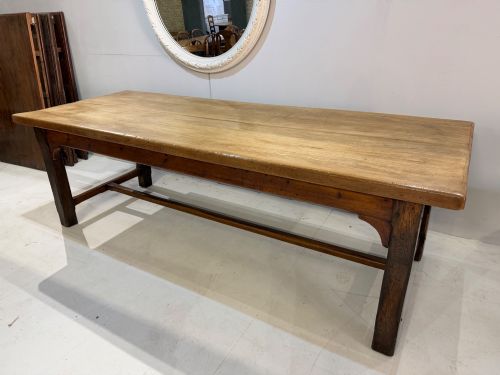
Construction relies heavily on solid oak, quarter-sawn oak, and pine, frequently paired with sturdy beech or iron details. Timbers are selected for structural durability, yielding heavy frames capable of withstanding decades of hard use.
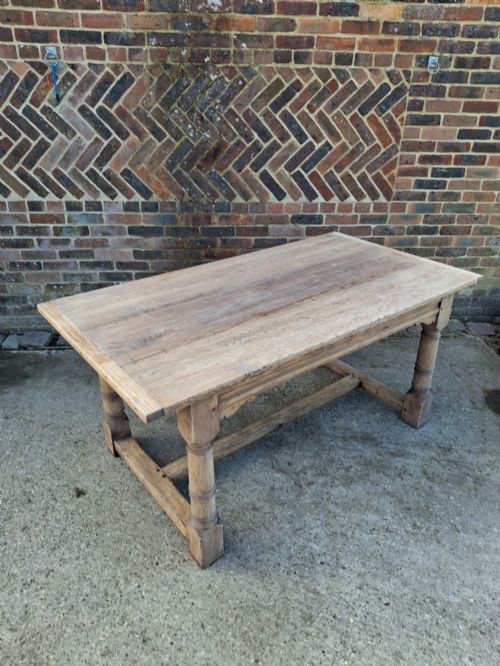
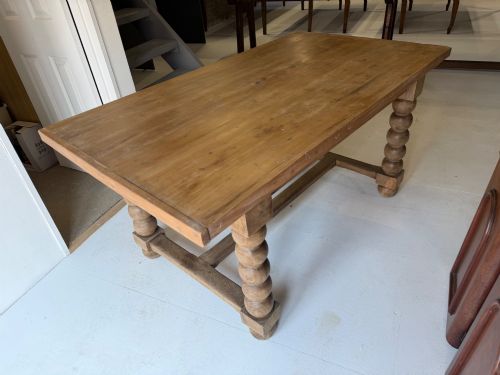
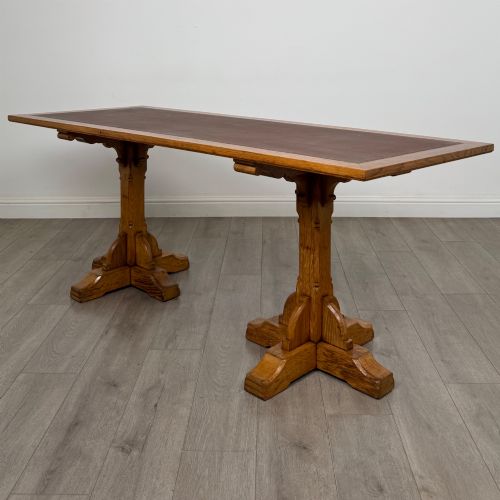
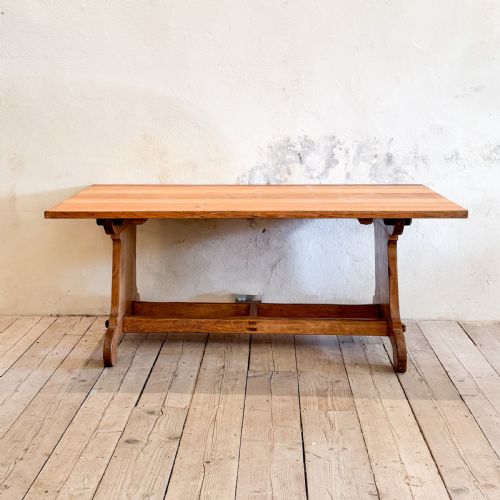
Joining techniques and surface finishes vary from scrubbed timber tops to polished golden oak. Makers utilised traditional framing methods, sometimes incorporating trestle supports, bobbin legs, or built-in drawers to enhance utility.
Vintage Refectory Desk Retail Price Guide 2026
Typical asking prices for vintage refectory desk among the pieces listed under this phrase on Sellingantiques today, from the lower quarter to the upper quarter. They describe what is for sale here now, not the wider market.
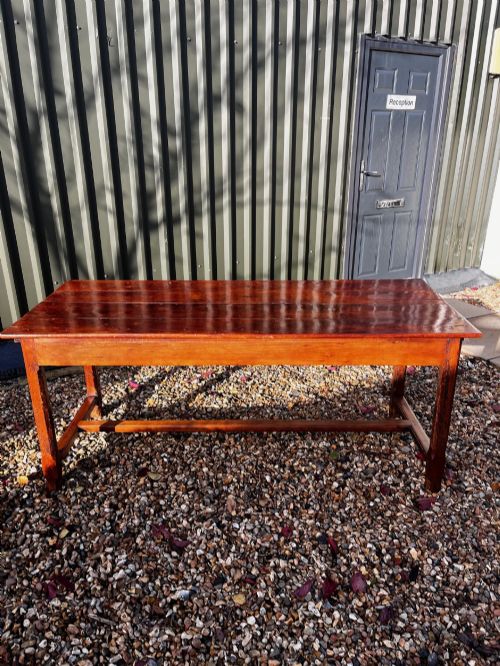
Listings span the nineteenth century, Edwardian period, and 1930s, featuring oak, pine, beech, and iron across library, dining, and desk formats.
Factors of Quality
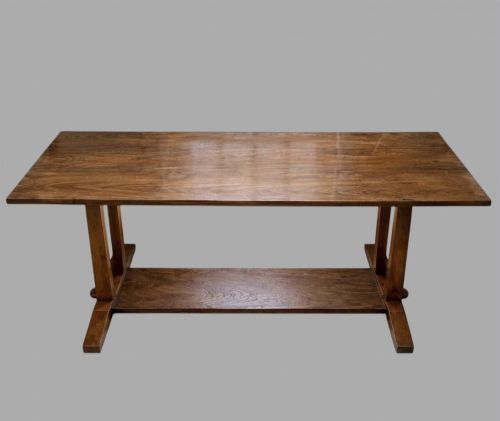
Quality rests in the selection of timber, such as quarter-sawn oak displaying prominent medullary rays, and the integrity of the underlying joinery. Superior examples maintain structural rigidity without excessive hardware intervention.
The character of the surface timber - whether a clean scrubbed top or a rich patinated finish - determines the visual weight of the piece. Better proportioned tables balance heavy legs with thick tops in a harmonious composition.
Heals
The Vintage Refectory Desk Glossary
- Quarter-sawn oak
- Timber cut radially across the growth rings to produce a distinctive decorative grain pattern. This method also results in a more stable board that resists warping.
- Trestle table
- A table design featuring a central board supported by two trestles or feet. It provides ample legroom and stable support.
- Arts and Crafts
- A design movement prioritising traditional craftsmanship and simple forms over mass production. Pieces from this style emphasise honest materials.
- Scrubbed top
- A wooden surface cleaned repeatedly with water and a stiff brush, leaving a pale, raw texture. This finish is typical of utilitarian tables.
- Bobbin legs
- Furniture legs turned on a lathe to resemble a string of beads or bobbins. They add decorative texture to nineteenth-century and early twentieth-century pieces.
Vintage Refectory Desk: Frequently Asked Questions
How do I use a vintage refectory desk today?
These large tables function exceptionally well as spacious writing desks or central work tables in a home study. Their deep proportions offer ample room for computers, books, and paperwork.
Because they originate from schools, libraries, and large kitchens, their robust construction easily handles daily professional use. Pairing them with comfortable seating creates a practical and striking workspace.
What periods do these desks cover?
The pieces span from the nineteenth century through the Edwardian era and into the 1930s interwar period. You will find styles ranging from rustic farmhouse to Arts and Crafts designs.
Each period brings distinct material treatments, such as scrubbed pine tops from the nineteenth century or golden quarter-sawn oak from the 1920s.
How do I care for an antique oak top?
Maintenance depends largely on whether the wood has a polished finish or a raw scrubbed surface. Generally, using coasters and avoiding excessive moisture will protect the historic timber.
Waxing polished oak periodically helps nourish the grain and preserve the rich patina built up over decades of use.
Are these tables suitable for small rooms?
Many refectory and library tables were built with generous proportions intended for public spaces or large dining halls. However, simpler trestle and farmhouse variants come in various lengths to fit domestic interiors.
Checking the exact dimensions listed for each piece ensures the table complements your room layout without overwhelming the space.