


Vintage Quilt Rack
These vintage quilt rack pieces are practical timber stands designed for airing textiles, offering sturdy frames and understated period charm for the home.
Vintage Quilt Rack
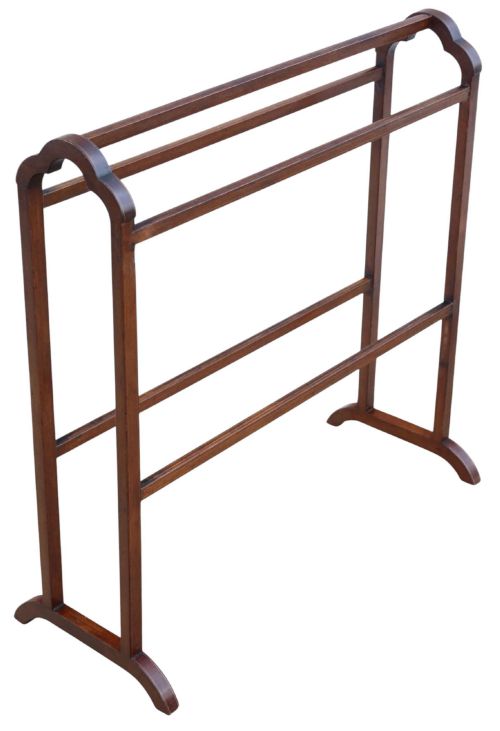
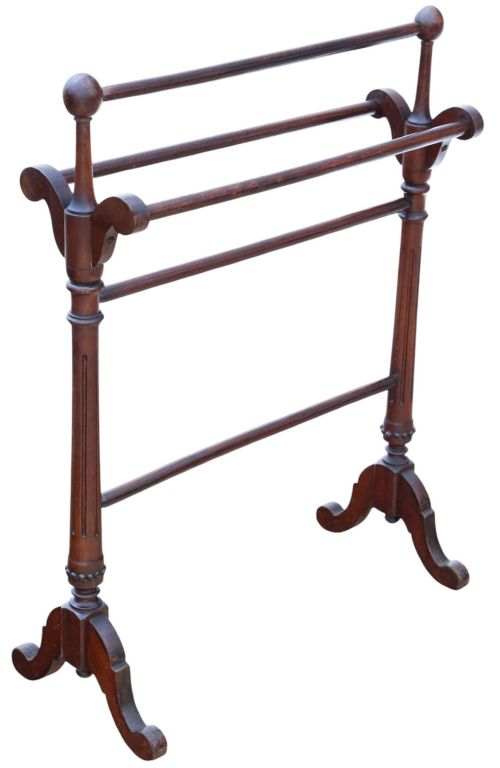
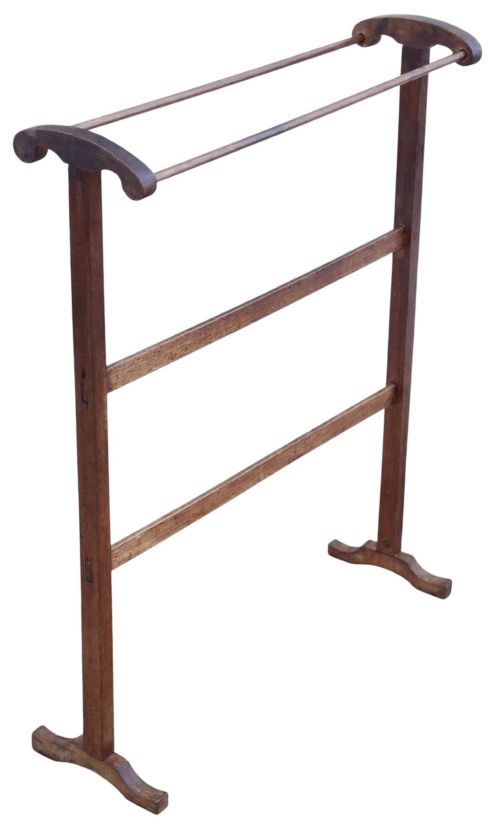
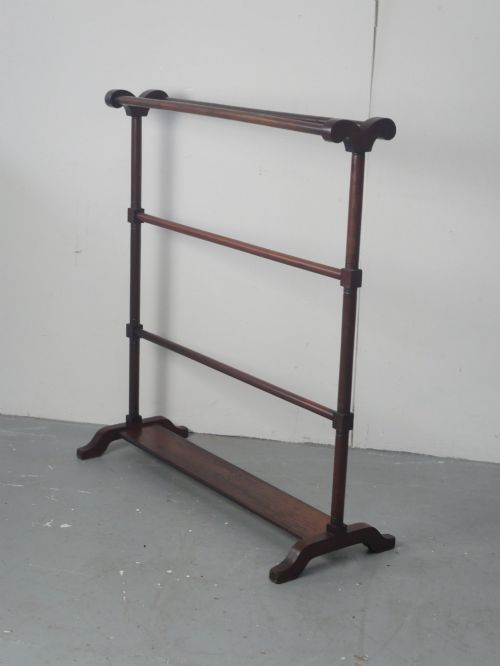
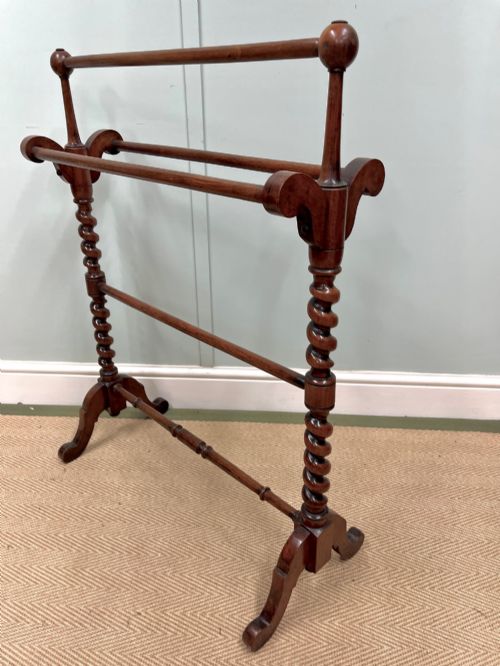
When you search for a vintage quilt rack, you encounter practical freestanding wooden stands designed historically for airing household textiles. These pieces commonly appear under the guise of nineteenth-century and early twentieth-century towel rail stands in mahogany, oak, and pine.
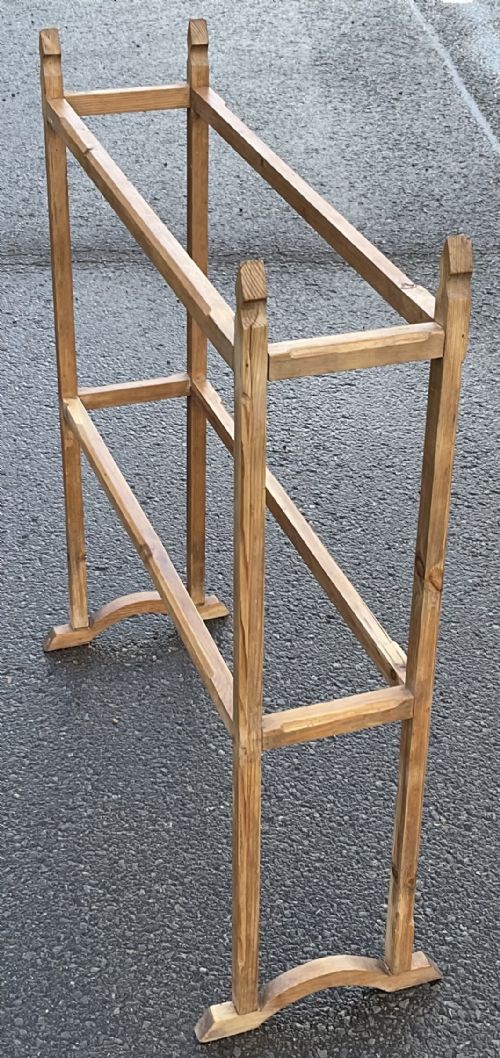
The selection on this page relies heavily on Edwardian and Victorian forms, alongside occasional Regency interpretations. Most examples utilise timber construction with multiple horizontal rails to support garments or blankets in a bedroom or bathroom setting.
How they were made
Cabinet makers constructed these stands primarily from solid hardwoods such as mahogany and oak, occasionally incorporating softer pine for utility pieces. Joinery techniques relied on traditional framing to support the weight of damp linens or heavy textiles without warping.
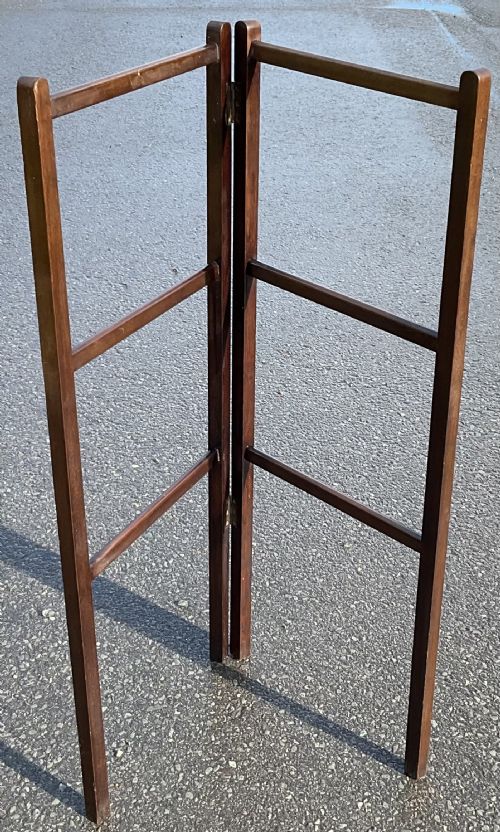
Finer examples integrate decorative elements like satinwood inlay and boxwood stringing into the timber frame. Brass fittings appear on select models to secure folding hinges or structural joints.
The listings feature pieces spanning the Regency period, the Victorian era, and the Edwardian years, constructed in mahogany, oak, pine, and hardwood.
What varies in quality
Quality rests upon the choice of timber and the crispness of any decorative inlay work. Pieces featuring rich mahogany or detailed satinwood inlay demonstrate superior craftsmanship compared to plain utility pine variants.
The rigidity of the standing frame and the balance of the multiple rails dictate the overall execution. Sturdier joints and thoughtful proportions distinguish the finer workshop output from simpler domestic furniture.
The Vintage Quilt Rack Glossary
- Edwardian
- A period spanning the early twentieth century defined by lighter furniture forms and refined decorative details.
- Mahogany
- A durable tropical hardwood prized for its deep reddish-brown tone and smooth grain. It forms the primary material for most better standing rails.
- Satinwood Inlay
- A contrasting light wood veneer embedded into the darker primary timber surface. This technique adds decorative geometric or floral motifs.
- Towel Rail Stand
- A freestanding wooden frame with horizontal bars designed for holding and airing fabrics. These serve the primary function associated with the search phrase.
Vintage Quilt Rack: Frequently Asked Questions
What are vintage quilt racks used for today?
These practical stands serve wonderfully for hanging quilts, blankets, and towels in bedrooms or bathrooms. They provide an accessible way to display textiles while keeping them aired.
Beyond functional storage, they introduce traditional wooden texture to modern interiors. Many people utilise them in guest rooms for displaying extra throws.
How do I tell Edwardian from Victorian pieces?
Edwardian stands generally display lighter proportions and brighter mahogany tones, sometimes featuring delicate satinwood inlay. Victorian pieces tend to be heavier and more robust in construction.
Examining the timber grain and any decorative banding helps reveal the specific period of manufacture. Earlier Regency examples often show bolder architectural lines.
Are these stands sturdy enough for heavy quilts?
Most hardwood versions possess robust frames built to handle substantial household textiles without difficulty. Oak and mahogany models offer the greatest stability for heavier items.
Lighter pine or folding variations suit delicate linens and standard towels better. Checking the rigidity of the side supports ensures safe daily usage.
How do I care for mahogany and oak frames?
Maintain the timber by dusting regularly with a dry cloth to prevent surface grit accumulation. Periodically applying a quality beeswax nourishes the grain and preserves the finish.
Keep the stands away from direct heat sources and excessive moisture to protect the joints. Gentle care preserves the historical patina of the wood.