



Vintage Pottery Set
These vintage pottery set collections bring together grouped vessels and tableware from the nineteenth and early twentieth centuries, offering matching surfaces for display or daily service.
Vintage Pottery Set
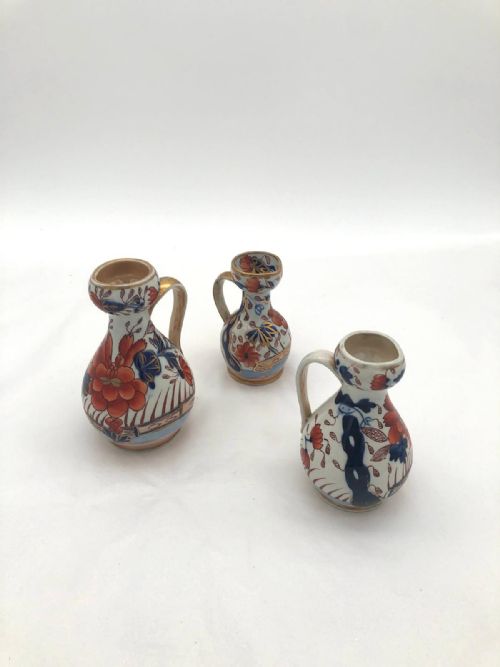
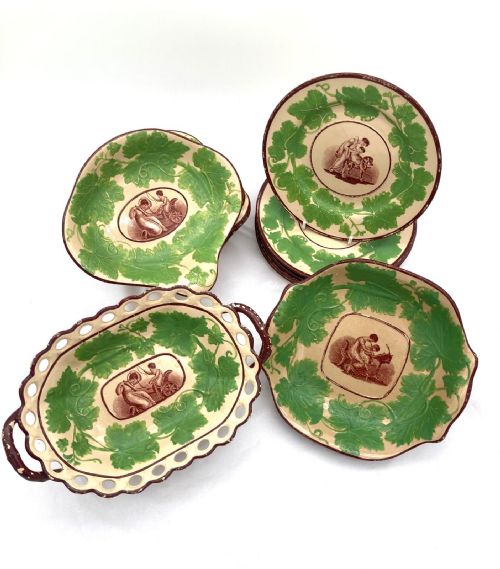
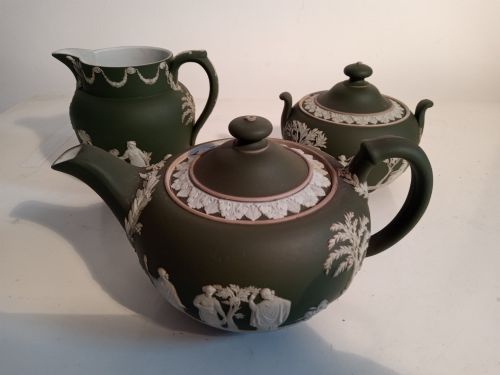
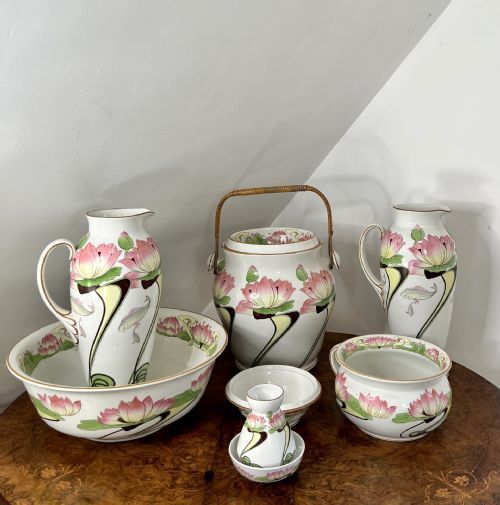
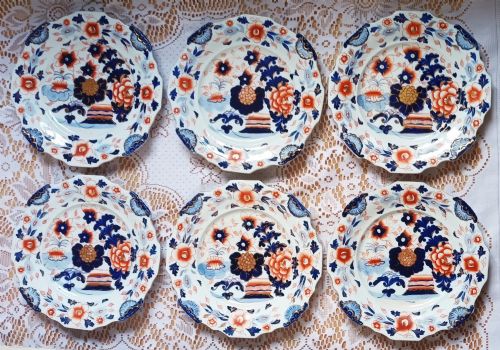
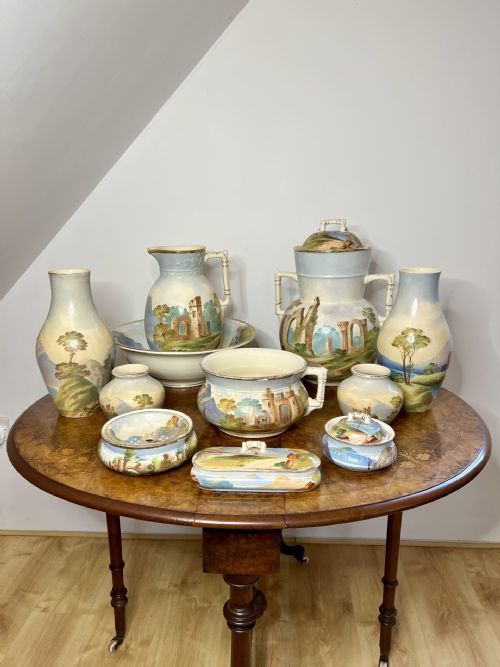
A vintage pottery set encompasses coordinated groupings of ceramics, earthenware, ironstone, and porcelain designed for tea service, washing, dining, and desktop use. Buyers examining this page encounter pieces ranging from Victorian toilet sets and Edwardian bathroom sets to Art Deco tea services and nineteenth-century dessert services.
The selections span diverse manufacturing traditions, including English ironstone, Dutch Delft, French faience, German steins, and Japanese Satsuma or Imari wares. Matching plates, graduated jugs, and bowls dominate the forms, reflecting how households historically purchased ceramics in functional groups.
Dated examples stretch from the mid-nineteenth century through the 1930s, capturing shifts from formal Victorian and Georgian aesthetics toward the geometric patterns of the Art Deco period. These groupings preserve historical domestic routines, whether through complete tea sets or sets of botanical plates.
Materials and production methods
Potters constructed these sets using dense earthenware, ironstone, heavy stoneware, and porcelain, applying coloured glazes, enamel pigments, and occasionally gold leaf for decoration. Many items utilise hand-painted designs or transfer printing, such as bar-printed motifs and blue and white patterns transferred onto the clay body before firing.
Specialised techniques defined specific regional workshops, from the rich majolica lead glazes and lustre finishes to the distinctive crackle glazes of Japanese Satsuma wares. Firing processes required precise kiln temperatures to fix complex enamel palettes and protective glaze coatings onto the ceramic substrate.
Vintage Pottery Set Retail Price Guide 2026
Typical asking prices for vintage pottery set among the pieces listed under this phrase on Sellingantiques today, from the lower quarter to the upper quarter. They describe what is for sale here now, not the wider market.
Listings feature ceramics spanning the eighteenth, nineteenth, and early twentieth centuries, incorporating earthenware, porcelain, ironstone, and stoneware.
Assessing quality and execution
Quality in a set rests upon the crispness of the moulding, the alignment of transfer-printed patterns, and the control shown in hand-painted enamel work. Superior examples exhibit uniform glaze coverage without pooling or dry patches, alongside well-defined relief modelling on ironstone jugs and earthenware bowls.
The cohesion of the group dictates desirability, particularly in multi-piece tea services or graduated jugs where matching hues and intact patterns across every component maintain the integrity of the original manufacture.
Mason's Ironstone·Wedgwood·Booths·Doulton Lambeth·Kinkozan·Clarice Cliff·Doulton Burslem·Davenport·Shelley·Copeland Spode·Poole Pottery·Elkin & Newbon
The Vintage Pottery Set Glossary
- Ironstone
- A patented ceramic body invented in the nineteenth century that combined durability with the refined appearance of porcelain. It provided a sturdy surface for heavy-use items like jugs and dinner services.
- Earthenware
- A porous pottery body fired at lower temperatures, requiring an impermeable glaze to hold liquids. It forms the base for much nineteenth-century domestic tableware.
- Majolica
- A type of earthenware covered with an opaque tin glaze and painted with brightly coloured metallic oxide pigments. It gained popularity during the Victorian era for decorative bowls and servers.
- Graduated
- Refers to a set of vessels, such as jugs or bowls, made in nested sizes that scale down proportionally from largest to smallest. They were typically designed to store inside one another when not in use.
Vintage Pottery Set: Frequently Asked Questions
How do I care for antique ceramic sets?
Wash delicate pieces by hand in warm water using mild soap, avoiding abrasive scrubbers or modern dishwashers that can damage historic glazes and enamel decoration. Dry them thoroughly with a soft cloth before storage.
Display sets away from direct sunlight and dramatic temperature fluctuations to prevent crazing in the glaze over time.
Were these sets meant for daily use?
Many of these groupings served practical daily functions in nineteenth- and twentieth-century households, from washing up in bedrooms to serving tea in drawing rooms. Ironstone and stoneware pieces handled heavy kitchen and dining tasks, while porcelain and lustre sets were reserved for formal occasions.
Today, owners often balance gentle functional use with careful preservation.
How do I date a vintage pottery set?
Examine the base of the pieces for maker's marks, registration numbers, or impressed factory stamps that correspond to specific historical production periods. Stylistic cues like Victorian ornamentation, Edwardian floral motifs, or Art Deco geometric forms also point to specific decades.
Matching the materials, such as early ironstone versus later earthenware, narrows the manufacturing window further.
What is a graduated jug set?
A graduated jug set consists of multiple vessels of identical shape made in progressively smaller sizes. They were manufactured to nest together for compact storage on pantry shelves.
Victorian households used these sets for various kitchen and dairy tasks, relying on the different capacities for measuring and pouring.