


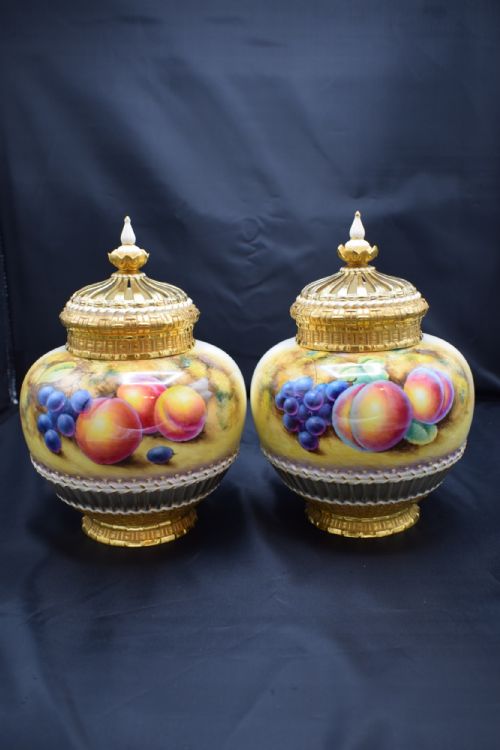


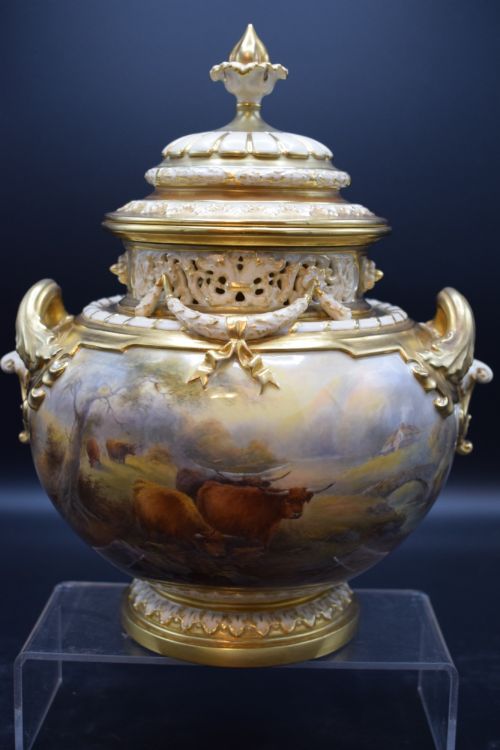
Vintage Pot Pourri Jars
Vintage pot pourri jars are fragrant containers designed to hold dried flowers and spices, bringing traditional scent and ornamental detail into a room.
Vintage Pot Pourri Jars
When you search for vintage pot pourri jars, you encounter ceramic and porcelain vessels created to hold dried botanical mixtures for household fragrance. These items bridge decorative arts and practical function across multiple decades.
The pieces on this page span several eras including Georgian, Edwardian, Victorian, and mid twentieth century periods. You will frequently find works originating from English potteries, particularly featuring traditional floral and painted fruit designs.
Forms range from individual vases and urns with covers to matched pairs and three piece garnitures. Each vessel incorporates pierced or perforated lids designed to release scented air into the room.
How they were made
Maker operations utilised fine porcelain, ironstone, and earthenware as the foundational bodies for these decorative vessels. Potters shaped these ceramic materials on wheels or within moulds to achieve symmetrical jar and urn forms.
Surface decoration frequently involved hand painted botanical or fruit motifs combined with gold leaf, gilt highlights, and enamel colours. Artisans also applied gilding and delicate enamel work to accentuate the contours of the pierced covers.
Vintage Pot Pourri Jars Retail Price Guide 2026
Typical asking prices for vintage pot pourri jars among the pieces listed under this phrase on Sellingantiques today, from the lower quarter to the upper quarter. They describe what is for sale here now, not the wider market.
Listings feature porcelain, ironstone, and earthenware materials across Georgian, Victorian, Edwardian, and mid twentieth century periods.
What varies in quality
The distinction between standard and superior pieces rests heavily upon the skill of the artist and the complexity of the painted decoration. Hand painted fruit and floral scenes executed by named artists command greater attention than simple transfer printed designs.
The integrity of the body and the delicacy of the pierced work on the covers define the manufacturing standard. Finely detailed moulding, substantial application of gold leaf, and intact original covers elevate the standing of a piece.
Royal Worcester·Masons Ironstone·Moorcroft Macintyre and Co
The Vintage Pot Pourri Jars Glossary
- Pot pourri vase
- A ceramic vessel featuring a pierced lid designed specifically for holding and releasing the scent of dried flower petals and spices.
- Ironstone
- A heavy, durable type of earthenware developed in England that provides a sturdy body for decorative household items.
- Gilt
- A thin layer of gold applied to the surface of porcelain or ceramic to create ornamental highlights and borders.
- Enamel
- A glass based substance fused to ceramic surfaces under heat to produce vibrant, durable colours in painted designs.
Vintage Pot Pourri Jars: Frequently Asked Questions
What is a pot pourri jar?
A pot pourri jar is a lidded ceramic or porcelain vessel constructed with pierced openings in the top. These holes allow fragrance from dried flowers and spices placed inside to drift into the surrounding space.
Historically placed in principal rooms, these containers combined decorative appeal with the practical purpose of freshening indoor air before modern ventilation.
How do I clean a vintage jar?
Cleaning requires gentle dusting with a soft, dry cloth to protect delicate painted surfaces and gold leaf accents. Avoid immersing older ceramics in water, particularly if they feature hand painted enamels or gilt highlights.
If the interior requires cleaning due to old botanical residue, use a barely damp cotton swab and dry the ceramic immediately afterward.
Are the covers usually original?
Many surviving pieces retain their original matching covers, which is essential for maintaining the intended silhouette and completeness of the vessel. Pierced lids experienced high risk of breakage due to their delicate construction.
Examining the interior rim and the ceramic body helps determine whether a lid belongs to the specific jar or urn.
How do I date these ceramics?
Dating relies upon factory backstamps, stylistic markers, and the specific composition of the ceramic body. Victorian, Edwardian, and mid twentieth century examples often carry printed or impressed manufacturer marks on the base.
Comparing the painting style, such as fruit motifs or floral transfer patterns, against known production periods provides a reliable timeline.