

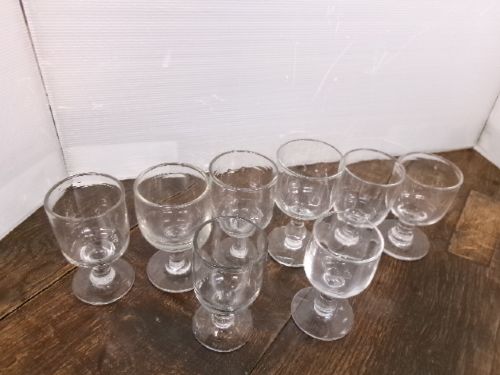



Vintage Port Glass
These vintage port glass pieces are historic drinking vessels and decanters from Georgian, Regency, and Victorian periods that bring genuine period character to the table.
Vintage Port Glass
When you search for a vintage port glass, you encounter historic vessels designed for fortified wines and spirits across the Georgian, Regency, and Victorian eras. These items encompass small rummers, dessert wine glasses, coloured liquor glasses, and sherry glasses.
You are most likely to meet Victorian and Georgian examples on this page, often appearing as matched pairs or small sets. Forms range from handled dessert wine glasses to three-ring Prussian style decanters fitted with stoppers.
The material origins trace through English glasshouses utilising lead crystal, clear glass, cut glass, and striking coloured glass such as aqua green and deep green. Alongside the glasses themselves, the selection includes spirit decanters mounted with sterling silver.
How they were made
Maker operations relied on traditional glass-blowing and cutting techniques, shaping lead glass and clear glass into robust vessels and decanter bodies. Skilled artisans applied surface decoration including facet cutting, three-ring necks on decanters, and fine etching.
Coloured glass was achieved through chemical additions to the molten batch, producing rich green and aqua hues seen in Victorian dessert wine glasses. Silver components on spirit bottles integrate metalworking traditions alongside blown glass containers.
Vintage Port Glass Retail Price Guide 2026
Typical asking prices for vintage port glass among the pieces listed under this phrase on Sellingantiques today, from the lower quarter to the upper quarter. They describe what is for sale here now, not the wider market.
What varies in quality
Quality differences lie in the crispness of the glass cutting, the clarity of the metal, and the depth of colour in tinted wares. Superior pieces display precise wheel-cut facets and well-balanced proportions that demonstrate exceptional craftsmanship.
The weight of the lead crystal and the harmony of matched sets dictate the tier of the piece. Subtle details such as hand-etched motifs and cleanly fitted original stoppers elevate the standing of decanters and glassware alike.
The Vintage Port Glass Glossary
- Lead crystal
- Glass containing a proportion of lead oxide, which increases brilliance, weight, and resonance. This material allows for deeper, sharper facet cutting.
- Prussian decanter
- A specific bottle shape featuring a tapering body and multiple horizontal neck rings. These rings provided a secure grip for pouring.
- Rummer
- A sturdy, large-bowled drinking glass popular in the Georgian and Victorian periods. They were traditionally used for ale, wine, and punch.
- Stopper
- The ground-glass plug designed to seal a decanter neck tightly and preserve the contents. Original matched stoppers add notable integrity to antique bottles.
- Etched glass
- Glass decorated by applying acid to eat away the surface design. This technique creates delicate frosted patterns against clear or coloured walls.
Vintage Port Glass: Frequently Asked Questions
What is a vintage port glass?
A vintage port glass is a historic drinking vessel produced during periods such as the Georgian, Regency, and Victorian eras. These items include small rummers, dessert wine glasses, and coloured liquor glasses shaped for fortified wines.
They reflect the dining customs of past centuries, offering distinct forms that differ significantly from modern glassware.
How do I identify a Georgian decanter?
Georgian decanters often feature distinctive characteristics such as three-ring necks in the Prussian style and heavy lead glass construction. These pieces were engineered to hold spirits securely and pour cleanly at the dining table.
Examining the base and the stopper fit helps confirm the period origins of these decanters.
Were these glasses used only for port?
While associated with port and heavier wines, the historical glassware served multiple purposes including sherry, brandy, and general dessert wines. Smaller glasses accommodated the stronger spirits and fortified wines consumed after meals.
Decanters listed alongside these glasses similarly held various spirits depending on household needs.
How should I care for antique glassware?
Antique glassware and crystal require gentle hand washing in lukewarm water with mild detergent. Avoid sudden temperature changes to prevent thermal shock and potential cracking of the old glass.
Storing decanters with the stoppers slightly loose helps protect the ground glass joints over time.