


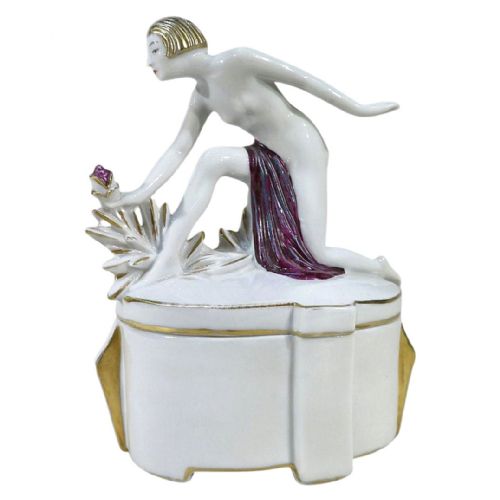

Vintage Porcelain Vanity Jar
A vintage porcelain vanity jar is a charming dressing table essential that brings period character and practical storage to your bedroom.
Vintage Porcelain Vanity Jar
A vintage porcelain vanity jar is designed for holding dressing table necessities such as powder, puffs, and trinkets. These pieces survive most commonly from the 1930s in the Art Deco style, reflecting the glamour of the period.
Materials and Construction
These items are shaped from porcelain, ceramic, and earthenware, then finished with a smooth glaze. Many pieces incorporate enamel decoration alongside gold leaf or gilt details to highlight the moulded forms.
Makers utilised fabric in conjunction with ceramic elements, particularly for powder puff stands and half doll dress components. The construction combines traditional ceramic casting with detailed hand-painting and gilding.
A jaunty jester peers out from the vanity top, reminding us that 1930s powder storage took its entertainment very seriously indeed.
Assessing Quality and Execution
The distinction in quality rests upon the precision of the modelling and the finesse of the hand-painted enamel work. Superior examples exhibit crisp facial expressions on figural pieces and clean application of gilt and gold leaf.
Origin also plays a part, with established European potteries demonstrating finer ceramic bodies and more intricate glazing techniques. The complexity of the subject, such as figural flapper girls and jesters, demands greater skill from the decorator.
Fasold and Stuach·Limoges
The Vintage Porcelain Vanity Jar Glossary
- Half doll
- A ceramic torso without legs, commonly made as a decorative top for powder brush handles, tea cosies, or powder box lids.
- Flapper
- A style archetype representing the liberated young women of the 1920s and 1930s, frequently depicted on vanity jars with bobbed hair and stylish hats.
- Gilt
- A thin layer of gold applied to the surface of porcelain or ceramic to accentuate moulded details and rims.
- Chinoiserie
- A decorative style reflecting European interpretations of Chinese and East Asian artistic traditions, seen in motifs like the black dragon.
- Enamel
- Opaque glassy material fused to the surface of ceramics through firing, adding vibrant colour to patterns and figures.
Vintage Porcelain Vanity Jar: Frequently Asked Questions
What were vintage vanity jars used for?
These jars served practical functions on dressing tables to hold loose face powder, cotton wool, or small pieces of jewellery. They kept daily cosmetic items neatly contained while adding a decorative touch to the room.
Ladies utilised the matching bowls and stands with powder puffs for applying cosmetics during grooming routines. Many also doubled as novelty ornaments when not in active use.
How do I identify an Art Deco vanity jar?
Art Deco vanity jars typically feature stylised geometric motifs, bold enamel colours, and figures such as flapper girls or pierrots. The styling reflects the modern aesthetic of the 1930s.
Look for streamlined shapes and characteristic ceramic moulding that typifies European production from this era. Maker marks on the underside can also confirm the period.
Where were these porcelain jars made?
The pieces originate primarily from European ceramic manufacturing centres in France, Germany, and Austria. Prominent porcelain houses and regional potteries produced these decorative items for the domestic and export markets.
French pieces frequently hail from Limoges, while various German and Austrian workshops specialised in figural half doll designs. Each region brought distinct decorating styles to the finished objects.
How do I style a vanity jar at home?
Place vanity jars on a dressing table, chest of drawers, or bathroom shelf to introduce period colour and texture. They work well grouped with other ceramic accessories or displayed on a mirrored tray.
Lid placement can vary depending on whether you wish to display the interior bowl or keep the figural top intact. Use them to store small everyday items while keeping surfaces tidy.