



Vintage Porcelain Teacup Set
These vintage porcelain teacup set examples bring historical charm and refined craftsmanship to the table.
Vintage Porcelain Teacup Set
A vintage porcelain teacup set comprises matching cups, saucers, and sometimes broader service pieces designed for social gatherings and daily hospitality. Collectors encounter various forms, from single trios to extensive multi-person services intended for afternoon tea.
The pieces span multiple eras, including Victorian, Edwardian, and Art Deco periods, originating from English, European, and Asian potteries. Buyers most frequently meet twentieth-century services alongside nineteenth-century breakfast sets and individual cups.
Production ranges from delicate bone china teacups to robust ironstone compositions and export porcelain wares. Each set reflects the social dining habits and aesthetic preferences of its specific decade of manufacture.
Assessing quality and execution
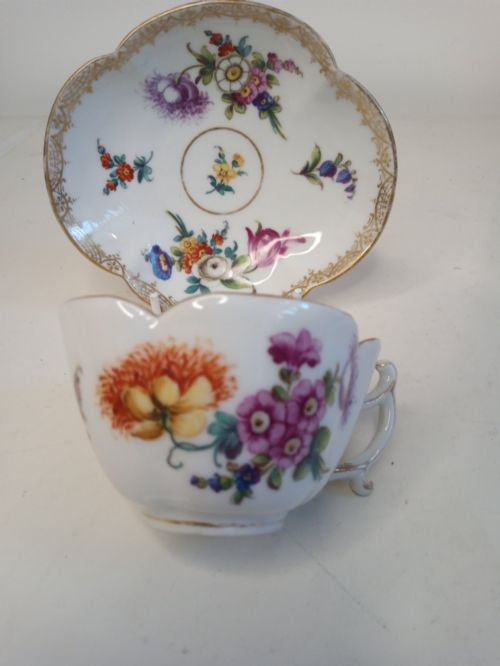
Quality rests upon the fineness of the porcelain body and the precision of the hand-painted or transferred artwork. Superior sets exhibit crisp execution in intricate patterns such as 'Bat Wing' or hand-painted birds and florals, showing great dexterity by the decorator.
The application of gold leaf and gilding dictates the overall refinement of a service, with heavier, more detailed burnished gold elevating the piece. The translucency of the bone china and the uniformity of the glaze further distinguish standard commercial production from master workshops.
Vintage Porcelain Teacup Set Retail Price Guide 2026
Typical asking prices for vintage porcelain teacup set among the pieces listed under this phrase on Sellingantiques today, from the lower quarter to the upper quarter. They describe what is for sale here now, not the wider market.
Some nineteenth-century breakfast sets arrived equipped with unusually large cups, designed to satisfy morning appetites before the invention of the modern mug.
Royal Worcester·Royal Albert Crown China·Coalport·Shelley·KPM Berlin·Sutherland·Masons
The Vintage Porcelain Teacup Set Glossary
- Bone china
- A type of soft-paste porcelain containing bone ash, known for its high strength, chip resistance, and milky translucency. This material allowed makers to produce remarkably thin-walled teacups.
- Gilding
- The application of gold leaf or gold paint to the rims, handles, and surfaces of teacups and saucers. It adds a decorative metallic border that catches the light during tea service.
- Demitasse
- A small cup used for serving espresso or strong coffee, frequently found alongside tea sets in twentieth-century services. These diminutive vessels often feature matching saucers and delicate handle designs.
- Trio
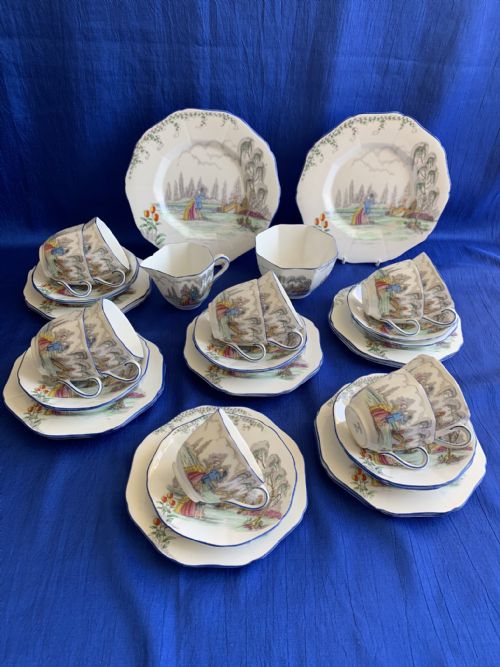
- A matching grouping consisting of a teacup, a saucer, and a corresponding tea plate. This combination formed the standard place setting for formal afternoon tea.
- Enamel
- Opaque glass-like pigments fused to the porcelain surface through firing to create colourful painted motifs. Artisans used enamel to render floral sprays, birds, and geometric patterns.
Vintage Porcelain Teacup Set: Frequently Asked Questions
How do I date a vintage porcelain teacup set?
Dating relies primarily on factory backstamps, ceramic bodies, and stylistic indicators such as Edwardian floral motifs or Art Deco geometric lines.
Comparing the shape of the handle and the type of gilding against known production periods helps narrow down the exact decade of manufacture.
Can I use these antique teacups for daily tea?
Many of these pieces remain durable enough for careful everyday use, provided they are washed by hand rather than placed in a machine.
Harsh detergents and sudden temperature changes can damage fragile overglaze enamels and delicate gold leaf decorations over time.
What is the difference between a tea set and a tea service?
A tea set typically refers to the core drinking vessels like cups, saucers, and plates intended for individual or group use.
A larger tea service often includes serving pots, sugar bowls, and cream jugs designed to entertain numerous guests at once.
How should I display my teacup sets?
Displaying sets in a dedicated cabinet protects them from accidental knocks while keeping them visible for daily appreciation.
Stacking cups should be avoided to prevent friction wear on the delicate gilded rims and painted surfaces.