


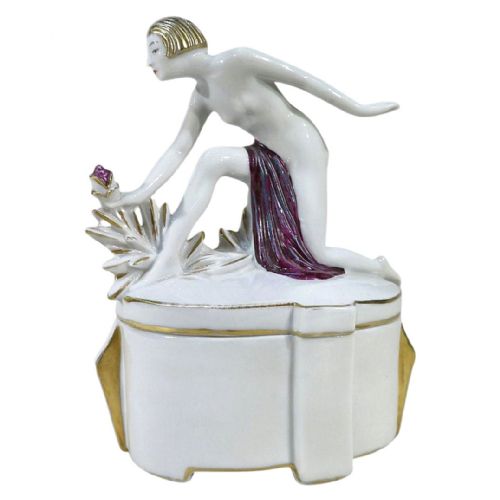


Vintage Porcelain Powder Bowl
A vintage porcelain powder bowl brings dressing table charm from the Art Deco era into a modern room.
Vintage Porcelain Powder Bowl
A vintage porcelain powder bowl is a decorative vanity container designed to hold cosmetic powder and dressing table items during the early twentieth century. These pieces primarily date from the nineteen thirties and capture the distinctive geometric and figurative aesthetics of the period.
The selection centres heavily on sculptural forms depicting flapper girls, pierrots, jesters, and half dolls mounted onto ceramic bases. Many originate from continental workshops in France, Germany, and Austria, reflecting European ceramic production of the interwar years.
Buyers encounter powder boxes, powder jars, and complete vanity sets that serve as functional trinket storage or decorative display objects. The assortment showcases how dressing table accessories combined practicality with whimsical character during the Art Deco movement.
Materials and construction
Gilt accents and fabric elements occasionally supplement the ceramic structures, adding textural contrast to the finished containers. Kiln firing fixed the coloured enamels and metallic highlights permanently onto the glazed surfaces.
Every listing in this selection dates from the nineteen thirties, representing Art Deco ceramic design from French, German, and Austrian makers.
Assessing quality and craftsmanship
Quality rests in the crispness of the mould and the precision of the hand-painted enamels on the figurative lids. Superior examples display sharply defined facial expressions and careful brushwork on the figures rather than soft outlines.
The choice of ceramic body and the smoothness of the glaze also separate standard production wares from finer pieces. Origin matters, with recognised French and German kilns typically demonstrating greater refinement in their porcelain paste.
Limoges
The Vintage Porcelain Powder Bowl Glossary
- Porcelain
- A hard, fine-grained ceramic material fired at high temperatures to create a vitrified, non-porous body. It provides a smooth white surface ideal for detailed enamel painting.
- Half doll
- A ceramic upper torso without legs, commonly manufactured in the early twentieth century as a decorative topper for powder boxes, whisk brooms, and tea cosies. These figures often portray fashionable women or theatrical characters.
- Enamel
- A glass-based decorative coating fused to the ceramic surface through kiln firing. It provides vibrant, permanent colour to the details of the figurines.
- Gilt
- A thin layer of gold applied to ceramic surfaces for decorative accent. It highlights the rims and decorative borders of the vessels.
- Earthenware
- A porous pottery body fired at lower temperatures than porcelain. It requires an opaque glaze to become completely water and powder resistant.
Vintage Porcelain Powder Bowl: Frequently Asked Questions
What is a vintage porcelain powder bowl used for?
These vessels originally held loose face powder on a dressing table, accompanied by a puff for application. They served as both functional cosmetic containers and decorative items in the bedroom.
Today, collectors use them to store small trinkets, jewellery, or hair accessories. Their decorative lids make them appealing display objects for dressing tables and mantlepieces.
How do I date a vintage powder bowl?
Dating relies heavily on stylistic markers from the Art Deco period, particularly the geometric lines and distinct fashion depicted in the figures. Most pieces from this category originate from around nineteen thirty.
Examining the ceramic body, glaze type, and any maker marks on the base helps narrow down the origin. French and German workshops during the interwar years left specific manufacturing traits that assist in identification.
Are the powder puffs usually included?
Original powder puffs rarely survive in usable condition due to the delicate nature of vintage fabrics. Most surviving containers are found without their original puffs or stands.
When fabric elements do accompany a ceramic base, they are treated as fragile historic textiles. Collectors generally focus on the condition of the porcelain lid and bowl rather than the presence of accessories.
How should I clean my powder bowl?
Cleaning requires gentle dusting with a soft, dry cloth to protect the painted enamels and gilt highlights. Moisture can damage old fabric components and residual powder cement inside the unglazed rims.
Harsh chemical cleaners and soaking must be avoided entirely because they degrade the vintage glaze and enamel decorations. Careful handling preserves the original painted details on the porcelain surface.