

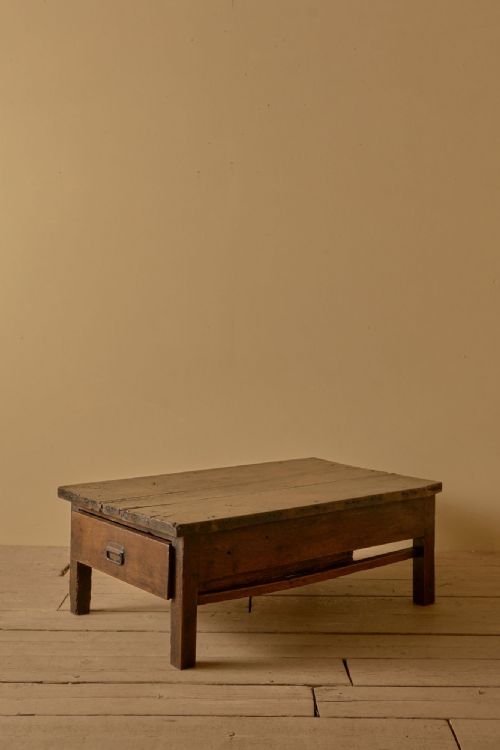
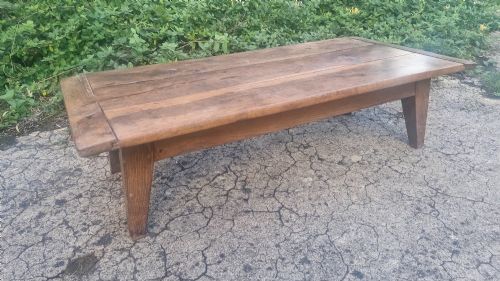
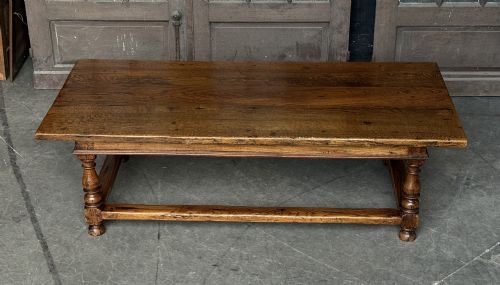
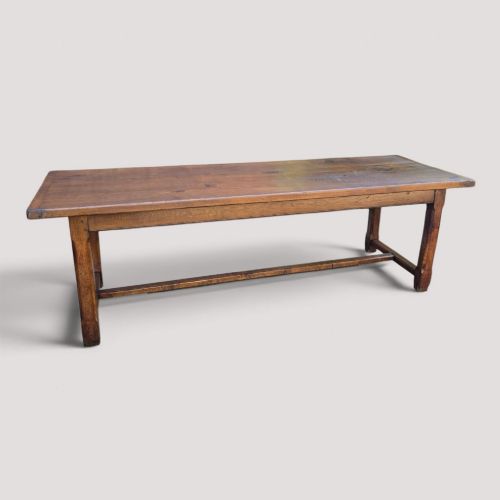
Vintage Plank Table
A vintage plank table brings honest timber and utility into a room, shaped by decades of daily service in kitchens and taverns.
Vintage Plank Table
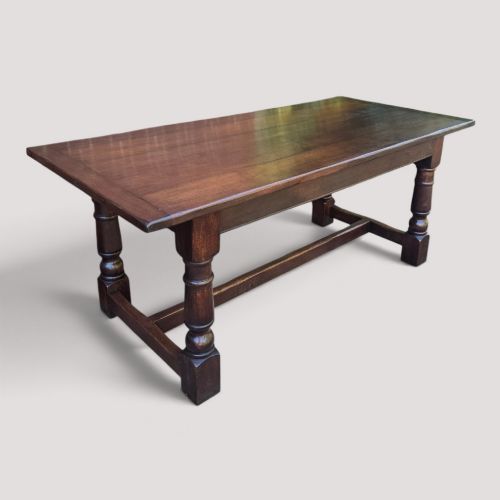
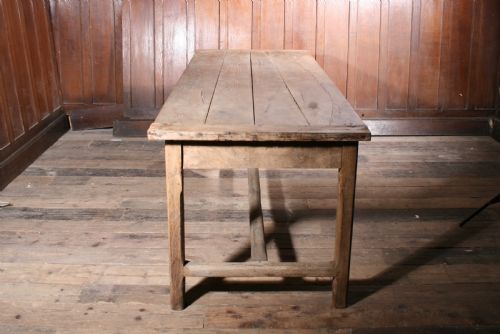
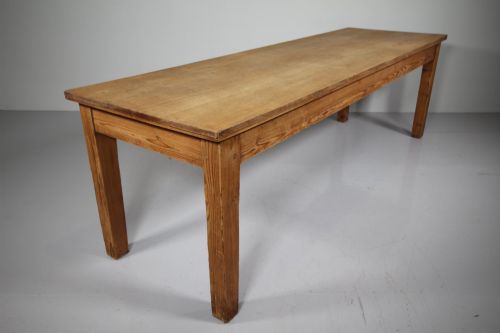
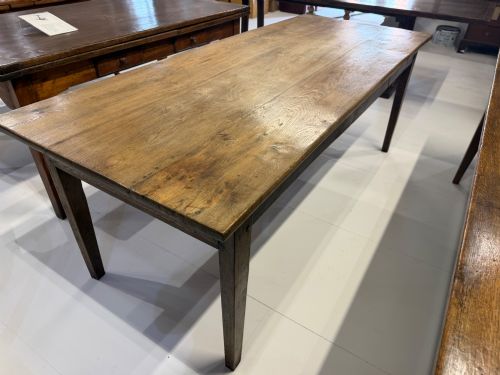
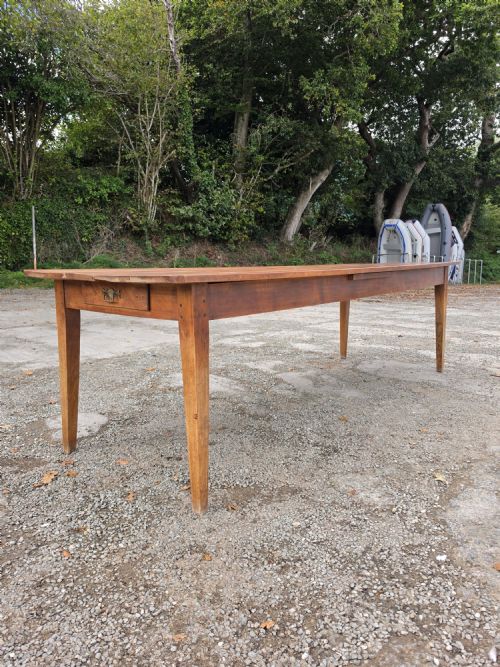
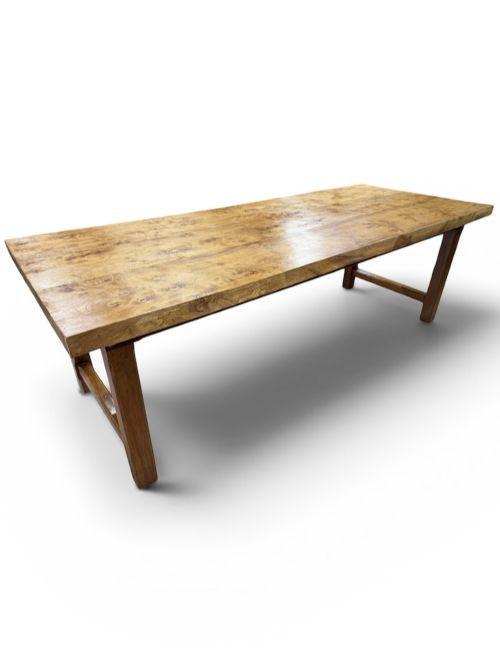
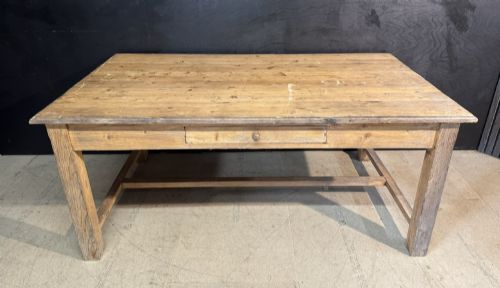
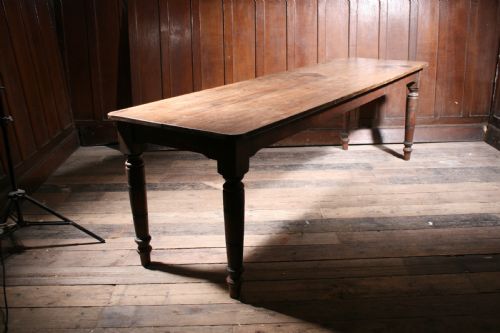
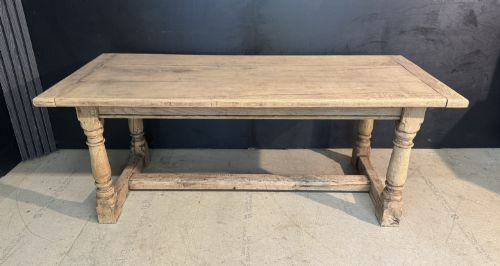
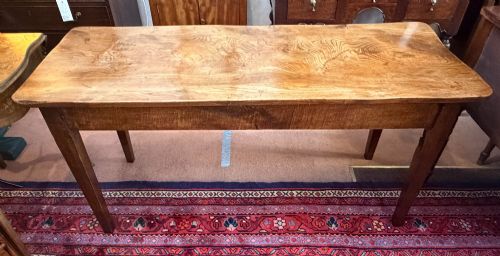
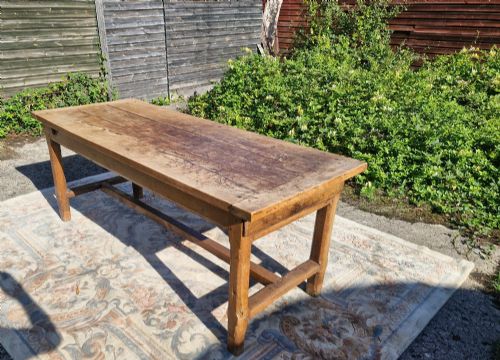
A vintage plank table is a utilitarian surface defined by solid timber boards joined to form a generous top, built primarily for communal dining, kitchen preparation, and tavern service. These pieces emerge from periods spanning the Georgian era through the early twentieth century, carrying the robust character of country workshops and rural houses.
The most common examples encountered on this page are sturdy farmhouse and refectory tables constructed from hearty woods like oak and pine. They often feature simple stretcher bases, trestle ends, or turned legs designed to support heavy daily use without fuss.
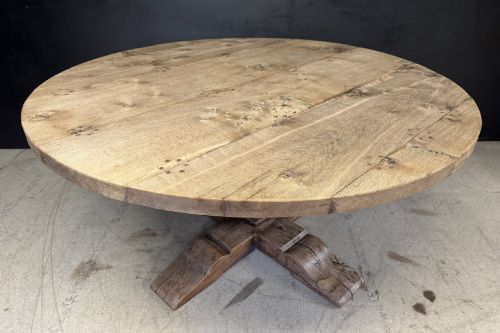
Buyers look for these tables to anchor modern or traditional spaces with genuine age and patina. The variety ranges from long, multi-board dining surfaces to smaller round kitchen tables and narrow benches.
Factors of quality
Quality in a plank table rests on the integrity of the timber selection and the balance of its proportions. Superior examples use thick, well-seasoned boards that have aged evenly without excessive warping, supported by sturdy framing that maintains absolute stability.
The presence of original surface treatments, such as weathered patinas and unblemished historical finishes, elevates a piece significantly. Finer construction shows careful attention to joint work, such as hand-pegged tenons and well-fitted drawers where integrated.
Vintage Plank Table Retail Price Guide 2026
Typical asking prices for vintage plank table among the pieces listed under this phrase on Sellingantiques today, from the lower quarter to the upper quarter. They describe what is for sale here now, not the wider market.
One listed chest-and-pine table incorporates eight separate drawers, proving that eighteenth-century cooks demanded serious organizational firepower.
Heals
The Vintage Plank Table Glossary
- Refectory table
- A long, narrow dining table traditionally used in monasteries and large halls. These pieces often feature stretcher bases for added stability.
- Plank top
- A table surface constructed from individual boards laid side by side. This method allowed makers to utilise wide timber sections.
- Pegged construction
- A method of joining wood using wooden pins rather than modern metal fasteners. This technique accommodates natural wood movement over time.
- Trestle ends
- Support structures positioned at either end of a table rather than corner legs. They provide maximum legroom along the length of the top.
- Patina
- The surface sheen and colour developed through years of use, cleaning, and exposure to light. It serves as a visual indicator of age.
Vintage Plank Table: Frequently Asked Questions
How do I clean a vintage plank table?
Wipe the surface with a damp cloth using mild soap, avoiding harsh chemical cleaners that strip the historic finish. Dry thoroughly to protect the grain of the wood.
Apply natural beeswax periodically to nourish dry timber and maintain a soft protective lustre without building up synthetic residues.
Are these tables suitable for daily dining?
These tables were originally built for heavy daily use in kitchens and dining rooms, making them inherently practical for modern meals. Their solid timber construction handles routine family life with ease.
Use coasters and placemats to protect the historic surface from excessive moisture and heat while enjoying the character of the aged wood.
How can I tell pine from fruitwood?
Pine is a softwood with a lighter, yellower tone and visible grain lines that often show knots and soft resin pockets. It feels softer to the touch.
Fruitwood is a denser hardwood with a tighter, smoother grain and warmer reddish or brown undertones developed through long exposure.
What is a peg-constructed joint?
Pegged construction involves drilling through joined pieces of timber and securing them with a close-fitting wooden dowel. This allows the frame to flex slightly with humidity changes.
Master carpenters used this method before modern glues and metal screws became common, ensuring structural longevity.