






Vintage Pine Low Table
A vintage pine low table brings practical warmth and rustic character to a room, offering a sturdy surface shaped by decades of honest use.
Vintage Pine Low Table
When you search for a vintage pine low table, you enter a diverse category of low-slung surfaces adapted from older utilitarian forms like benches, work tables, and scrub-top pantry tables. These pieces span the nineteenth century, the Edwardian era, and the early twentieth century, drawing on English, French, Scottish, Dutch, and Scandinavian country traditions.
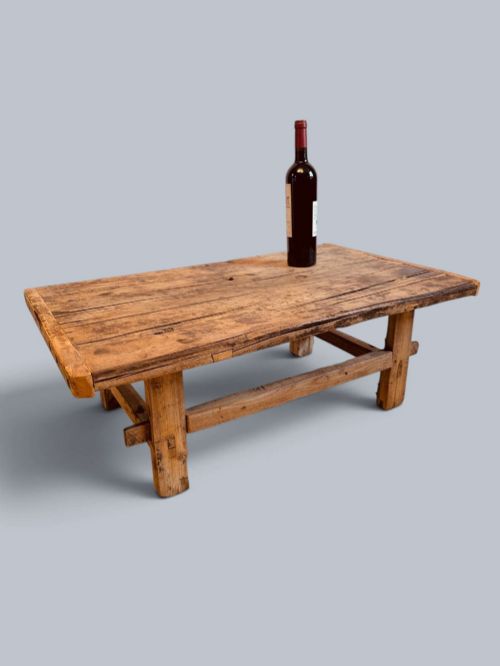
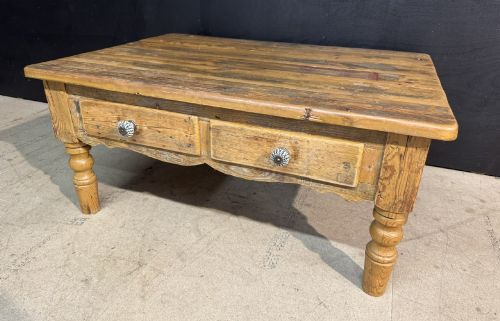
The version you are most likely to meet on this page is a coffee table or a low occasional table, often featuring turned legs, scrubbed tops, or painted finishes. Many originate as altered or purpose-built low tables, incorporating rustic farmhouse and primitive aesthetics suited to modern living spaces.
Makers and workshops across different regions produced these pieces using local softwoods and hardwoods, resulting in variations from simple box designs to trestle and coffee table formats. The selection ranges from unpainted waxed wood to distressed painted surfaces that reflect regional domestic habits.
Materials and construction
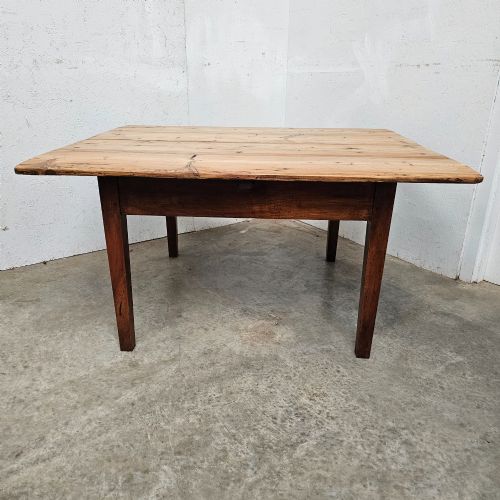
Construction relies primarily on solid pine, frequently paired with secondary woods like fruitwood, oak, sycamore, and elm, particularly in scrub tops and trestle structures. Joinery is straightforward and functional, designed to withstand daily domestic labour in kitchens, dairies, and workshops.
Surfaces are finished in various ways, including clear wax, historical paint layers, and bleached treatments that lighten the tone of the wood. Turned legs and sturdy aprons provide structural support without excess ornamentation, staying true to the utilitarian origins of the forms.
Vintage Pine Low Table Retail Price Guide 2026
Typical asking prices for vintage pine low table among the pieces listed under this phrase on Sellingantiques today, from the lower quarter to the upper quarter. They describe what is for sale here now, not the wider market.
One listed item is an original pine pig scratch from eighteen ninety, proving that even agricultural scratching posts make charming low tables today.
Judging quality in pine low tables
Quality in these pieces rests on the integrity of the timber, the honesty of the patina, and the proportion of the structure. Original scrub tops and authentic historical paint finishes hold more character than later interventions, while well-balanced turned legs indicate thoughtful rural carpentry.
The relationship between the top and the base dictates the overall harmony of the table, particularly in pieces adapted from benches, cobblers' benches, or work tables. A pleasing integration of proportion and surface wear distinguishes superior examples from simpler utilitarian conversions.
The Vintage Pine Low Table Glossary
- Scrub top
- A wooden table top cleaned repeatedly with water and a stiff brush, leaving a pale, textured surface. This method creates a clean, matte finish characteristic of dairy and pantry tables.
- Potboard
- A lower slatted shelf fitted between the legs of a dresser base or table. It was originally used for storing pots and pans off damp stone floors.
- Cobblers bench
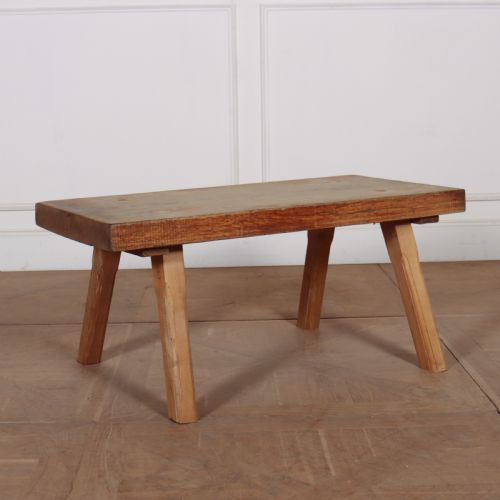
- A low wooden bench traditionally fitted with compartments and tool trays for shoe repair. In modern settings, these survive as low coffee tables with distinctive partitioned sections.
- Trestle table
- A table structure consisting of two or more supports connected by a horizontal beam. This design provides robust legroom and stability.
- Patina
- The surface sheen and colour acquired by wood through age, handling, and wax polishing. It serves as a visual record of the piece's history.
Vintage Pine Low Table: Frequently Asked Questions
Where did low pine tables come from?
Many low pine tables originate from repurposed domestic or workshop items such as cobblers' benches, work tables, and low pantry boards. Country homes across England, France, and Scandinavia adapted these sturdy functional objects for everyday use.
Over time, changing domestic habits transformed these low work surfaces into popular coffee tables that suit contemporary living rooms.
How do I clean a waxed pine table?
Clean waxed pine gently using a soft, dry cloth to remove dust and everyday particles. Avoid harsh chemical cleaners that strip the protective wax layer and dry out the old timber.
Apply a traditional beeswax polish occasionally to nourish the wood and maintain a soft, natural sheen across the surface.
Are scrub top tables practical for daily use?
Scrub top tables offer a durable, tactile surface that handles everyday use well because the wood has already weathered decades of active service. The pale, unvarnished finish resists minor marks gracefully if tended with care.
Using coasters and placemats helps protect the historical timber from staining while allowing the natural grain and texture to remain visible.
How do I date an old pine table?
Dating relies on examining the construction methods, tool marks, types of screws or nails, and the natural ageing of the pine. Hand-turned legs, historical paint layers, and deep wax patinas point toward nineteenth-century or Edwardian origins.
Comparing the form to known regional styles, such as French primitive or Scottish country furniture, helps narrow down the probable period.