

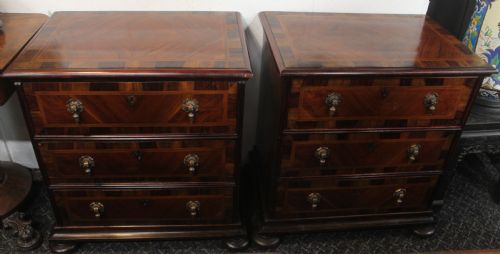
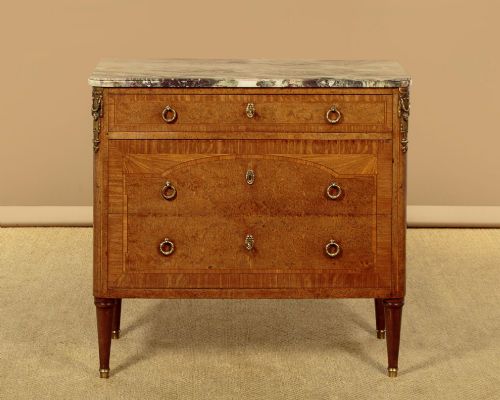
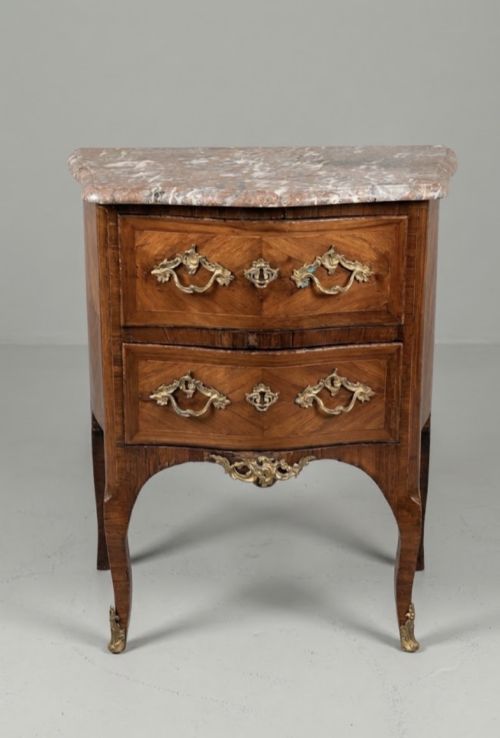
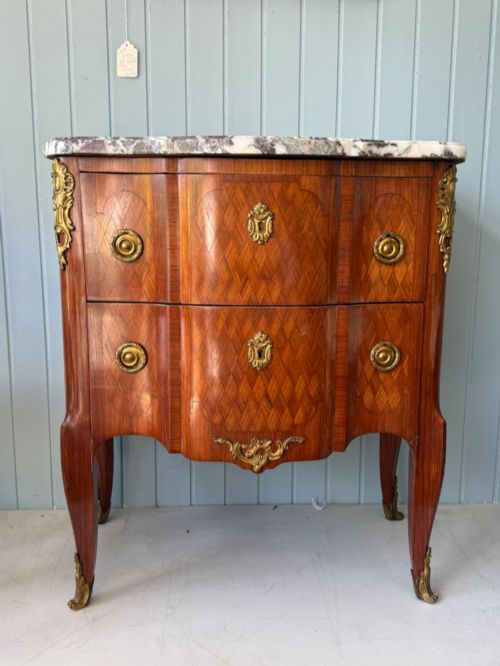


Vintage Parquetry Commode
A vintage parquetry commode brings geometric wooden patterns and heavy marble tops into a room, offering serious storage with French flair.
Vintage Parquetry Commode
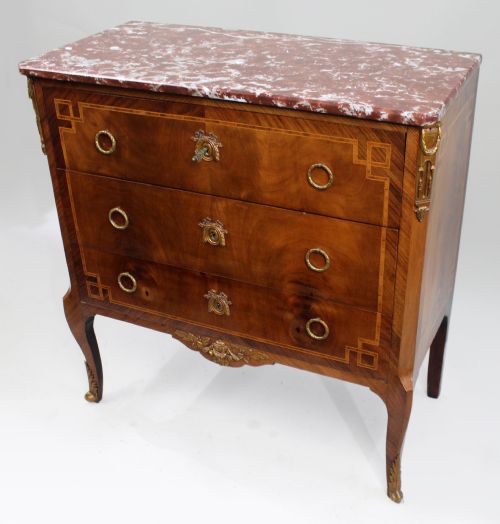
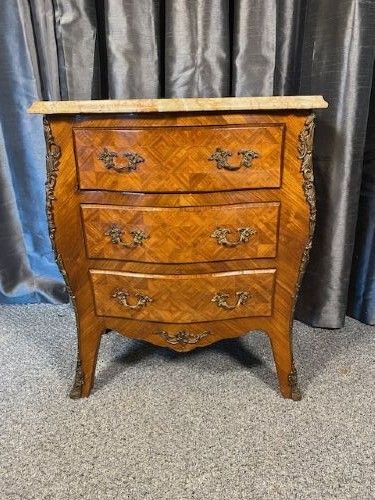
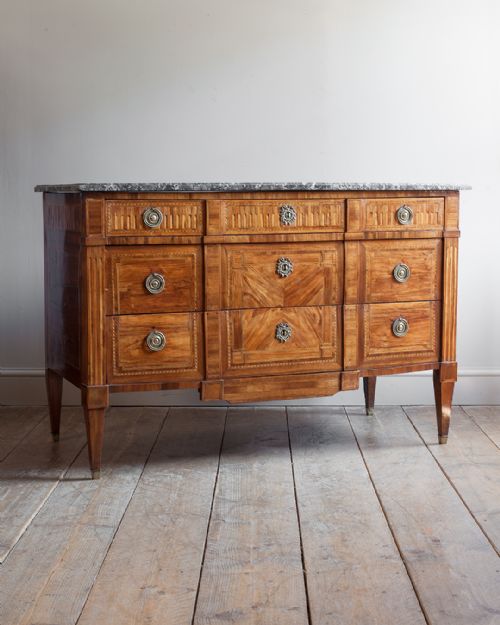
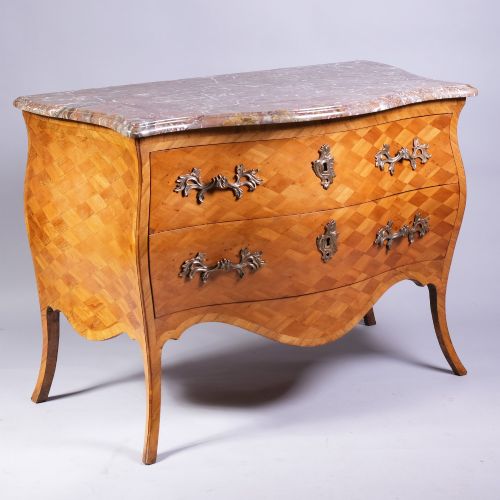
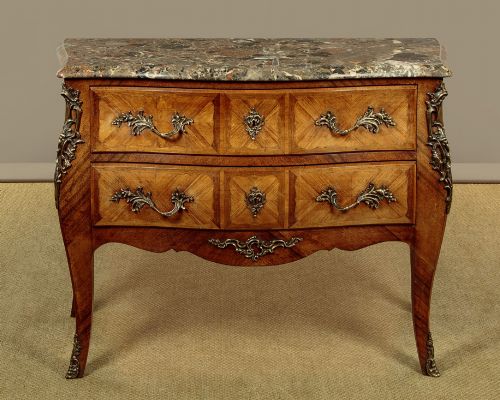
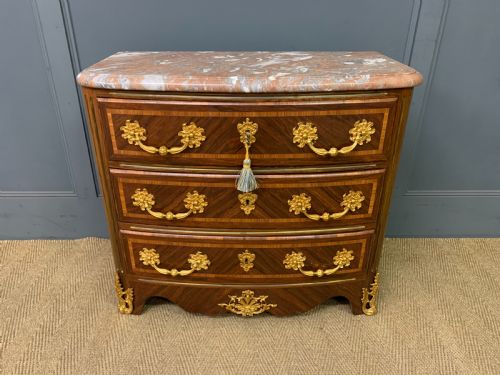
A vintage parquetry commode is a low storage chest designed with patterned wood veneers on the drawer fronts and sides, usually topped with a thick slab of stone. These pieces draw heavily on continental design traditions, particularly French styles from earlier centuries reinterpreted across the nineteenth and early twentieth centuries.
The versions most commonly found here date from the nineteenth and early twentieth centuries, spanning revival periods like Louis XV and Louis XVI alongside early twentieth-century decorative arts. They take various forms, from serpentine fronts and bombe profiles to smaller bedside cabinets and secretaire chests.
Makers of these items utilised geometric wood arrangements such as cubes and herringbones rather than pictorial scenes, setting them apart from purely marquetry decorated furniture. They function primarily as decorative storage units in bedrooms, hallways or reception rooms.
How They Were Made
Cabinet makers constructed the carcasses using native and exotic timbers, laying down thin veneers of kingwood, walnut, satinwood, mahogany, rosewood and tulipwood in precise geometric parquetry patterns. These woods were carefully selected for contrasting tones to create the illusion of three-dimensional depth across the drawer fronts and sides.
Heavy marble slabs, sometimes in rouge or scagliola varieties, were shaped and polished to sit directly on the wooden carcase tops. Ormolu and brass mounts, cast in bronze, were then applied to the corners, apron mounts and drawer pulls to accent the structural lines.
Vintage Parquetry Commode Retail Price Guide 2026
Typical asking prices for vintage parquetry commode among the pieces listed under this phrase on Sellingantiques today, from the lower quarter to the upper quarter. They describe what is for sale here now, not the wider market.
Listings feature commodes spanning the eighteenth century through to the 1930s, constructed in kingwood, walnut, satinwood and mahogany with marble tops.
What Varies in Quality
Quality rests upon the precision of the veneer work and the choice of timbers used in the parquetry layout. Finer examples display tight, uniform geometric alignments with rich hardwoods like kingwood and walnut, whereas simpler pieces rely on basic mahogany or cherrywood.
The weight and finish of the marble top and the cast quality of the ormolu mounts signal the tier of the piece. Crisp, finely chased bronze mounts and thick, unblemished stone indicate superior workshop production compared to lightweight pressed brass and thin, utility-grade marble.
The Vintage Parquetry Commode Glossary
- Parquetry
- Geometric wood mosaic work formed by fitting small veneer pieces together into patterns like cubes or bricks. This technique provides the primary decorative surface on the front and sides of these chests.
- Ormolu
- Gilded bronze mounts applied to furniture for decorative enrichment and edge protection. It appears frequently on the corners and feet of revival commodes.
- Bombe
- A swollen or bulging outward curve to the front and sides of a chest of drawers. This curvaceous silhouette requires advanced woodworking skill to veneer accurately.
- Serpentine
- A furniture front featuring a concave centre flanked by two convex ends, creating a gentle wave shape. It marks a departure from flat-fronted case furniture.
- Scagliola
- A composite material made from selenite, glue and pigments, mimicking marble and other fine stones. It was often used for decorative table and commode tops.
Vintage Parquetry Commode: Frequently Asked Questions
What is a parquetry commode?
A parquetry commode is a decorative set of drawers finished with geometric wood veneer patterns. These low storage cabinets often feature contrasting timbers and stone tops.
Originating in continental cabinetmaking traditions, they serve as both functional furniture and decorative focal points in interiors.
How do I style a commode?
These chests work well in bedrooms, hallways and living spaces where surface area and low storage are required. Place a lamp or decorative objects on the marble top while utilising the drawers for linen or daily items.
Pare the rest of the room's decor back to let the detailed wood patterns and ormolu mounts stand out clearly.
How do I tell Louis XV and Louis XVI styles apart?
Louis XV style pieces are characterised by flowing curves, bombe profiles and asymmetrical rococo mounts. The lines are organic and rounded throughout the frame.
Louis XVI style moves towards straight lines, symmetrical geometry and neoclassical fluting. The legs become straighter and the overall silhouette is more restrained.
What woods are used in these cabinets?
Cabinet makers used a range of decorative hardwoods including kingwood, walnut, satinwood, rosewood and tulipwood. These were chosen for their natural colour variations and grain patterns.
The timbers were sliced into thin veneers and arranged meticulously to build up the geometric parquetry designs.