





Vintage Panel Ring
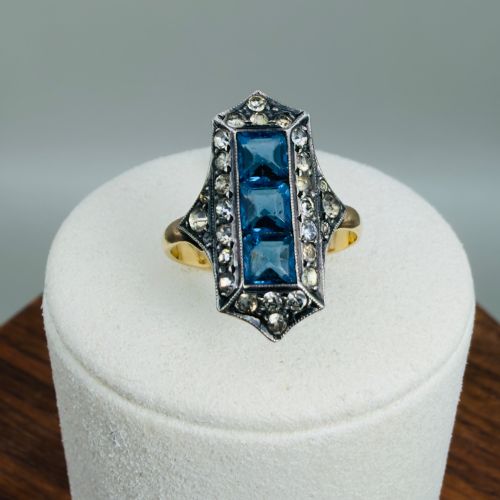
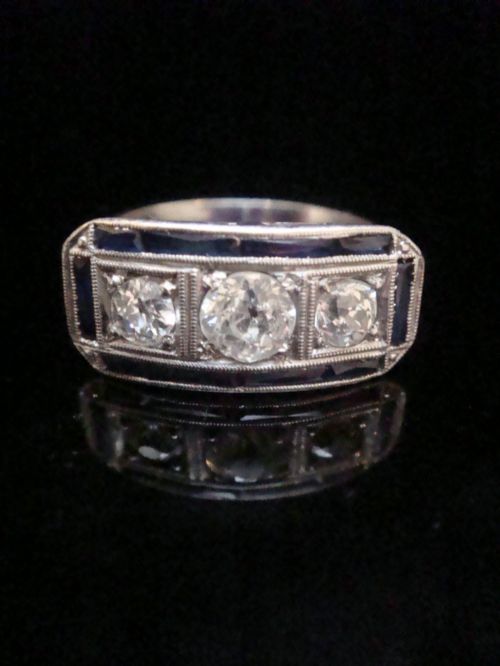
A vintage panel ring sits flat upon the finger, drawing the eye across geometric arrangements of diamonds and coloured stones.
Vintage Panel Ring
A vintage panel ring presents a broad, flat face across the finger, showcasing symmetrical designs built from precious stones and metals. These pieces emerge predominantly from the Art Deco period, alongside Edwardian, Victorian, Mid-Century, and 1950s Retro eras.
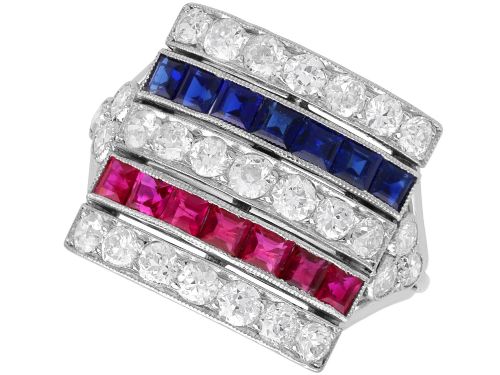
The most common version met on this page is the Art Deco platinum or gold ring featuring diamonds alongside sapphires, rubies, or emeralds. Such jewels take the form of elongated plaques, rectangles, or clusters designed to create maximum visual impact on the hand.
How they were made
Goldsmiths utilised platinum and various grades of gold, including 18ct gold, 18ct white gold, 14ct gold, and 9ct gold, as the foundational structures for these jewels. Platinum provides the strength required for delicate pierced galleries and secure claw or bezel settings without adding excessive bulk.
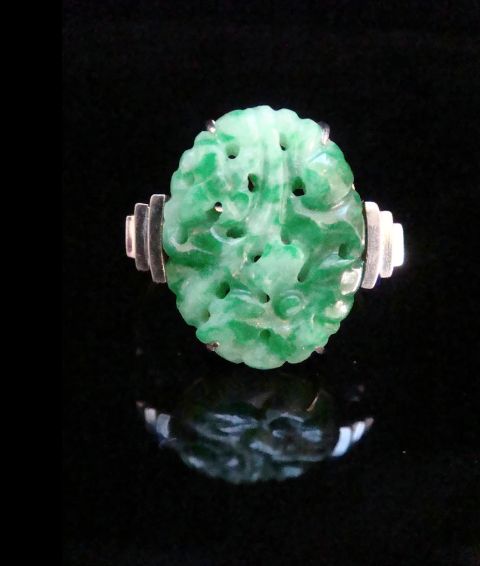
Master craftsmen set old cut diamonds, old transitional cut diamonds, and baguette cut sapphires, rubies, emeralds, pearls, and carved jade into these metallic frameworks. The combination of contrasting gemstones allows for intricate geometric patterns characteristic of the period styles.
Vintage Panel Ring Retail Price Guide 2026
Typical asking prices for vintage panel ring among the pieces listed under this phrase on Sellingantiques today, from the lower quarter to the upper quarter. They describe what is for sale here now, not the wider market.
Among the treasures sits an unexpected Dutch landscape oil painting on wood panel, proving that panel searches occasionally wander off the finger.
What varies in quality
The standard of a vintage panel ring rests upon the crispness of its geometric geometry and the harmony of its stone arrangement. Superior examples demonstrate meticulous hand-piercing in the metalwork and precise matching of diamond cuts and coloured gems.
The Vintage Panel Ring Glossary
- Plaque ring
- A ring featuring a flat, ornamental panel that spreads across the finger. This style became immensely popular during the Art Deco era.
- Old cut diamond
- A diamond cut by hand before modern machinery standardised proportions, characterised by a high crown and small table facet. These stones exhibit a soft glow under candlelight.
- Baguette cut
- A step-cut gemstone shape forming a narrow rectangle. Jewellers utilise these straight edges to build geometric borders in panel designs.
- Cluster ring
- A ring design where a central gemstone is surrounded by a border of smaller stones. This arrangement enhances overall brilliance and perceived size.
- Transition cut
- A diamond cut bridging the older Old European style and the modern round brilliant. It retains high crown proportions while introducing a smaller culet.
Vintage Panel Ring: Frequently Asked Questions
What is a panel ring?
A panel ring is a piece of fine jewellery featuring a wide, flat decorative top that covers the knuckle or finger. These designs utilise geometric gemstone layouts to create bold visual statements.
They appear frequently in Art Deco and Edwardian designs, often combining diamonds with sapphires, rubies, or emeralds.
How do I date a vintage ring?
Dating relies upon stylistic markers, metal choices, and stone cutting techniques specific to periods like the 1920s, 1930s, or 1950s. Art Deco pieces show geometric symmetry, while Edwardian examples favour delicate platinum lacework.
Examining the type of diamond cuts, such as old cuts or transitional cuts, offers further clues to the decade of manufacture.
Can I wear a panel ring daily?
Many people wear these antique rings every day, provided the setting metal and gemstone claws remain secure. Platinum and 18ct gold offer the durability needed for regular wear.
Gentle cleaning and periodic checks by a jeweller help preserve the delicate metalwork and stone settings over time.
What makes Art Deco rings unique?
Art Deco rings stand out through their embrace of straight lines, symmetry, and high-contrast colour palettes. The introduction of platinum allowed jewellers to create strong yet whisper-thin settings.
These pieces break away from Victorian organic curves in favour of architectural precision and bold gemstone pairings.