



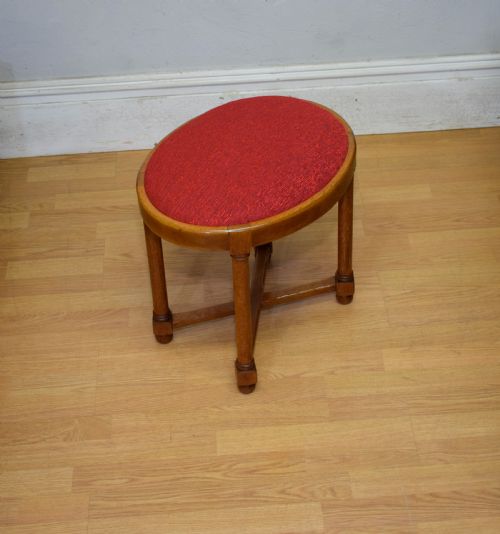
Vintage Oval Footstool
A vintage oval footstool brings both low seating and curved woodwork into a room, offering the proportion collectors seek in period rooms.
Vintage Oval Footstool
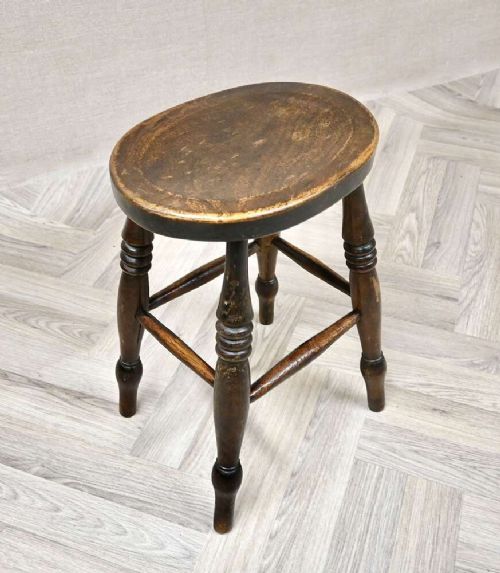
When you search for a vintage oval footstool, you encounter a form that spans the eighteenth century through to the early decades of the twentieth century. These pieces appear in styles ranging from Queen Anne revivals and George II interpretations to Victorian country makes and Arts and Crafts designs.
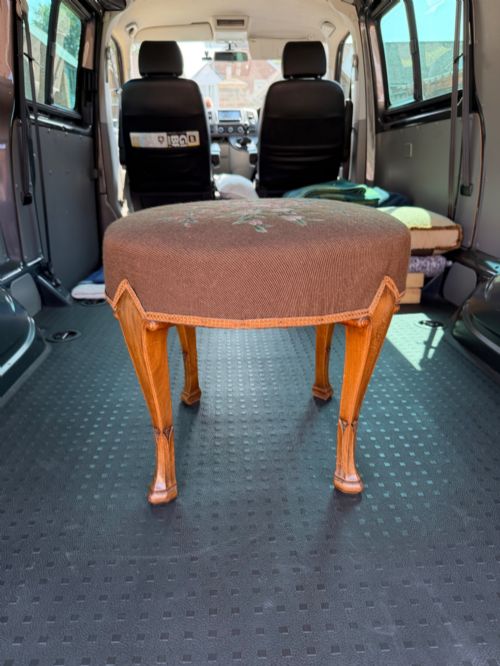
The most common examples on this page date from the nineteenth century and the early decades of the twentieth century. Makers constructed them in walnut, mahogany, oak, elm, and rosewood, often framing seats upholstered in tapestry, needlework, or traditional textile fabrics.
Forms include dressing stools, low parlour seats, and occasional footrests designed for domestic interiors. Their curved frames distinguish them from standard rectangular or square seating variants found in similar periods.
Materials and construction
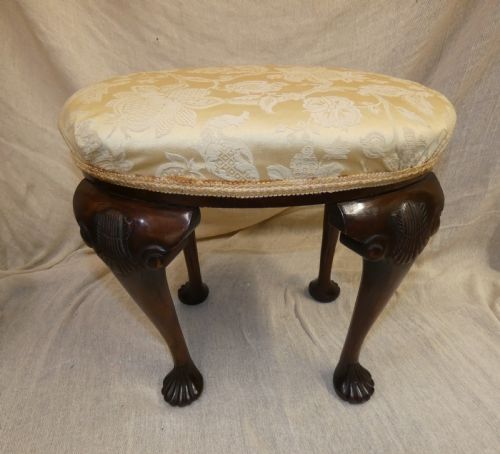
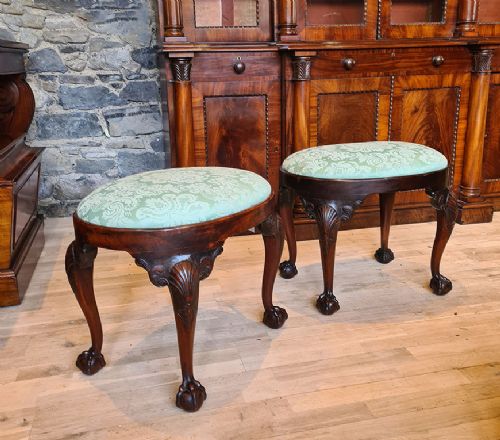
Timbers like walnut, mahogany, and oak form the structural carcasses of these pieces, shaped into curved rails and supported by cabriole or straight legs. Turnings and carved details reflect the stylistic influences of earlier Georgian and Victorian eras.
Upholstery relies on traditional textiles, tapestry, and needlework fixed over padded foundations. Makers matched the curved geometry of the oval wooden frames with carefully fitted fabric covers.
Vintage Oval Footstool Retail Price Guide 2026
Typical asking prices for vintage oval footstool among the pieces listed under this phrase on Sellingantiques today, from the lower quarter to the upper quarter. They describe what is for sale here now, not the wider market.
Listings feature timbers including walnut, mahogany, oak, elm, and rosewood across various nineteenth and early twentieth-century periods.
Judging quality
Quality rests upon the crispness of the timber carving and the integrity of the underlying frame construction. Finer examples show thoughtful proportion in the curve of the oval and careful selection of cabinet timbers like figured walnut or mahogany.
The Vintage Oval Footstool Glossary
- Cabriole leg
- A furniture leg that curves outward at the knee and tapers inward to an ankle, common in Queen Anne and George II revival pieces. This form mimics the natural shape of animal limbs.
- Tapestry
- A heavy hand-woven or needle-worked textile used for upholstery on traditional stools. It often depicts floral or figurative scenes.
- Dressing stool
- A low seat traditionally used in bedrooms or dressing rooms for grooming. These pieces match the height of dressing tables and vanity desks.
- Windsor
- A style of wooden seating construction featuring turned spindles fitted into a solid carved seat. Country variants utilise this technique for robust domestic utility.
Vintage Oval Footstool: Frequently Asked Questions
Where should I place a vintage oval footstool?
These pieces fit comfortably beside armchairs as leg supports or function as low seats in dressing rooms and parlours. Their curved outline softens the rigid geometry of surrounding furniture.
Position them in living spaces where their compact proportions allow for flexible movement without crowding the floor plan.
How do I care for wooden stool frames?
Dust the timber regularly with a soft dry cloth and avoid placing the furniture near direct heat sources or strong sunlight. Maintaining stable room humidity protects the wood joints from drying out.
Apply occasional appropriate wax polish to nourish hardwoods like walnut and mahogany without building up heavy residue.
Can I reupholster an antique stool?
Upholstery can be renewed using traditional materials and fabrics that suit the period of the frame. Many pieces feature needlework or tapestry covers that reflect historical styles.
Consult a specialist upholsterer to preserve internal webbing and padding techniques appropriate to the age of the piece.
How do I identify a revival style?
Revival pieces borrow decorative motifs, leg forms, and proportions from earlier centuries such as the Georgian or Queen Anne periods. Makers in the nineteenth and twentieth centuries reinterpreted these historic designs for contemporary homes.
Examine the tool marks, timber ageing, and construction methods to distinguish a later revival from an original eighteenth-century example.