
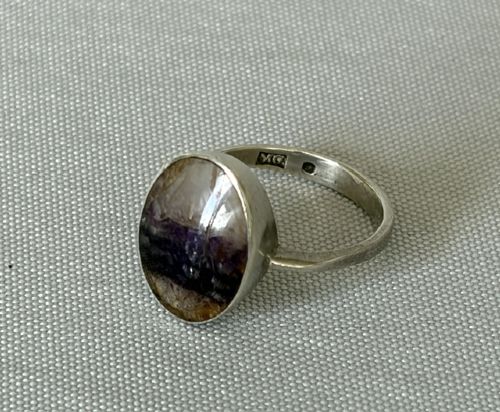
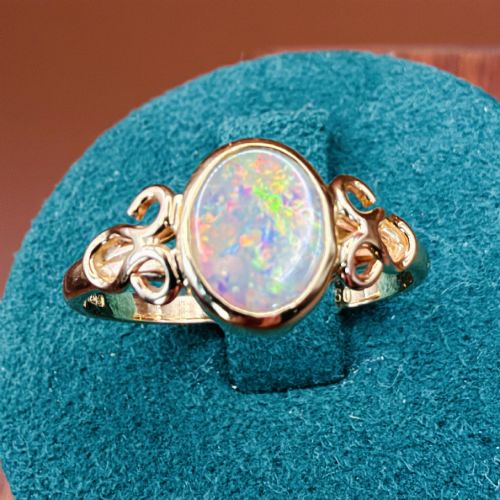
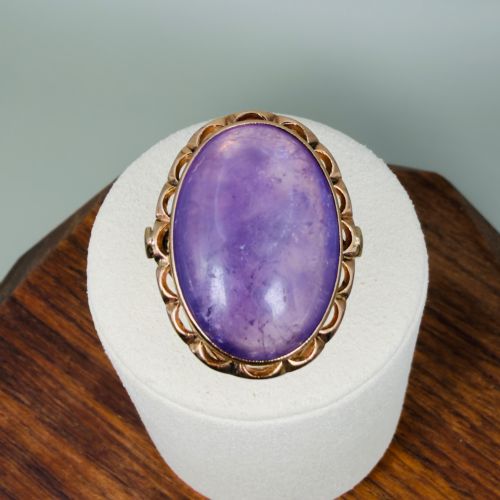
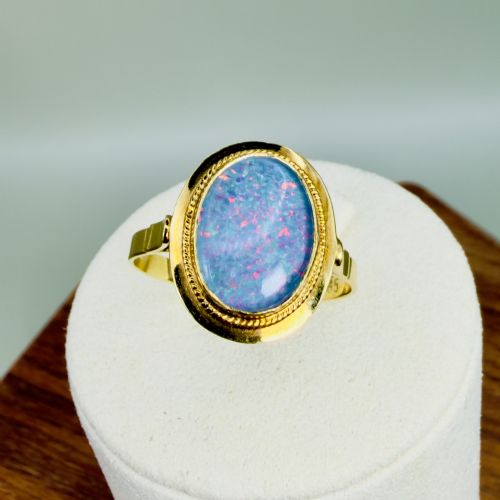




Vintage Oval Cabochon Ring
A vintage oval cabochon ring brings together smooth, domed stones and precious metals across periods from the Victorian era to the mid-century.
Vintage Oval Cabochon Ring
A vintage oval cabochon ring centres on a polished, unfaceted stone cut with a rounded top and a flat base, set into bands of gold, silver, or platinum. These pieces span from the late nineteenth century through Victorian, Edwardian, Art Deco, and mid-century modern periods, reflecting shifting tastes in gemstone presentation.
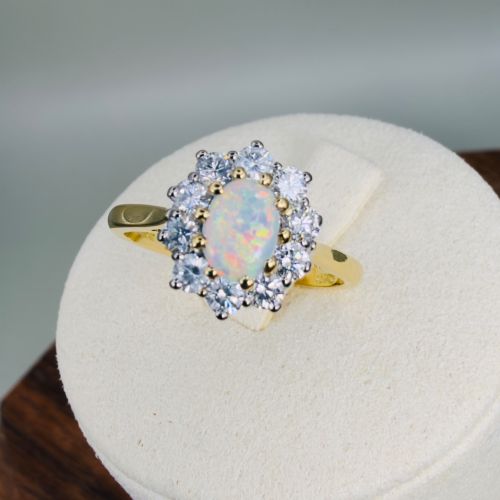
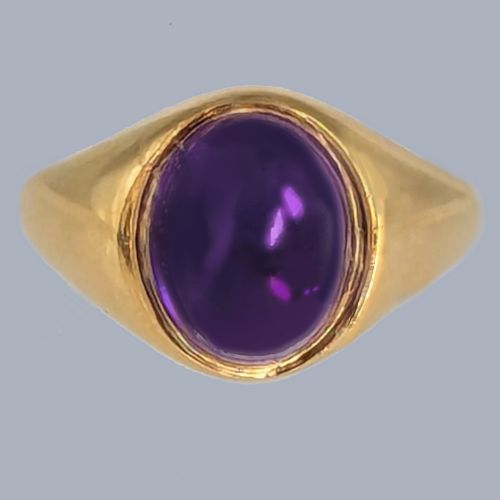
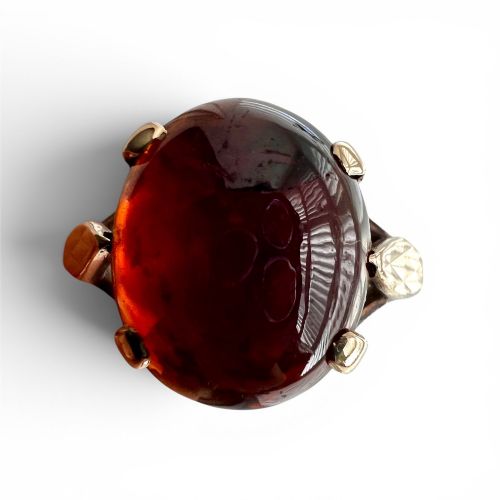
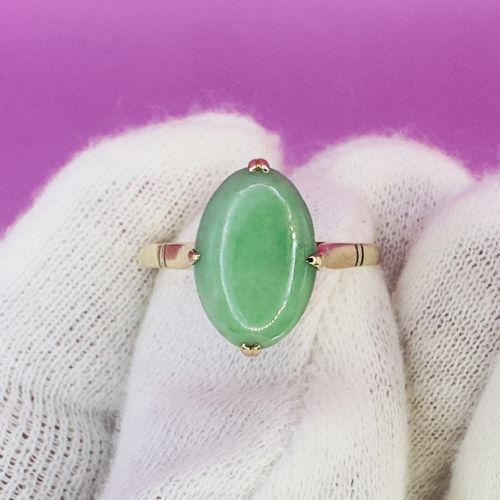
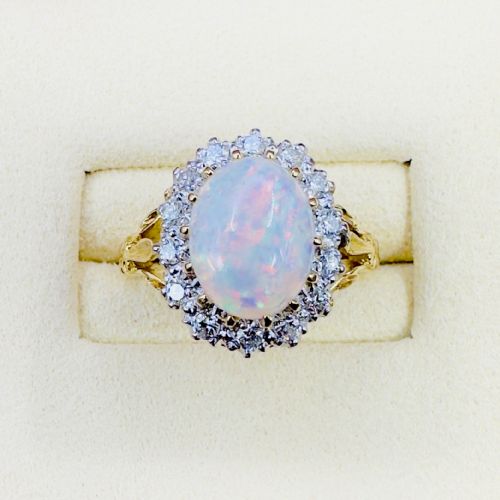
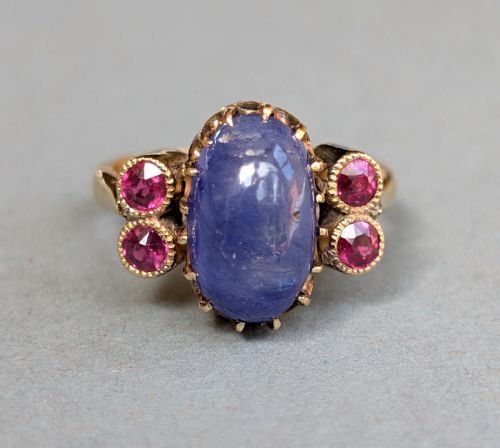
The most common versions encountered here are opal, sapphire, and jade solitaires or diamond-accented clusters set in yellow or white gold. Buyers will find both delicate antique designs and substantial cocktail rings carrying stones like amethyst, garnet, and moonstone.
How they were made
Goldsmiths shaped metals including nine-carat and eighteen-carat gold, platinum, and silver to secure domed gems using bezel, claw, or raised cluster settings. Stones were hand-cut and polished to showcase natural optical phenomena such as play-of-colour in opals or asterism in star sapphires.
Makers integrated diamonds as supporting stones in cluster configurations, mounted around central cabochons using white gold or platinum settings to enhance contrast.
Listings span periods from the nineteenth century through the 1960s, featuring sapphire, opal, jade, and diamond set in gold, platinum, and silver.
What varies in quality
Quality rests in the optical character and weight of the central cabochon, alongside the integrity of the metalwork and secureness of the settings. Superior stones display vivid internal fire, deep saturation, or distinct phenomenon without structural compromise.
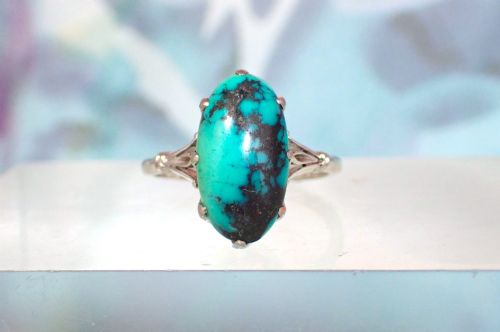
The hand-finished detail of the surrounding metalwork, whether Edwardian platinum filigree or substantial mid-century gold shanks, distinguishes finer examples from simpler production.
The Vintage Oval Cabochon Ring Glossary
- Cabochon
- A gemstone shaped and polished with a smooth, rounded dome rather than faceted edges. This cut is historically used for opals, jade, star sapphires, and moonstones.
- Solitaire
- A ring featuring a single set gemstone without supporting side stones. This setting places visual emphasis entirely on the central cabochon.
- Cluster ring
- A ring design where a central stone is encircled by a border of smaller gems, typically diamonds or sapphires. This layout maximises visual presence on the hand.
- Bezel set
- A method of stone setting where a thin metal collar wraps entirely around the girdle of the gem to hold it securely in place. It offers a clean profile and protection for softer stones.
Vintage Oval Cabochon Ring: Frequently Asked Questions
How do I care for an opal cabochon ring?
Opals contain water and require gentle handling, avoiding harsh chemicals, ultrasonic cleaners, and sudden temperature shifts. Store them away from hard gems to prevent surface scratching.
Wipe the stone and metal gently with a soft, damp cloth after wear and check the security of the claw or bezel settings periodically.
Can these rings be resized easily?
Most gold and platinum bands can be adjusted by a skilled jeweller, depending on the shoulder decoration and whether gemstones extend down the shank. Plain gold shanks offer the most straightforward adjustment.
Stones like opal and jade are sensitive to heat and require protection during torch work, so consult a specialist familiar with vintage mountings.
What defines a cocktail ring?
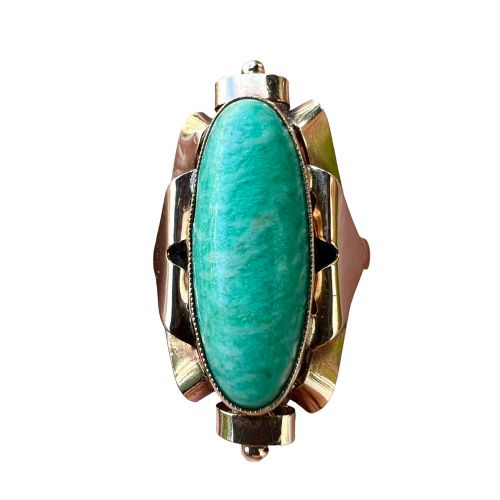
Cocktail rings are large, statement pieces designed to draw attention, frequently featuring substantial centre stones like jade, amethyst, or opal. They gained popularity during the mid-twentieth century.
These substantial designs often sit higher off the finger and incorporate heavy gold or cluster work to frame the central cabochon.