

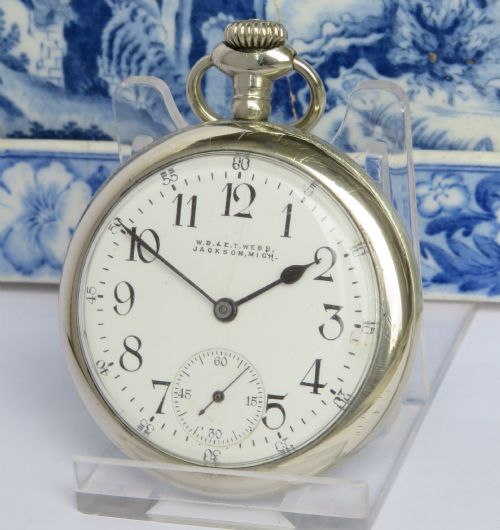
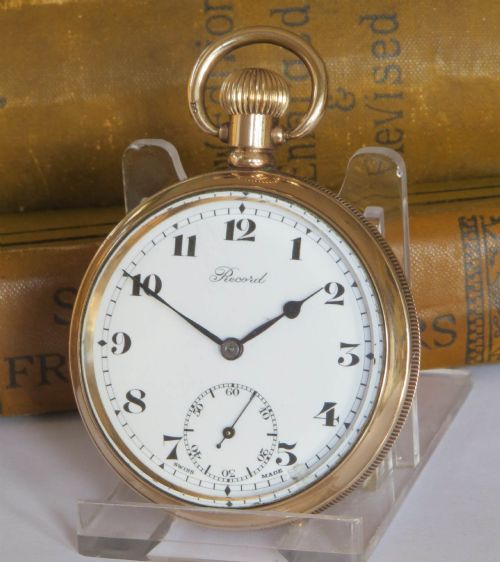
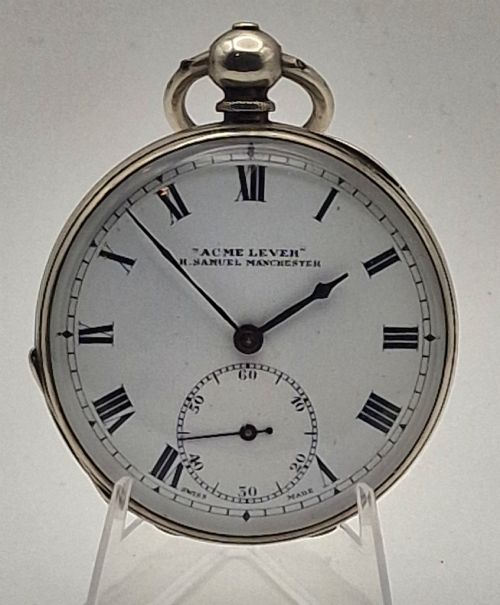
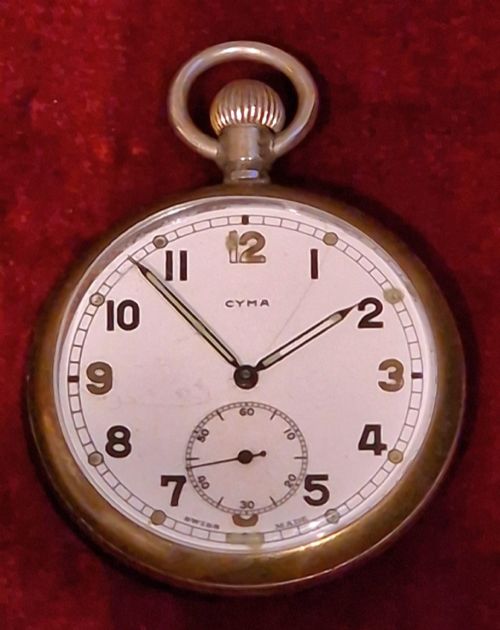
Vintage Open Faced Watch
A vintage open faced watch offers pocket timekeeping without a hinged cover, pairing mechanical movement with immediate visibility.
Vintage Open Faced Watch
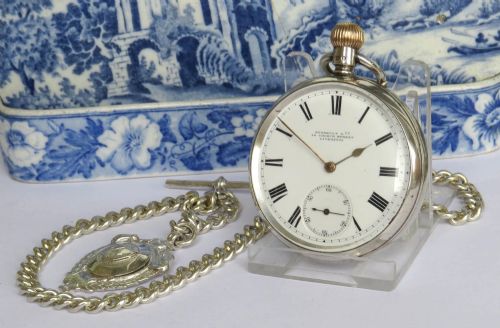
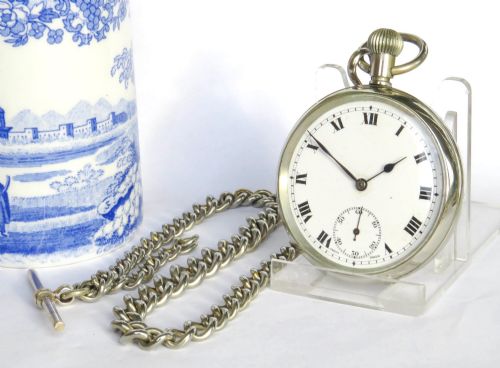
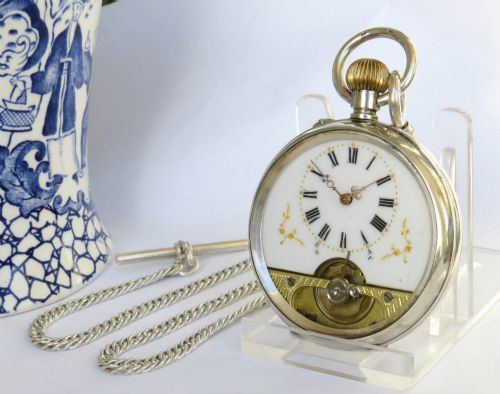
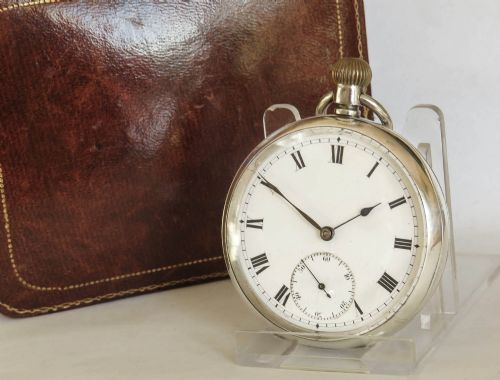
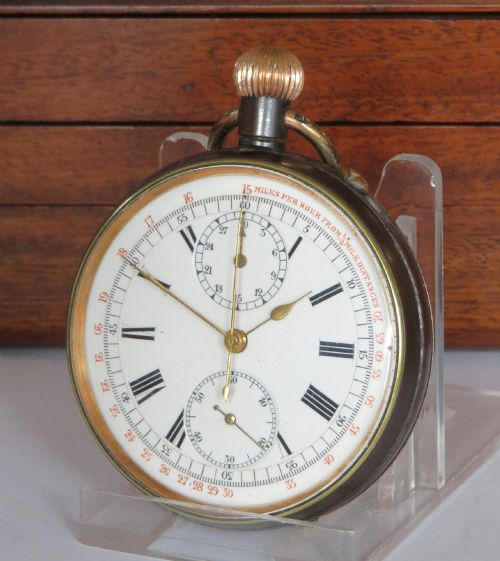
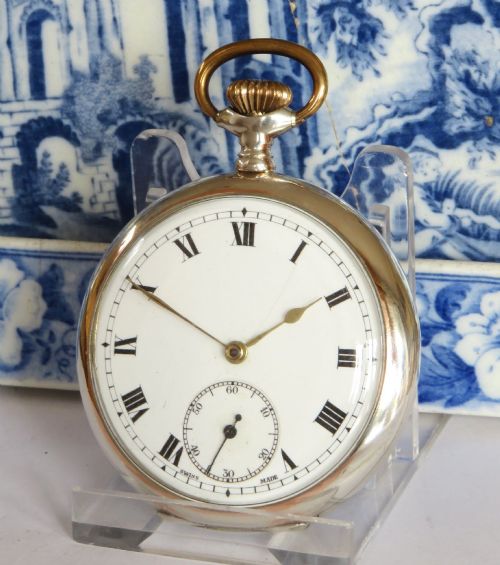
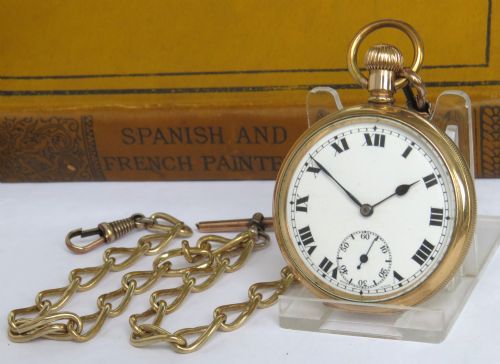
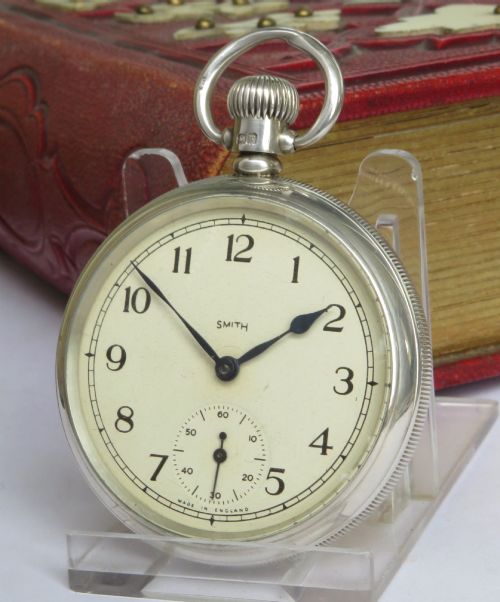
A vintage open faced watch strips away the protective hunter case lid to reveal the dial instantly at a glance. These timepieces span the late Victorian era through the mid-twentieth century, encompassing everyday pocket watches alongside specialised railway, military, and aviation issues.
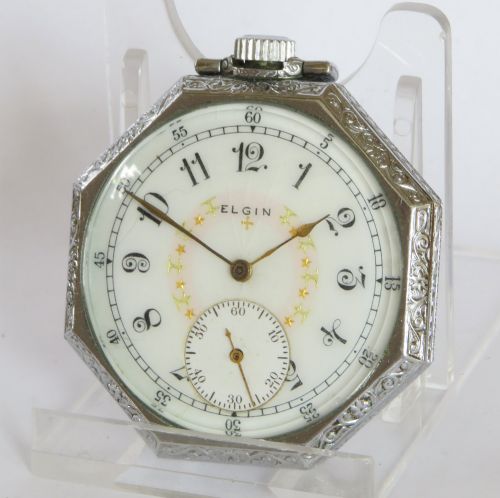
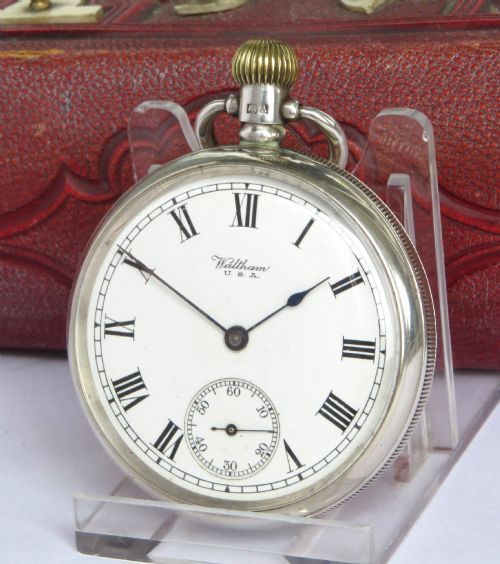
The selection ranges from simple silver models by makers such as Waltham and Elgin to complex chronographs and goliath pieces. Railway service pieces and military issues from the Second World War frequently appear, each bearing specific departmental markings on the dial or caseback.
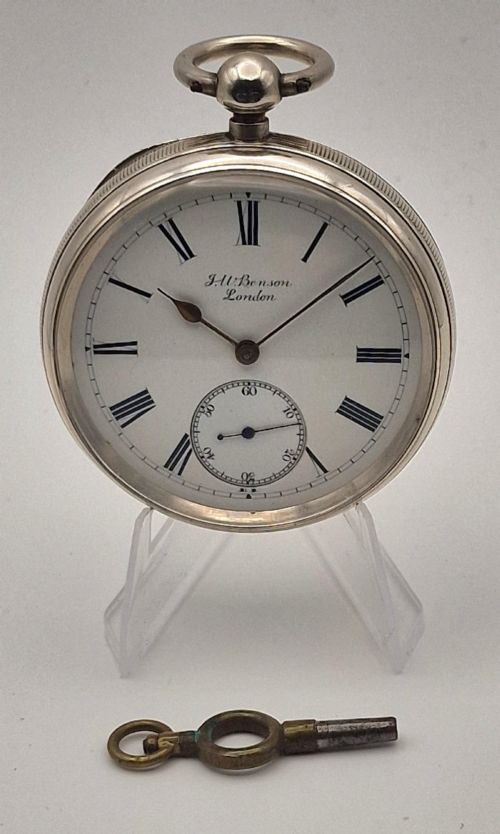
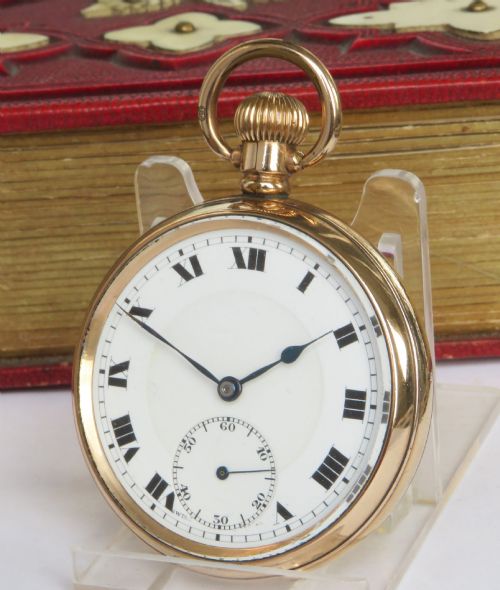
Victorian fusee movements sit alongside later mechanical calibres housed in silver, steel, brass, nickel, or gold plate. Enamel dials predominate, carrying Arabic or Roman numerals accompanied by subsidiary seconds dials.
Materials and construction
Cases utilise solid silver, nickel, steel, brass, and gold plate, often protecting the movement with a dust cover beneath the outer rear lid. Glass crystals shield the delicate enamel dials, which are kiln-fired to fuse powdered glass onto a metal base.
Mechanical gear trains rely on brass wheels and steel pinions, regulated by balance springs and jewelled lever escapements. Earlier Victorian examples employ fusee chains to equalise the mainspring power delivery, whilst twentieth-century calibres utilise direct barrel mainsprings.
Vintage Open Faced Watch Retail Price Guide 2026
Typical asking prices for vintage open faced watch among the pieces listed under this phrase on Sellingantiques today, from the lower quarter to the upper quarter. They describe what is for sale here now, not the wider market.
Judging quality and condition
Quality rests upon the refinement of the internal movement, the presence of adjustments for temperature and position, and the number of jewels supporting the pivots. Finer calibres exhibit damaskeening or Geneva stripes across the bridges, paired with micro-regulators for precise timing.
The crispness of the enamel dial and the integrity of the metal case separate standard utility pieces from high-grade specimens. Original matching components, clear hallmarks, and unblemished dial enamel elevate the standing of any pocket watch.
Waltham·Longines·Buren·Cyma·Elgin·Henry Capt·Zenith·Cortebert·Vertex·Kendal & Dent·Allion·Helvetia·Lemania·Revue
The Vintage Open Faced Watch Glossary
- Open faced
- A watch design lacking a hinged metal cover over the dial, allowing direct sight of the hands.
- Fusee
- A conical pulley device used in older watches to maintain constant torque as the mainspring unwinds.
- Chronograph
- A watch equipped with a stopwatch function controlled by an independent pusher or crown.
- Damaskeening
- Ornamental wave or swirl patterns engraved onto the nickel plates of a watch movement.
- Subsidiary seconds
- A small dial separate from the main hands dedicated to tracking the passing seconds.
Vintage Open Faced Watch: Frequently Asked Questions
How do I wind a vintage open faced watch?
Most twentieth-century pieces wind via the crown at the top, turning it gently clockwise until resistance meets the fully tensioned mainspring.
Older Victorian fusee models occasionally require a separate key inserted through the rear dust cover or dial centre to wind the movement.
Can I carry a pocket watch every day?
Carrying a pocket watch daily remains practical provided the piece is paired with a secure albert chain or fob passed through a waistcoat or trouser buttonhole.
Regular servicing by a horologist ensures the mechanical movement maintains reliable timekeeping despite the vibrations of modern life.
What is a goliath pocket watch?
A goliath is an oversized pocket watch, measuring substantially larger than standard examples, designed originally for carriage use or travel.
These substantial pieces often feature robust eight-day movements and sit within dedicated leather travelling cases.
How do I identify a railway issue watch?
Railway timepieces typically display bold Arabic numerals on a white enamel dial for maximum legibility in dim light.
Many bear specific company engravings on the caseback or dial, such as references to British Railways or regional lines like the Midlands.