



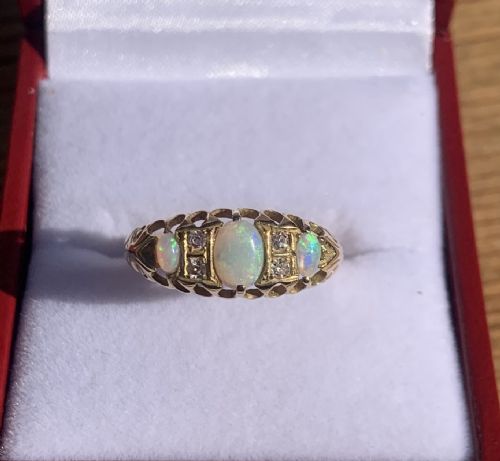


Vintage Opal Gemstone Ring
A vintage opal gemstone ring brings together iridescent colour and precious metal in a piece designed to catch the eye with every movement.
Vintage Opal Gemstone Ring
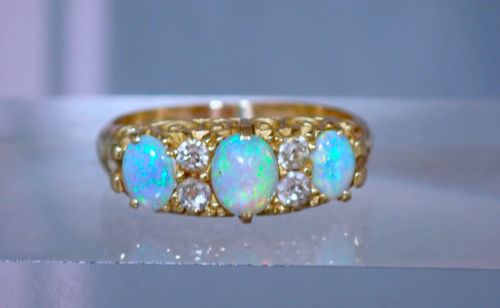
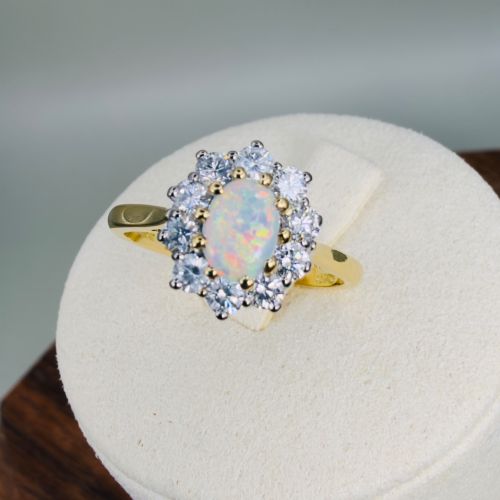
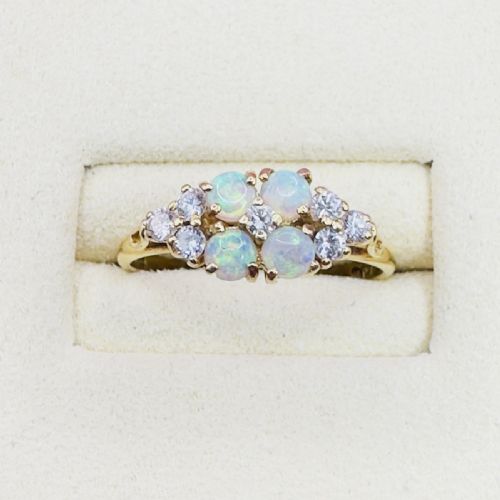
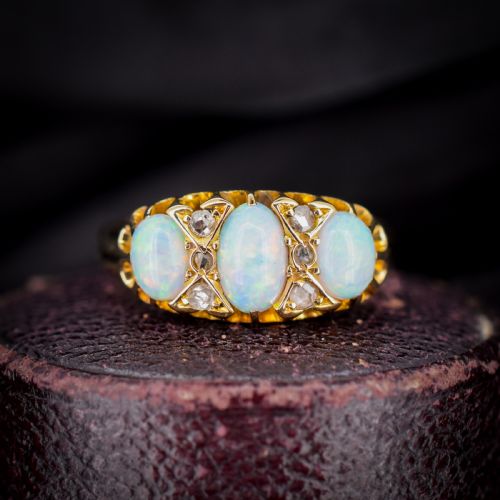
A vintage opal gemstone ring presents a play of colour across the stone, housed in settings that span the Victorian, Edwardian, and mid-century periods. When looking for a vintage opal gemstone ring, a buyer meets diverse forms ranging from simple solitaires to elaborate multi-gem clusters.
The selections on this page draw from the nineteenth century up to the nineteen-sixties, capturing styles such as traditional classic and Continental Art Nouveau. Boat rings and cluster formations appear frequently, alongside three-stone and five-stone arrangements.
Originating in periods like the Edwardian era and the mid-twentieth century, these rings reflect the changing tastes in goldsmithing and gemstone arrangement. Buyers encounter both robust ninety-carat gold bands and finer eighteen-carat yellow and white gold settings.
Materials and construction
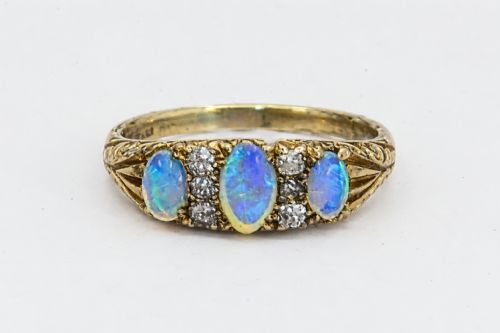
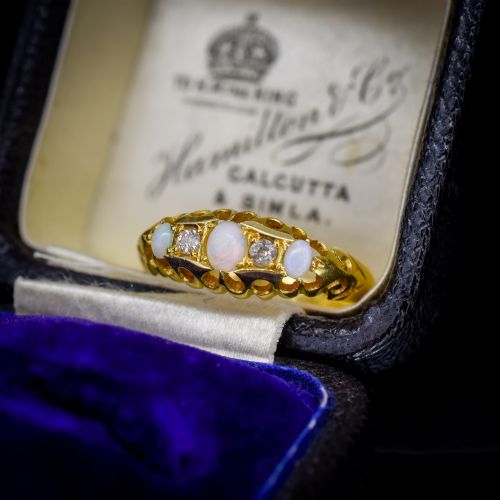
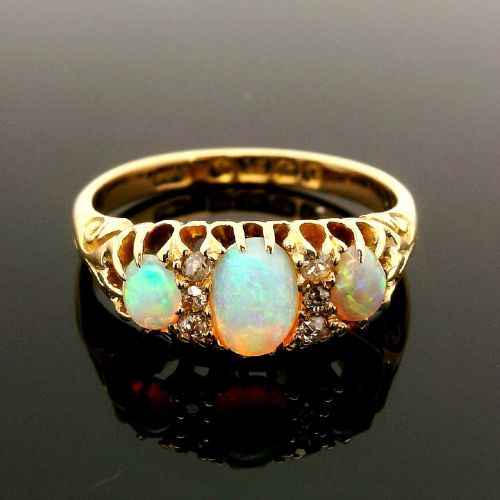
Goldsmiths of the Victorian and Edwardian eras typically mounted opals in eighteen-carat yellow gold, often combining them with diamonds in boat or cluster formations. Bezel settings, claw settings, and raised mountings secure the stones while allowing light to reach the opal from multiple angles.
Later mid-century pieces utilise both yellow and white gold, incorporating sapphires, emeralds, or rubies alongside the central opal. Cabochon cutting shapes the soft silica stone into smooth, rounded domes that maximise the internal play of colour.
The listings span from the nineteenth century to nineteen sixty, featuring materials such as eighteen-carat yellow gold, white gold, and sapphires.
Judging quality in these rings
The intensity and breadth of the play of colour across the stone dictate the visual impact of the piece. Stones displaying a full spectrum of spectral hues outrank those with muted or single-colour flashes.
The integrity of the metalwork and the security of the claw or bezel settings indicate the standard of original craftsmanship. Weight and purity of the gold, combined with the harmonious integration of accompanying diamonds or sapphires, separate the exceptional examples from the standard workshop output.
The Vintage Opal Gemstone Ring Glossary
- Cabochon
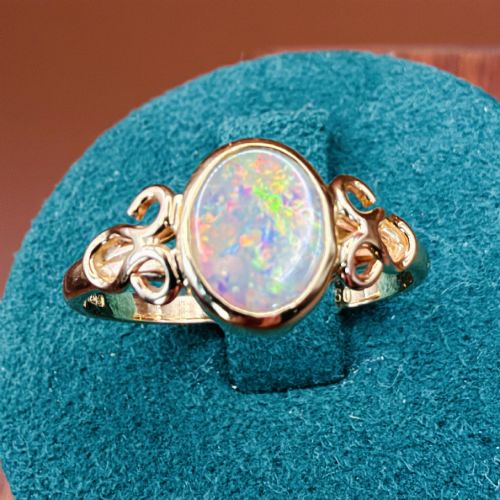
- A gem cut with a smooth, rounded surface rather than facets. This style highlights the optical phenomena within opals.
- Boat ring
- A ring setting shaped like the hull of a boat, curving upwards towards the centre to hold a row of graduating stones. This configuration was particularly popular during the Edwardian period.
- Trilogy
- A ring featuring three stones set side by side, traditionally representing the past, present, and future. In these listings, they pair opals with flanking diamonds.
- Solitaire
- A ring featuring a single prominent gemstone. In this collection, opal solitaires rely entirely on the scale and colour play of one stone.
Vintage Opal Gemstone Ring: Frequently Asked Questions
How do I care for my opal ring?
Opals contain water within their silica structure and score lower on the hardness scale than diamonds. Avoid ultrasonic cleaners, harsh chemicals, and sudden extreme temperature changes to protect the stone.
Remove the ring before undertaking heavy manual work or gardening. Store it away from direct sunlight and dry environments to maintain its moisture balance.
What is a cluster ring?
A cluster ring arranges smaller gemstones around a larger central stone, creating a larger visual footprint on the finger. In these pieces, opals form the focal point surrounded by diamonds or coloured gems.
This style maximises sparkle and colour contrast by pairing the iridescent opal with faceted stones. It was favoured across the Victorian and Edwardian periods for dress and cocktail wear.
How do I determine the period?
Dating relies on the style of the mounting, hallmarks stamped inside the band, and the overall manufacturing technique. Victorian pieces often feature heavy gold and claw settings, while Edwardian examples favour delicate openwork and boat shapes.
Later mid-century items introduce white gold and distinctive cluster arrangements. Assay marks and Birmingham registry stamps provide definitive clues for specific decades.