

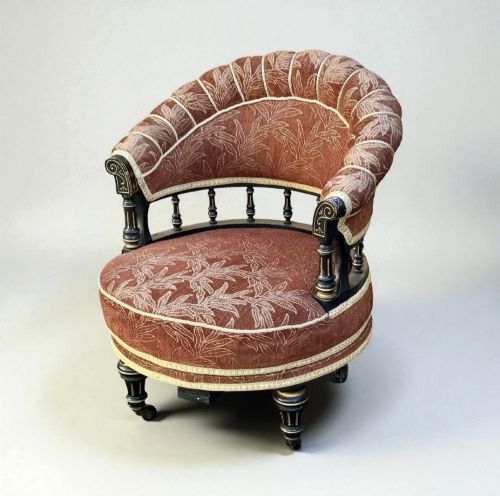


Vintage Office Tub Chair
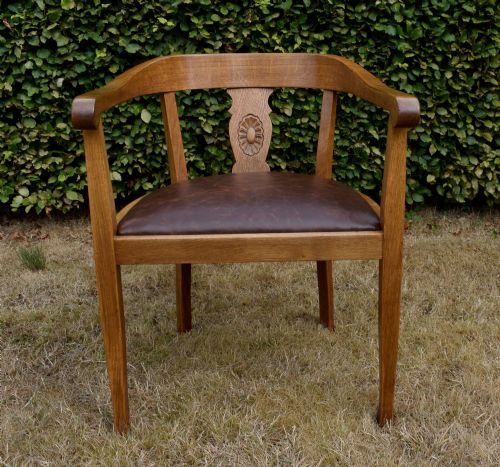
A vintage office tub chair offers supportive seating through deep, curved wooden backs and leather or hide seats built for prolonged work.
Vintage Office Tub Chair
A vintage office tub chair encompasses various desk armchairs, swivel seats, and captain's chairs originating from the Victorian, Edwardian, and early twentieth-century periods.
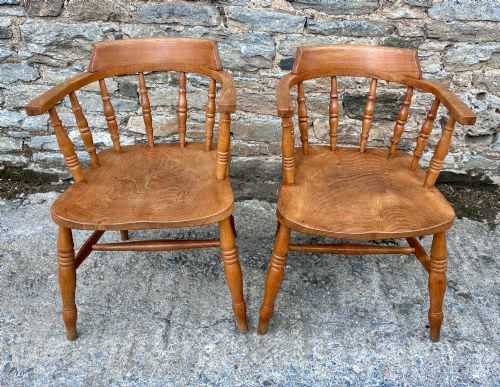
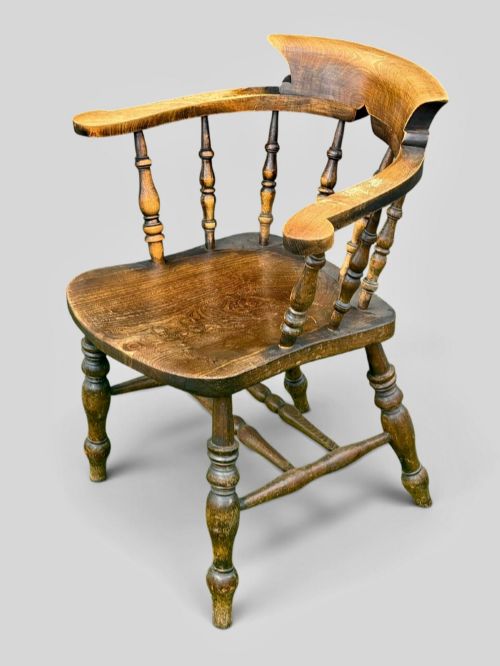
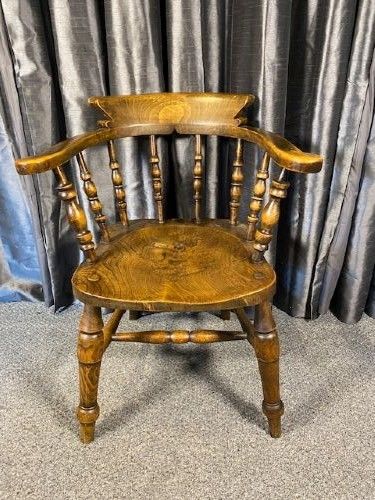
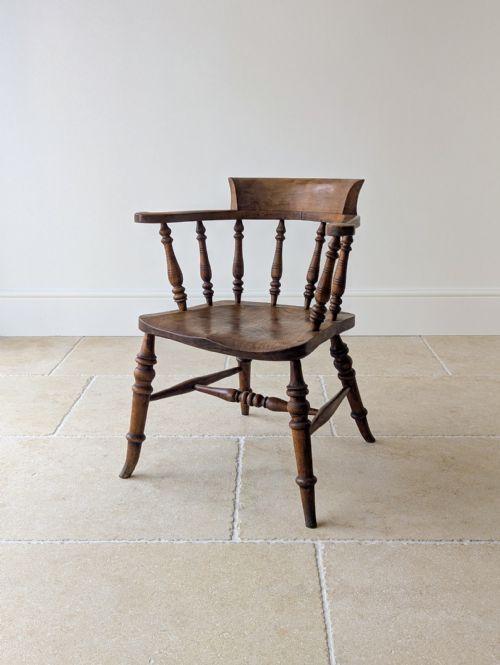
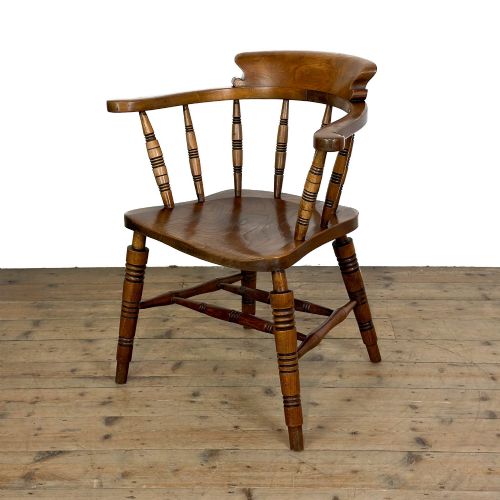
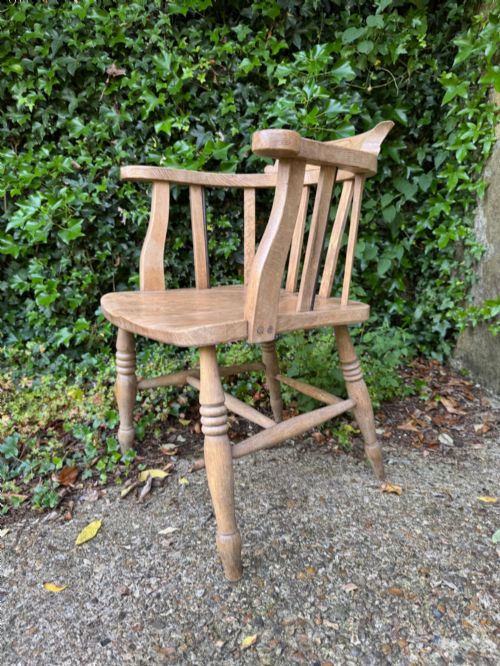
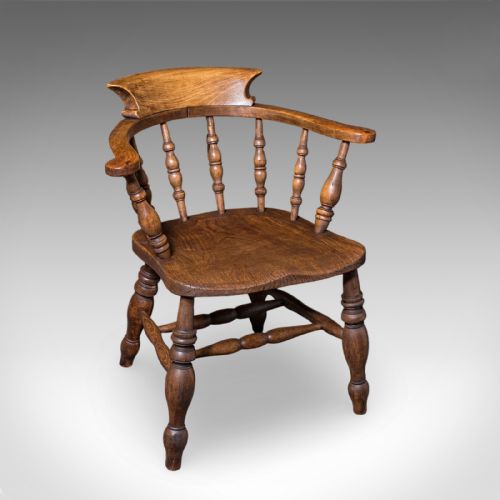
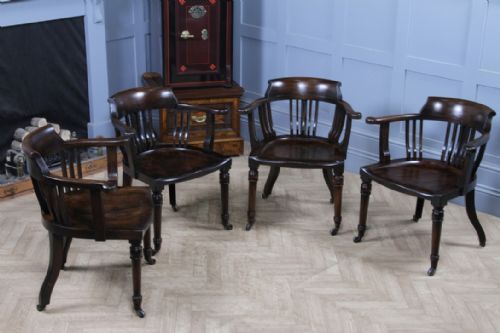
The selections on this page rely heavily on traditional forms like the smoker's bow and horseshoe desk chair, appearing in rich timbers such as mahogany, oak, and walnut.
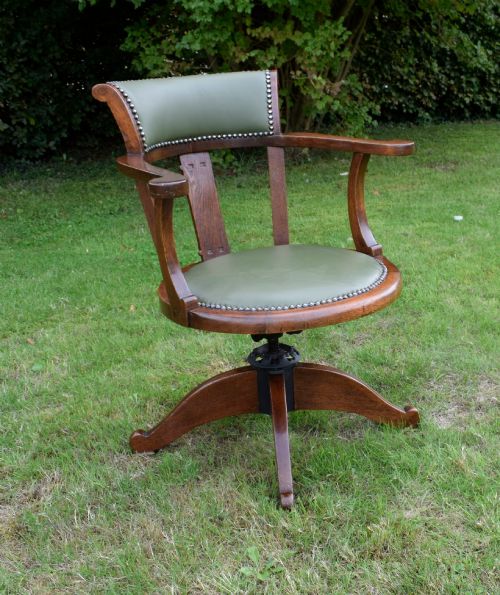
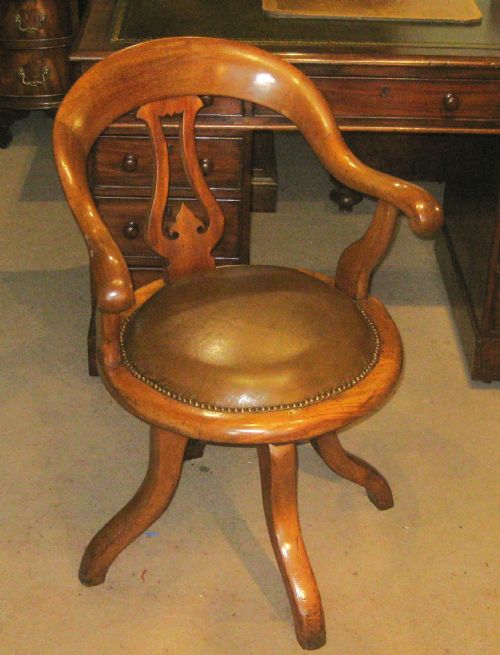
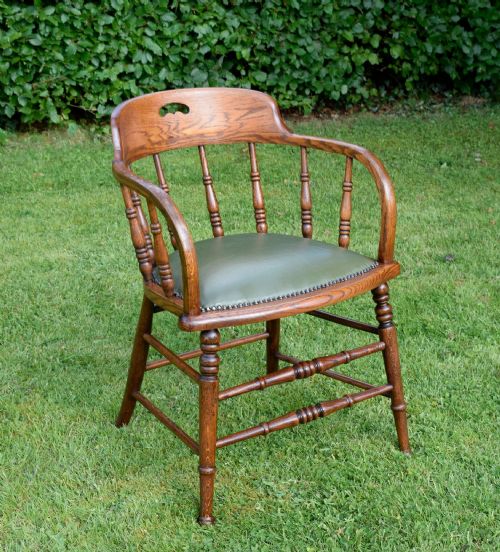
Buyers seeking this style find robust timber frames paired with upholstered leather, hide, or oil cloth seats designed specifically for office and study spaces.
Materials and Construction Methods
Cabinet makers built these chairs using solid native timbers including oak, elm, beech, and mahogany, often steaming and bending the wood to form continuous curved backrests.
Upholstery techniques combined sturdy horsehair stuffing or simple pad seats covered in durable leather, hide, or oil cloth, secured with brass tacks.
Swivel mechanisms utilise iron spindles and wooden bases to provide movement for desk use.
Military campaign versions fold away their authority, ready to pack up and govern an empire from the next tent.
Assessing Craftsmanship and Condition
Quality rests in the structural integrity of the bentwood components and the selection of figured timbers like golden mahogany and walnut.
Fine examples display careful joinery, such as pegged joints and precise spindle turnings, alongside original leather upholstery showing natural patination rather than modern replacement.
The Vintage Office Tub Chair Glossary
- Tub chair
- An armchair featuring a continuous curved back and arms enclosing the seat. This form provides wrap-around comfort during long hours at a desk.
- Smoker's bow
- A low-backed Windsor-style armchair with a turned spindle gallery above the seat. These robust chairs served as sturdy office and tavern seating.
- Swivel chair
- A seat mounted on a central rotating pivot allowing the user to turn. Mechanical adjustment mechanisms often accompany these office designs.
- Caned
- Woven rattan or cane panels fitted into chair backs or seats. This technique offers a lighter visual weight and flexible support.
- Oil cloth
- Heavy cotton fabric treated with boiled linseed oil to create a waterproof surface. It provides a durable, wipe-clean covering for antique desk seats.
Vintage Office Tub Chair: Frequently Asked Questions
What is a vintage office tub chair?
A vintage office tub chair is a supportive desk seat featuring a continuous curved backrest that wraps around the user. These pieces date primarily from the Victorian and Edwardian eras, built to serve working environments.
They combine turned wooden spindles or solid timber panels with upholstered leather or hide seats. Their sturdy proportions make them practical for daily use at modern desks.
How do I date an office armchair?
Dating relies on observing timber choices, construction techniques, and stylistic details. Victorian pieces often use heavy mahogany, walnut, or elm with deep turns, while Edwardian examples frequently feature lighter oak or inlaid mahogany.
Hardware such as brass fittings and the presence of swivel mechanisms also help place a chair within the nineteenth or early twentieth century.
Were these chairs used only in offices?
While designed primarily for administrative tasks, counting rooms, and libraries, their comfortable proportions suited domestic studies and bedrooms equally well.
Many styles evolved from traditional captain's chairs and smoker's bows, adapting utilitarian seating for professional and residential settings.
How do I care for leather upholstery?
Leather and hide seats require minimal intervention to preserve their historic surface. Regular dusting and occasional application of traditional leather balm maintain suppleness without harming the material.
Keeping the timber and leather away from direct heat sources prevents the natural materials from drying and cracking over time.