
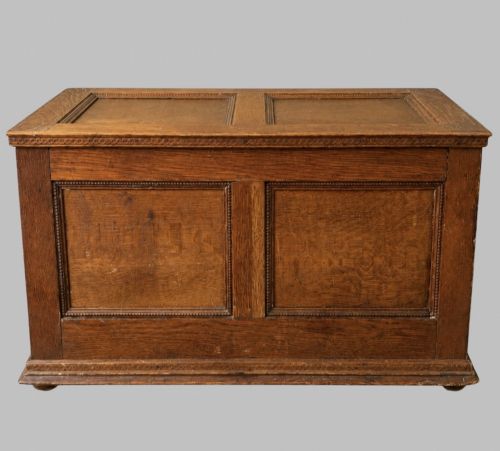
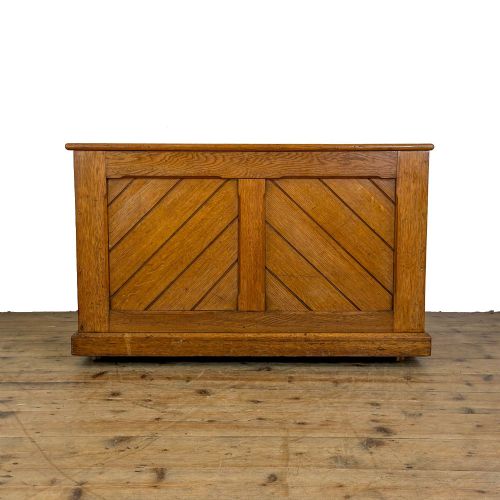
Vintage Oak Storage Coffer
A vintage oak storage coffer provides sturdy domestic containment, bringing period character and practical utility into a hallway or bedroom.
Vintage Oak Storage Coffer
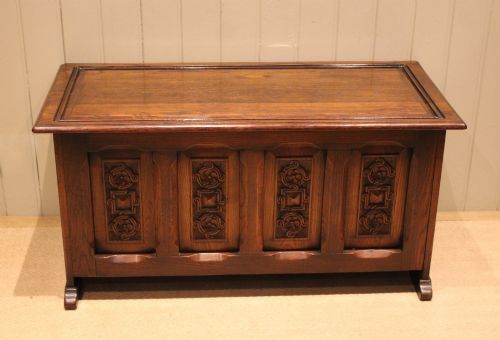
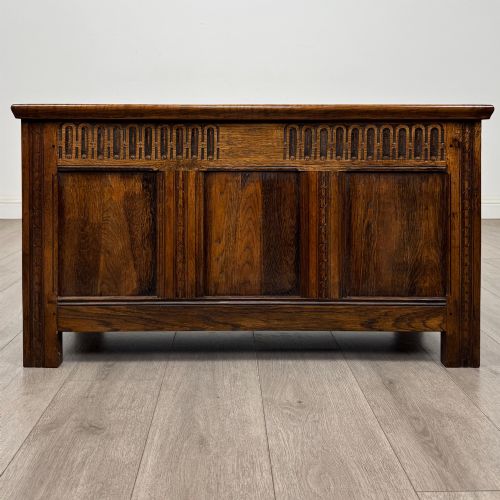
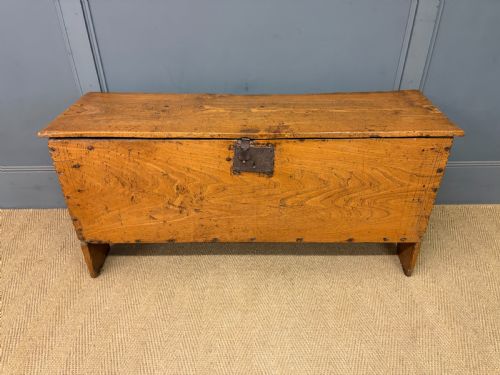
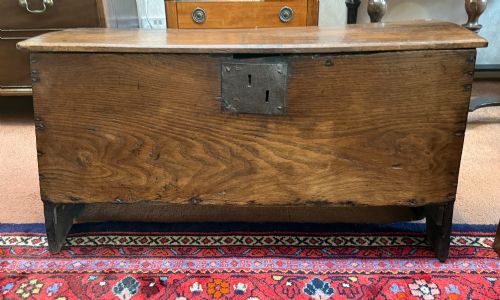
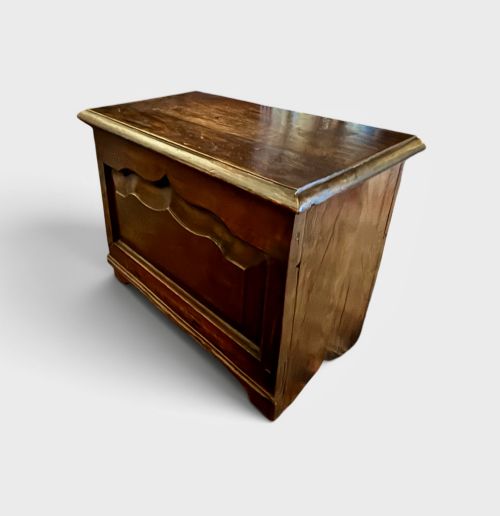
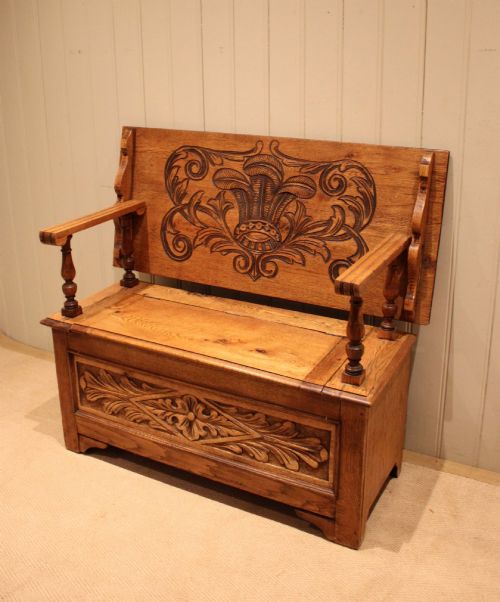
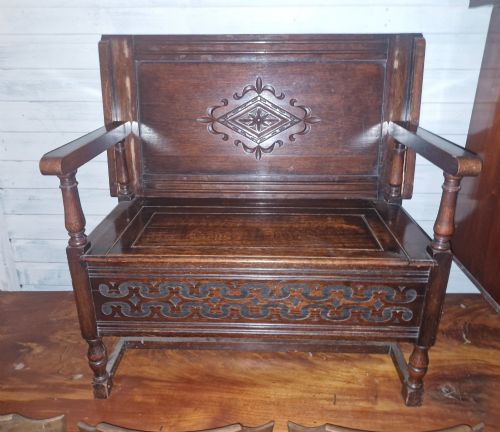
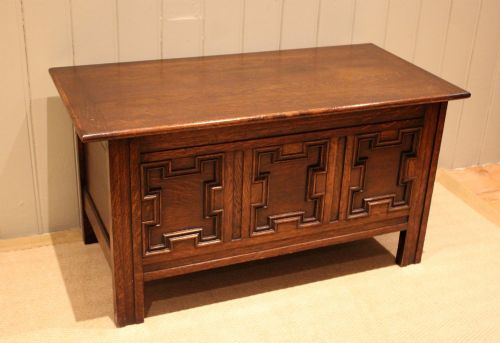
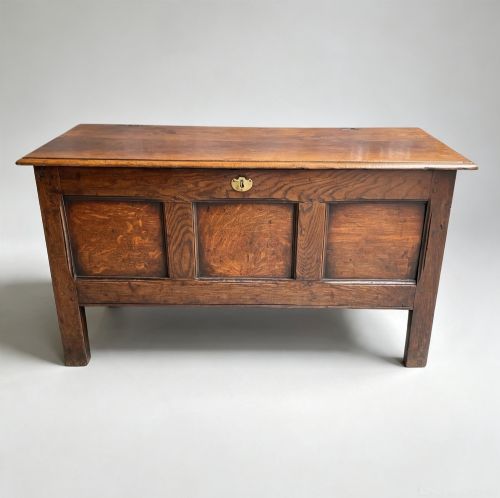
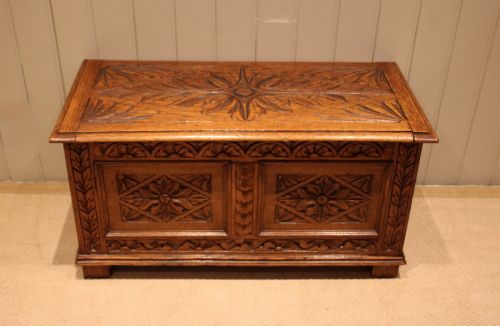
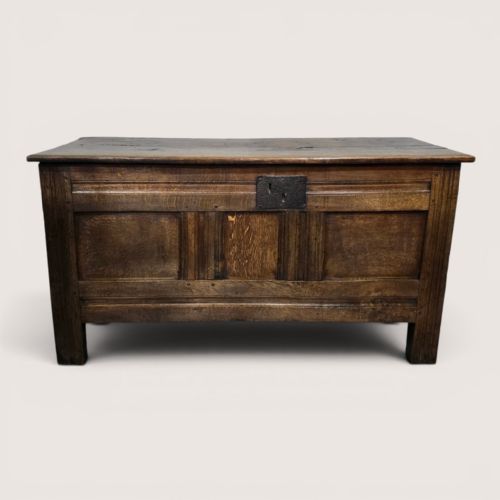
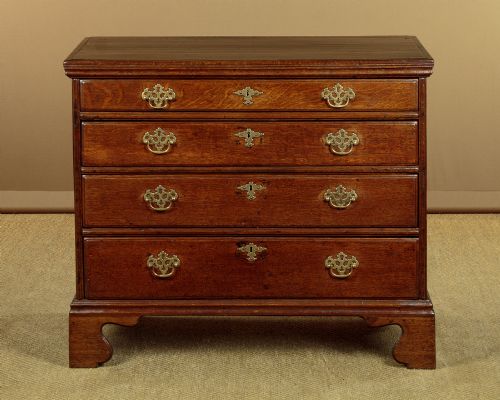
A vintage oak storage coffer spans several centuries of domestic woodwork, ranging from early board construction to panelled revival styles. Buyers encounter pieces from the seventeenth century through to the Edwardian period, alongside variations such as mule chests with lower drawers and monks benches with folding tops.
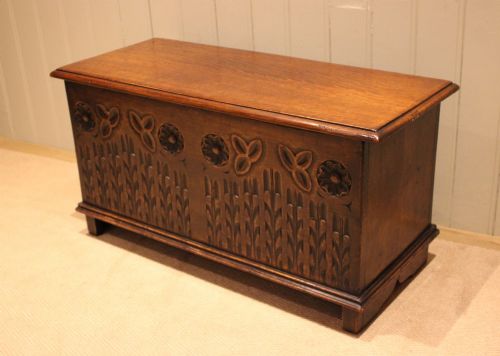
The selection here includes smaller trunk formats, carved blanket boxes, and substantial country pieces fashioned in solid oak and elm. Regional variations extend to Arts and Crafts interpretations and continental examples, maintaining the primary function of heavy-duty household storage.
Materials and construction
Makers relied primarily on solid oak, frequently supplemented by secondary timbers such as elm and walnut for internal components and panels. Construction methods combine traditional framing, pegged joints, and panelled assembly designed to withstand heavy domestic use.
Metal reinforcement appears in the form of brass and iron hinges, locks, and binding, particularly on campaign and travel trunks. Surface treatments range from natural waxed finishes and dark polish to painted applications and limed oak treatments.
Several coffers on show conceal unexpected details, including secret compartments and vibrant red painted interiors.
Distinguishing quality
Quality rests upon the integrity of the timber selection, the crispness of any carved decoration, and the preservation of original construction details. Solid oak framing with intact period hinges and undisturbed surface patination stands apart from heavily restored or later assembled examples.
Proportion and execution dictate distinction, particularly where panel work or figural carvings demonstrate deliberate craftsmanship rather than routine mass production. The presence of original internal tills, working locks, and stable bases separates superior examples from standard utility pieces.
The Vintage Oak Storage Coffer Glossary
- Coffer
- A large wooden chest traditionally used for storing valuables, linens, or documents. These pieces often feature hinged lids and sturdy boarded or panelled construction.
- Mule chest
- A storage chest fitted with one or more drawers beneath the main compartment. This form bridges the traditional coffer and the modern chest of drawers.
- Monks bench
- A multi-functional item of furniture combining a seat with a hinged back that folds down to form a table. They utilise the same solid oak construction seen in standard coffers.
- Panelled
- A method of construction where thinner panels of wood sit within grooved frames to accommodate natural wood movement. This technique prevents splitting as the timber ages.
- Campaign chest
- A portable storage chest made in sections with inset brass handles, designed for military transport. These pieces utilise sturdy timbers and iron binding for durability during travel.
Vintage Oak Storage Coffer: Frequently Asked Questions
How do I date an oak coffer?
Dating relies on observing construction techniques, tool marks, and stylistic motifs such as linenfold carving or geometric panels. Earlier pieces from the seventeenth century typically display hand-riven timber and pegged frame-and-panel joints.
Later Victorian and Edwardian examples often incorporate machine-cut elements, standardised hinges, and revivalist carving styles that reflect the period of manufacture rather than genuine antiquity.
What is the difference between a coffer and a mule chest?
A standard coffer consists of a single deep storage compartment accessed via a hinged lid at the top. The interior remains entirely open for linens, blankets, or household goods.
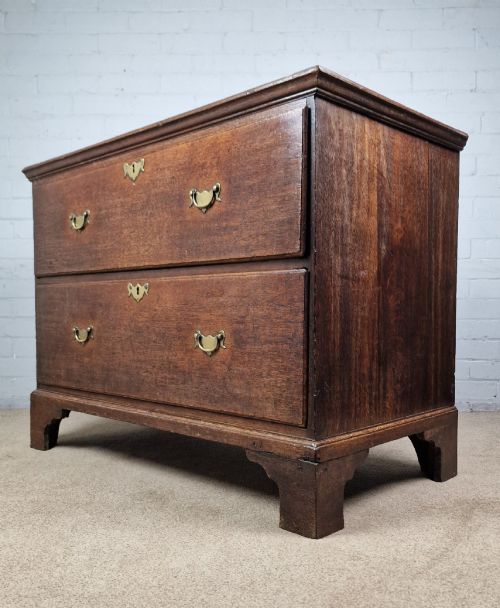
A mule chest incorporates one or more functional drawers built into the base beneath the main compartment, offering easier access to smaller items without disturbing the items stored above.
Can I use a coiser as a coffee table?
Many people adapt lower coffers and blanket chests for use as living room tables due to their flat tops and pleasing proportions. Flat-topped pieces provide a stable surface for books and decorative objects.
Consider the height and surface finish to ensure daily use does not compromise the antique polish or dry timber.
How do I care for antique oak?
Maintain antique oak by keeping it away from direct heat sources and sudden temperature fluctuations that can cause the timber to split. Apply a microcrystalline wax periodically to nourish the wood and protect the surface patination.
Avoid liquid polishes containing silicone, which can penetrate open-grain oak and dull the natural finish over time.