


Vintage Oak Stick Holder
A vintage oak stick holder brings practical country house charm to an entrance hall, keeping wet weather gear organised in solid timber.
Vintage Oak Stick Holder
When you search for a vintage oak stick holder, you find sturdy hall furnishings designed to store walking sticks, canes and umbrellas. These items appear primarily in Victorian, Edwardian and Arts and Crafts forms, reflecting the heavy reliance on outdoor walking accessories in past centuries.
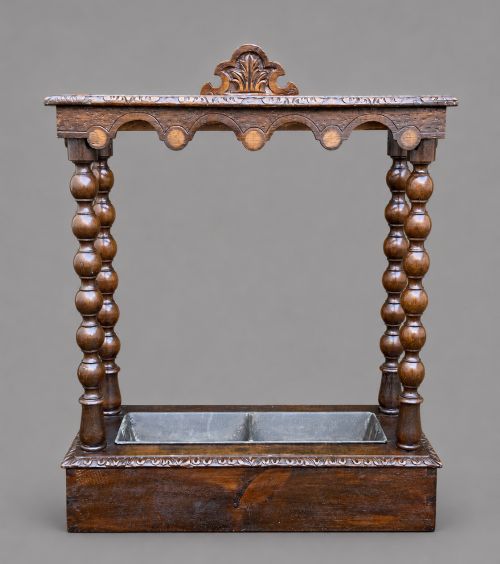
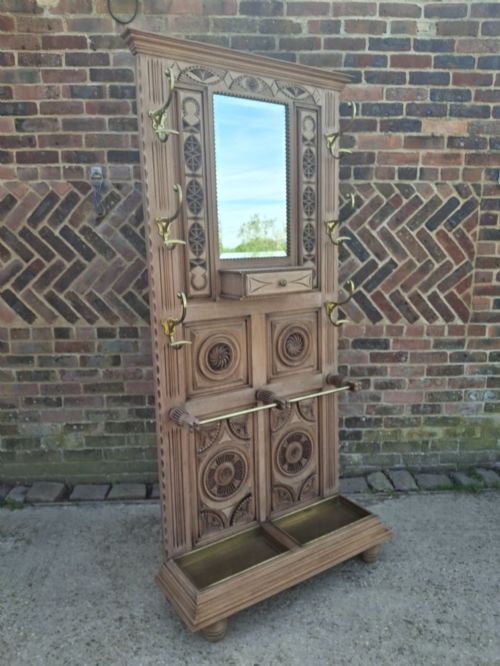
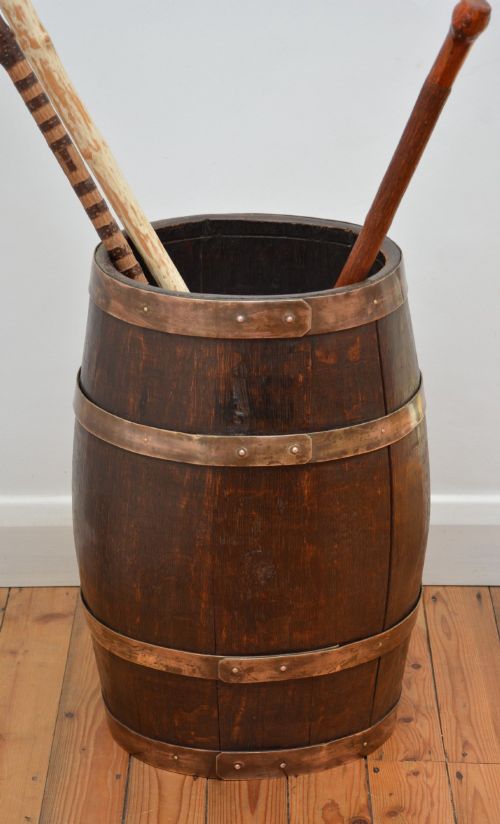
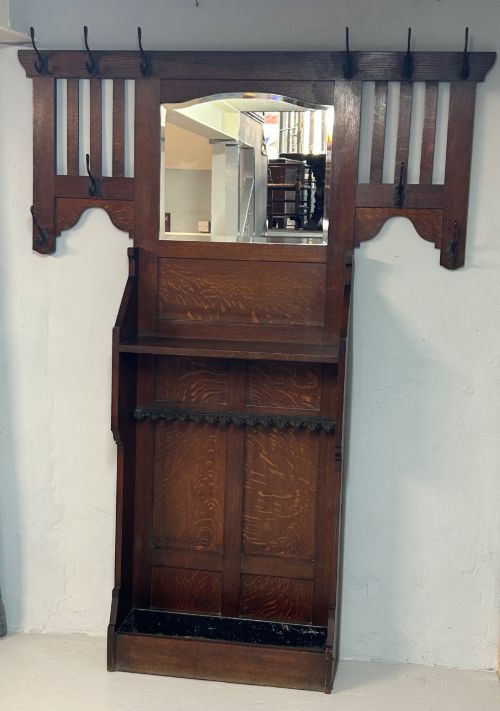
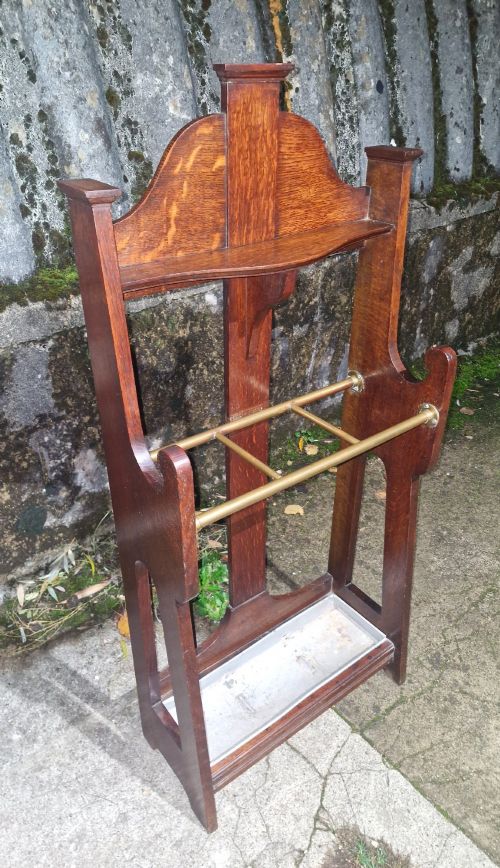
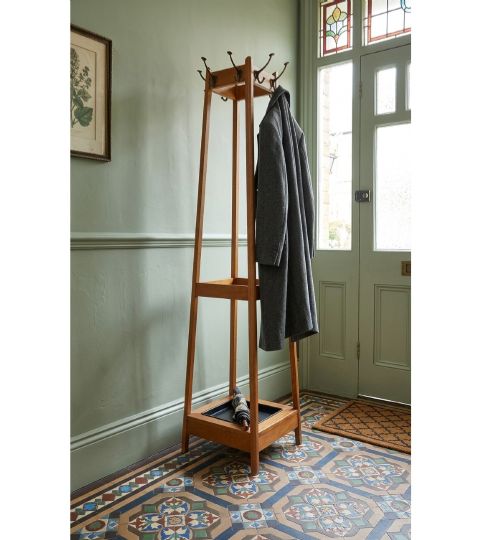
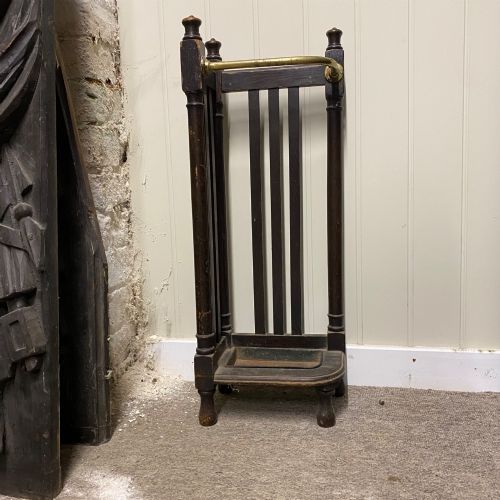
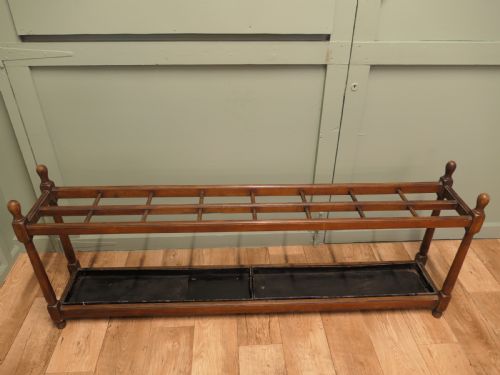
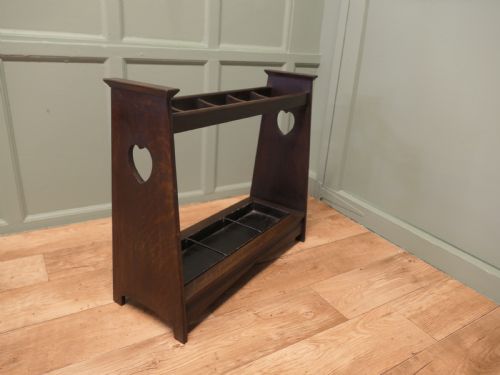
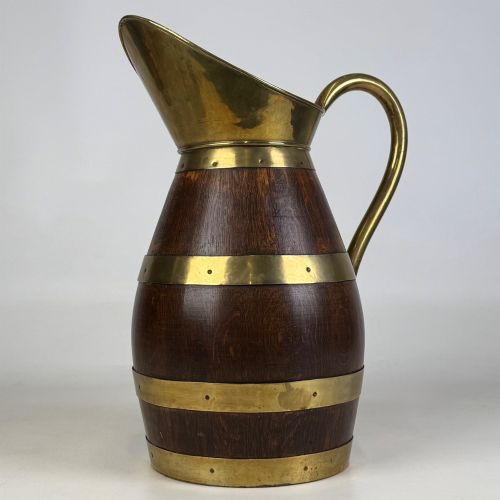
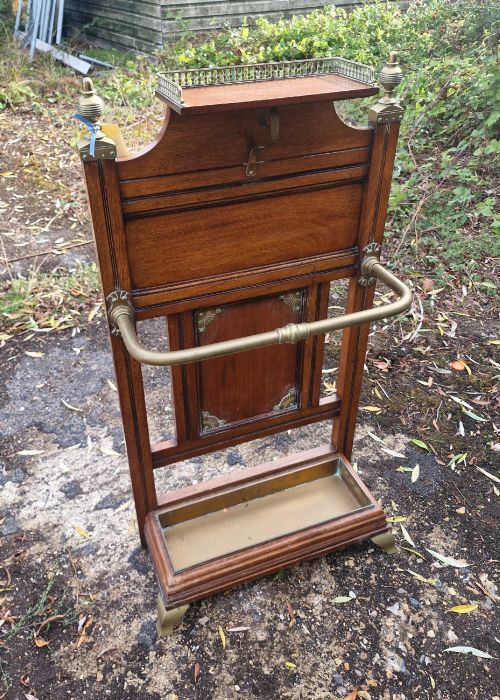
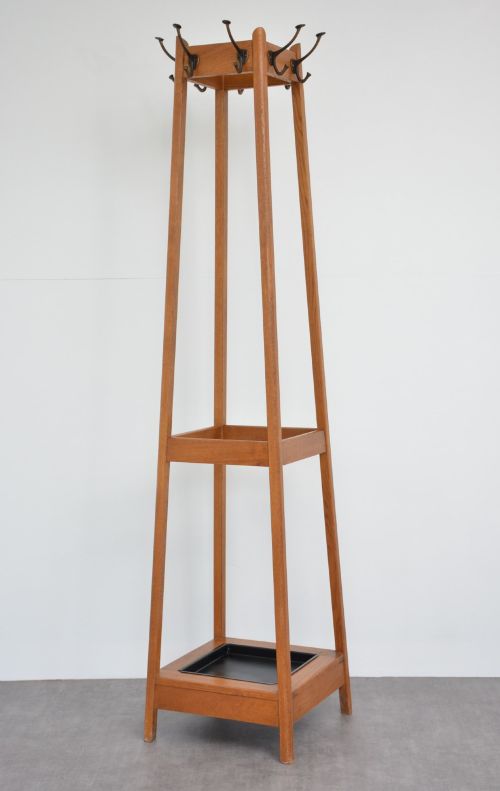
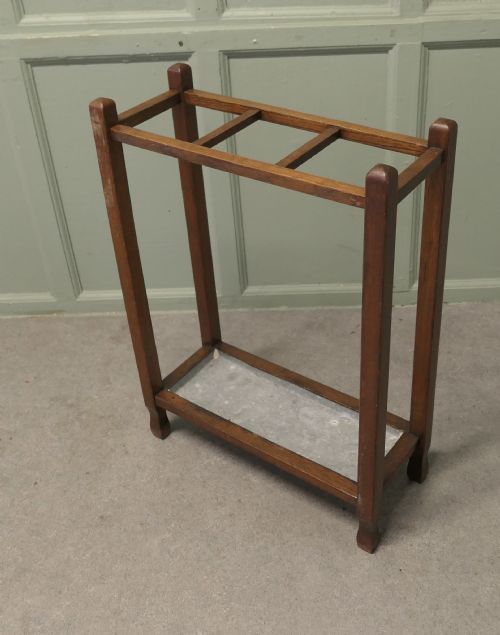
The most common examples on this page take the form of coopered wooden barrels or structured frame stands, often incorporating integrated metal drip trays at the base. You also encounter larger combined hall stands that feature coat hooks and mirrors alongside the stick compartments.
Originating largely from British country houses and town residences, these pieces utilise dense native timber to withstand daily heavy use in damp hallways. Their survival in varied domestic settings demonstrates their enduring utility and robust initial construction.
How they were made
Maker workshops built these pieces using solid oak staves bound with brass, copper, iron or zinc bands, employing traditional cooperage techniques identical to barrel making. This construction method allows the wood to expand and contract naturally when exposed to wet umbrellas over decades.
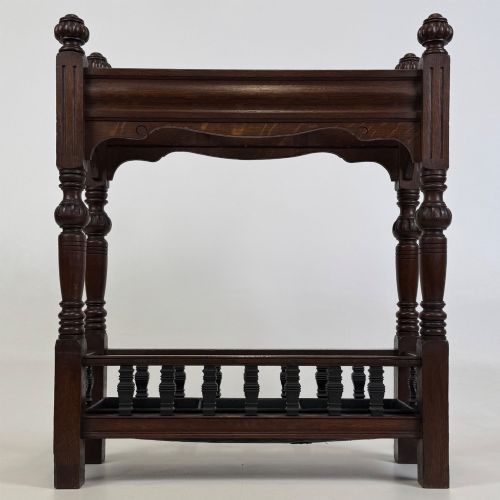
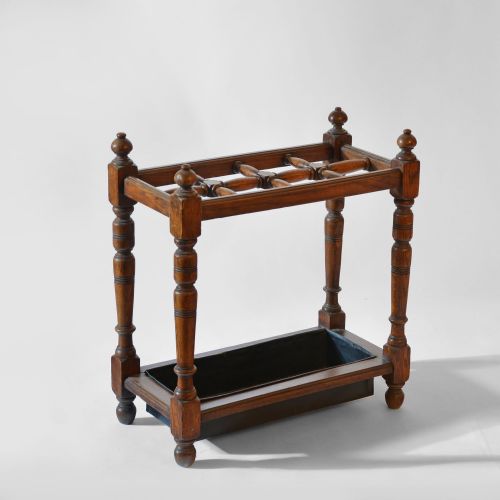
Framed variants rely on mortise and tenon joinery, sometimes enhanced by turned barley twist supports, carved panel detailing or applied metal fittings. Workshops often integrated removable metal pans underneath the stick divisions to collect moisture and protect the wooden floors.
Vintage Oak Stick Holder Retail Price Guide 2026
Typical asking prices for vintage oak stick holder among the pieces listed under this phrase on Sellingantiques today, from the lower quarter to the upper quarter. They describe what is for sale here now, not the wider market.
Listings span the nineteenth and twentieth centuries, incorporating Victorian, Edwardian and Arts and Crafts design movements executed in oak, brass and copper.
What varies in quality
Quality rests upon the integrity of the timber selection and the precision of the metal binding or joinery. Superior examples maintain tight, secure staves and retain their original metal liners, whereas lesser items suffer from warped wood or mismatched replacement hardware.
Design ambition separates basic utility items from exceptional pieces created by notable retailers or specific artistic movements. Stronger design coherence, such as clean Arts and Crafts lines or crisp Gothic Revival carving, distinguishes the finer workshop output from standard domestic furniture.
Liberty Design·Heals of London
The Vintage Oak Stick Holder Glossary
- Coopered
- Constructed from curved wooden staves fitted together side by side and bound by metal hoops, much like a traditional cask or barrel. This technique ensures stability for cylindrical umbrella stands.
- Barley twist
- A type of woodworking cut in a spiral form resembling a twisted rope, frequently seen on the upright supports of Edwardian and Jacobean Revival furniture. It adds textural depth to hall stands.
- Demi lune
- A half-moon or semicircular shape utilised in the footprint of hall stands designed to sit flush against an entrance wall. This profile saves floor space in narrow corridors.
- Drip tray
- A removable metal basin placed at the bottom of a stick stand to catch water from wet umbrellas. Original trays are usually zinc, copper or galvanized iron.
Vintage Oak Stick Holder: Frequently Asked Questions
Where should I place a stick stand?
These items suit entrance halls, porches or boot rooms where wet outerwear and walking sticks accumulate naturally upon coming indoors.
Ensure the placement allows adequate ventilation so that damp umbrella tips dry thoroughly without lingering moisture damaging the interior timber.
How do I care for oak furniture?
Maintain the wood by applying occasional clear beeswax to nourish the grain and preserve the deep natural patina developed over decades of use.
Avoid placing the piece directly beside active heat sources such as radiators, which can cause older oak staves to shrink or split.
Are original metal liners common?
Many surviving pieces retain their fitted metal drip pans, though some replacements occur due to rust from centuries of collecting rainwater.
Check whether the base pan matches the period of the stand, as zinc and copper linings help confirm authenticity.
How do I date an oak stick stand?
Dating relies on stylistic clues, such as heavy Gothic Revival mouldings from the nineteenth century or lighter geometric Arts and Crafts framing from the early nineteen hundreds.
Construction methods also provide hints, as hand-coopered barrels precede later mass-produced variants.