
Vintage Oak Box
A vintage oak box brings centuries of sturdy utility and rich grain into a room, offering practical storage with distinct period character.
Vintage Oak Box
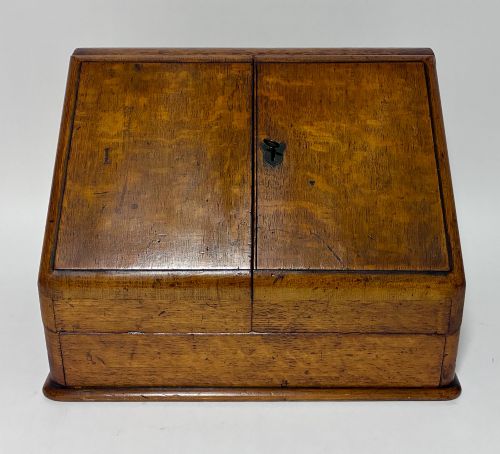
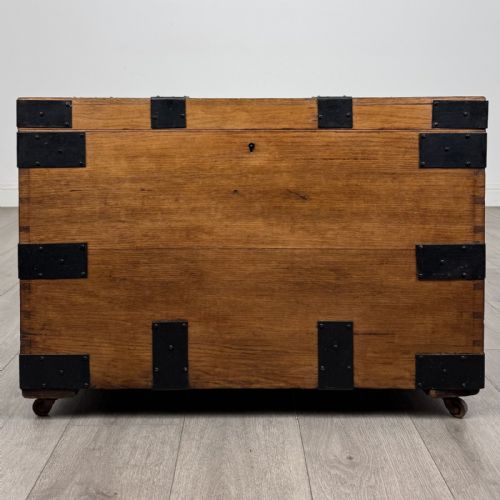
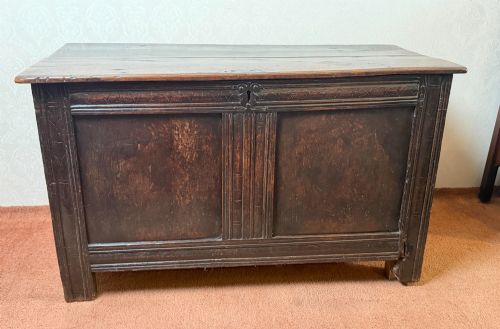
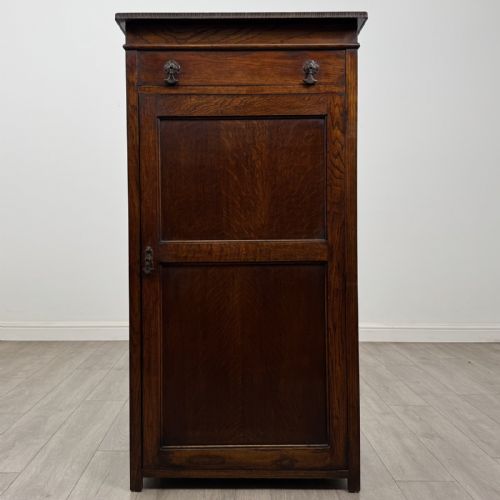
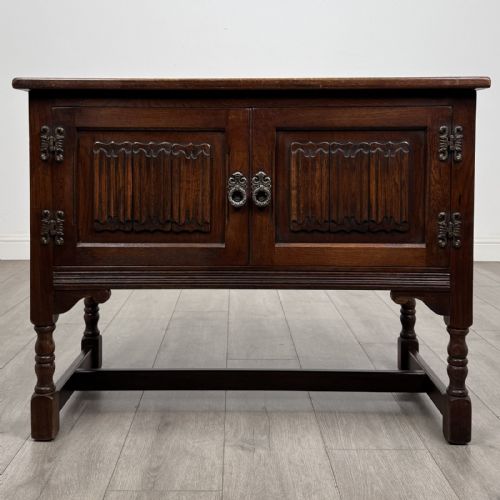
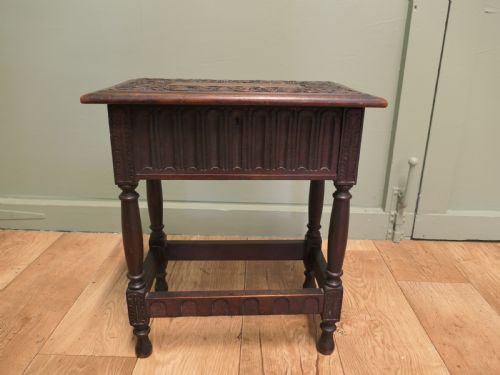
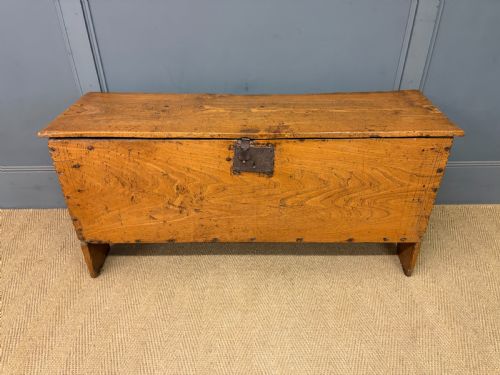
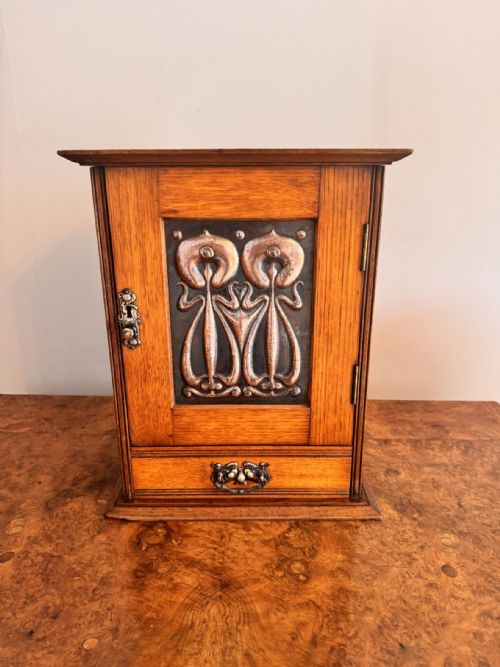
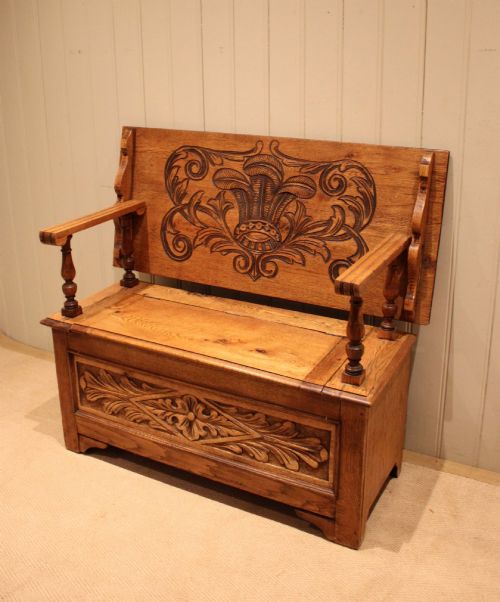
A vintage oak box encompasses a wide array of sturdy containers, from rustic country coffers and blanket chests to refined smokers' cabinets and games boxes. When searching for a vintage oak box, buyers frequently encounter heavy storage trunks and smaller lift-top containers spanning the 17th century through the Edwardian and Arts and Crafts eras.
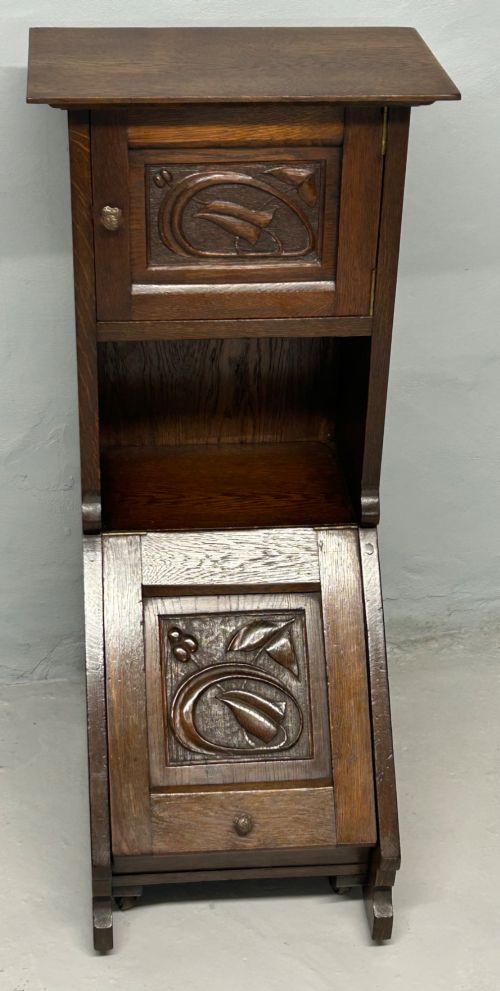
The selection ranges from utilitarian flour bins and coal scuttles to finely carved Jacobean revival cupboards and brass-bound trunks. Solid oak construction unites these varied forms, providing the durable framework that allowed them to survive centuries of domestic use.
Evaluating craftsmanship and condition
Quality in these pieces depends upon the integrity of the original timber and the depth of the hand-carved detailing. Pieces featuring untouched patination, solid oak panels, and intact period hardware command greater interest than those with replaced elements.
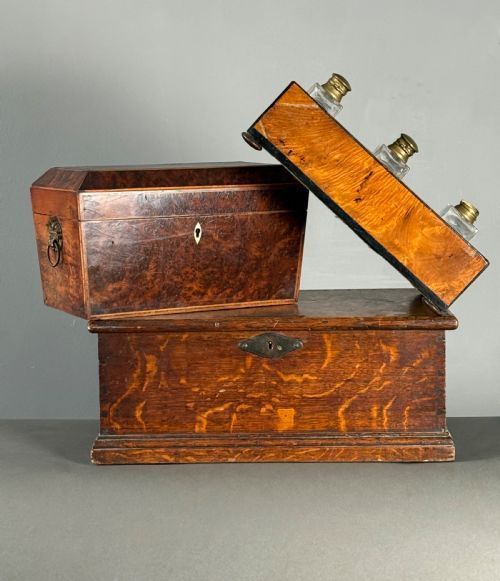
The precision of the joinery and the survival of secondary materials, such as internal compartments, mother of pearl inlay, or original glass decanters, distinguish standard storage items from finer cabinetwork.
An unusual Frisian foot stove reminds us that people once warmed their toes by placing hot coals inside carved wooden boxes.
Levi and Salaman·Heals
The Vintage Oak Box Glossary
- Coffer
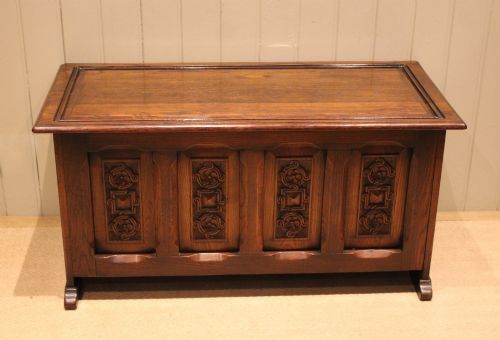
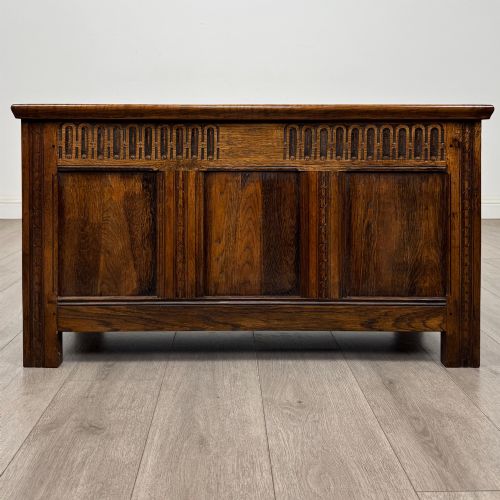
- A heavy wooden chest traditionally used for storing valuables or household goods. These sturdy containers often feature hinged lids and carved panels.
- Tantalus
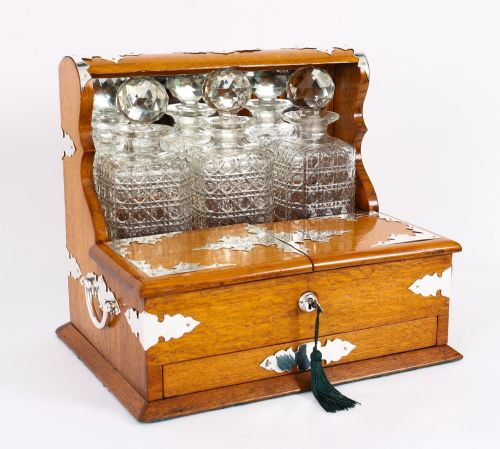
- A locked cabinet holding decanters that displays the contents while preventing unauthorised access. They typically incorporate polished wood and metal locking mechanisms.
- Purdonium
- A specialised domestic cabinet designed to house coal near a fireplace. These containers often include a sloping front and a metal liner.
- Linenfold
- A style of wood carving that mimics folded linen fabric. This decorative technique appears frequently on the panels of Tudor and revival cupboards.
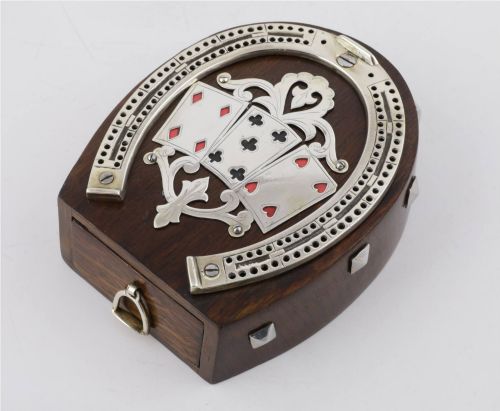
- Cribbage board
- A scoring board used during card games, frequently integrated into dedicated wooden boxes. They often feature brass peg holes and storage for playing cards.
Vintage Oak Box: Frequently Asked Questions
How do I date an oak box?
Dating relies on examining the construction methods, tool marks, and hardware styles visible on the piece. Hand-cut joints and period locks often point towards earlier centuries.
Revival pieces from the Edwardian or Arts and Crafts periods emulate these older styles but display different interior fittings and machine-assisted preparation.
What were small oak boxes used for?
Smaller boxes served specific domestic functions such as holding playing cards, cigars, documents, or medical supplies. Wealth households utilised dedicated containers to secure valuable personal items.
Many incorporated specialised compartments, velvet linings, or silver mounts to protect delicate contents.
How should I clean a vintage oak box?
Maintenance requires gentle dusting with a dry cloth to protect the aged surface patination and historic wax finishes. Avoid modern liquid cleaners or harsh polishes that strip the character from the wood.
Occasional application of traditional beeswax helps nourish dry oak and maintain a soft lustre.
Are these boxes suitable for modern storage?
These robust containers adapt readily to contemporary interiors for storing blankets, games, or paperwork while adding historic texture to a room. Their solid construction ensures they remain fully functional.
Lift-top chests and cupboards offer practical concealment for household clutter in living spaces or hallways.