

Vintage Napkin Ring
A vintage napkin ring brings small-scale metalwork and tailored charm to the table.
Vintage Napkin Ring
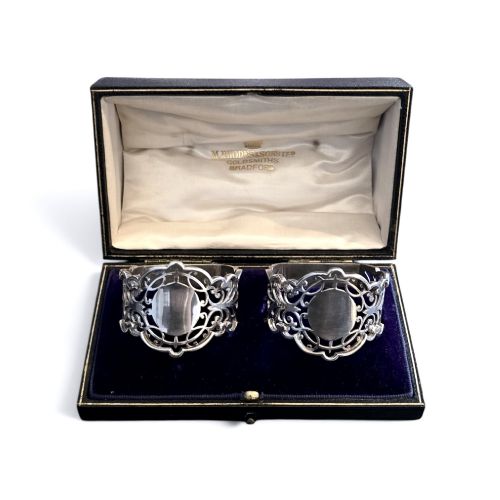
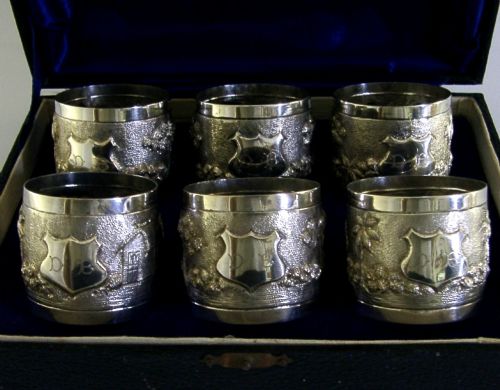
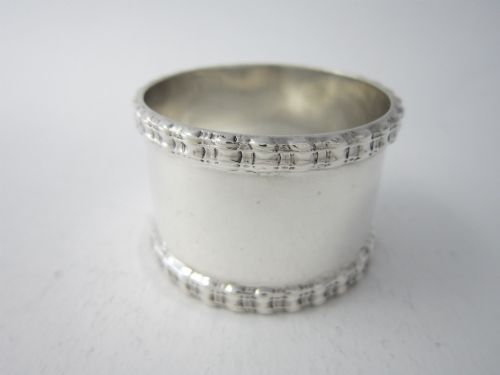
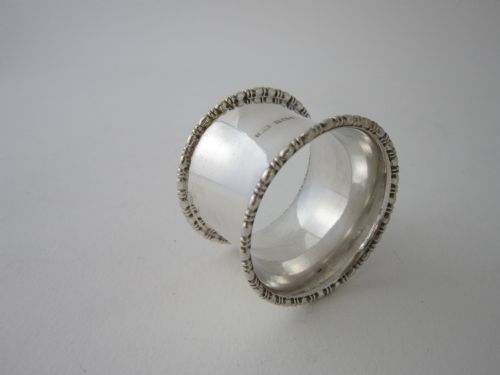
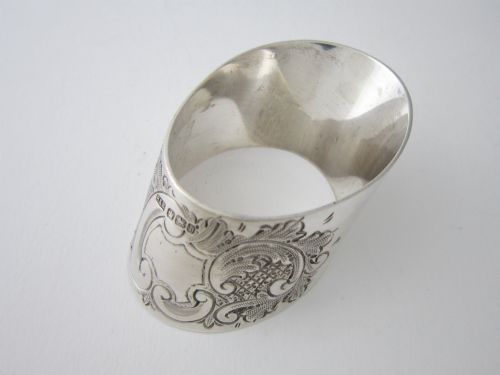
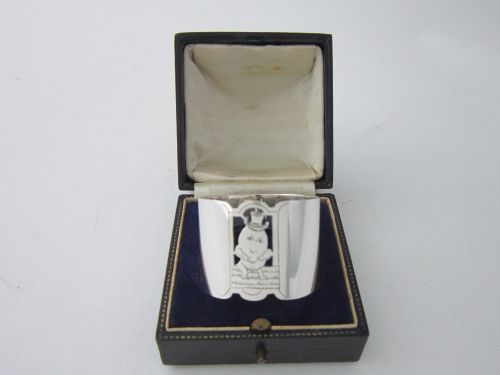
When searching for a vintage napkin ring, buyers encounter table accessories spanning the Victorian, Edwardian, and mid-century periods. These pieces include single items, matched pairs, and larger cased sets often lined with silk, velvet, or leatherette.
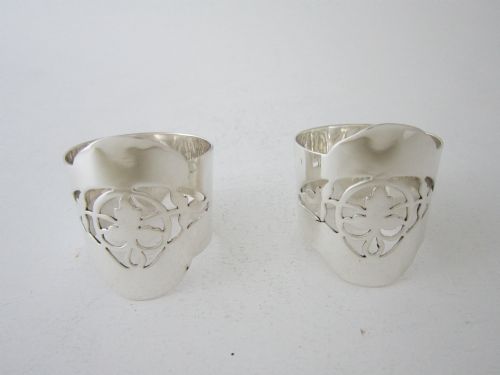
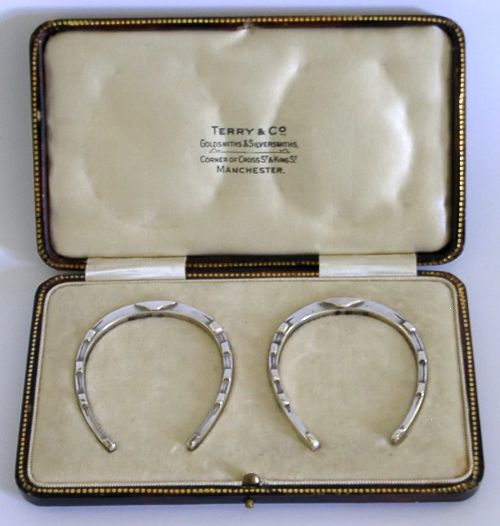
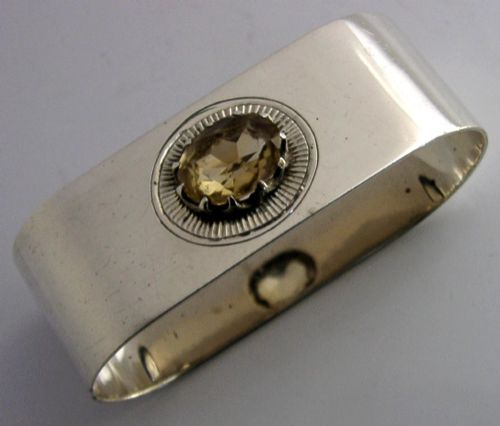
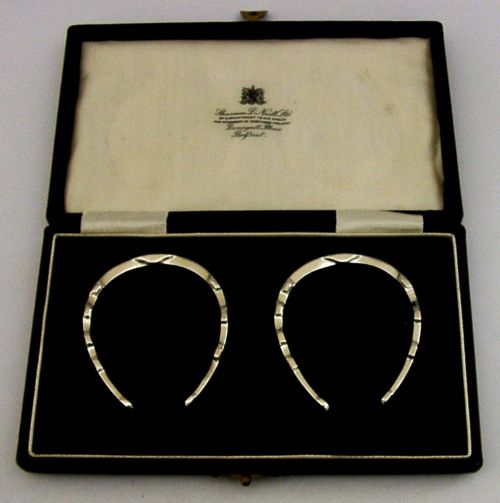
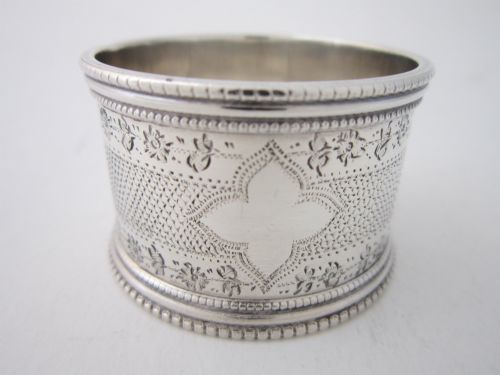
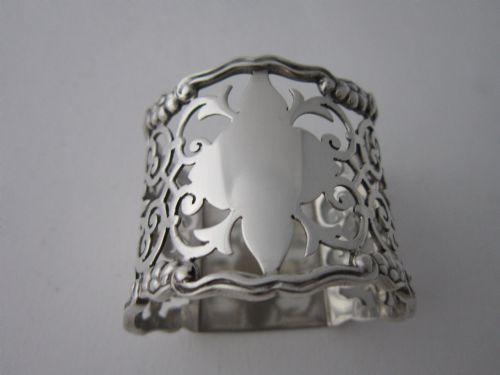
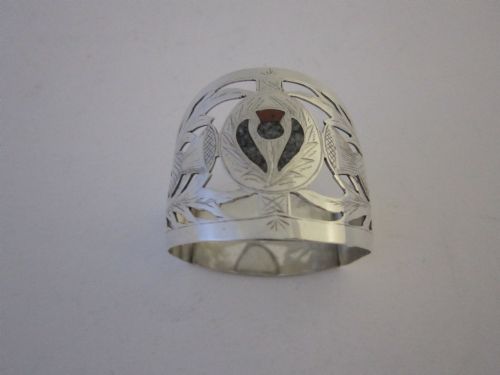
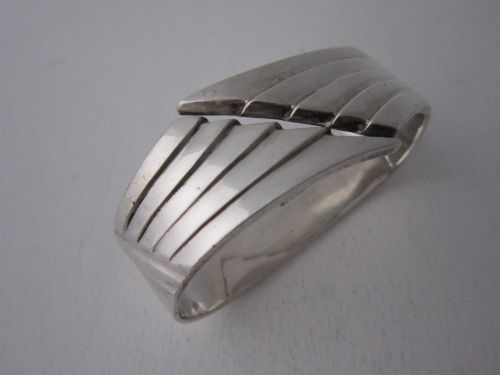
The selections on this page range from plain bands to shaped designs such as horseshoe motifs, belt buckles, and novelty forms. Sterling silver and silver plate predominate, occasionally paired with enamel, citrine, or agate.
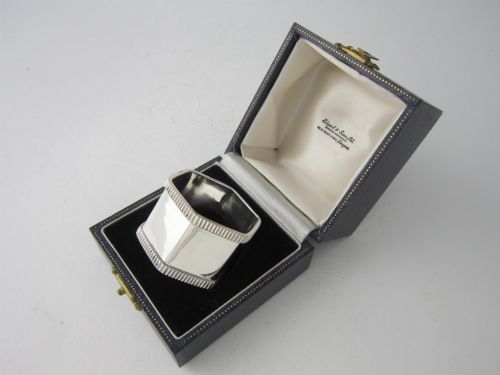
Sets are frequently housed in fitted leather or card presentation boxes, pointing to their historical use as gifts for weddings, christenings, and anniversaries.
How they were made
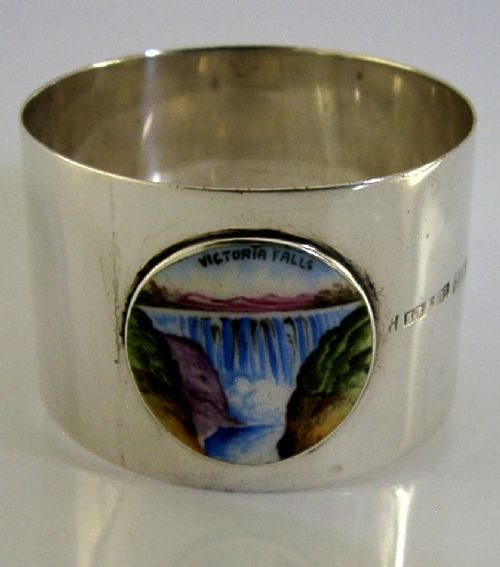
Silversmiths formed these rings from sterling silver or applied silver plating over base metal, sometimes utilising hammering techniques to create textured surfaces. Enamelwork added colour and pictorial detail, as seen in pieces depicting landscapes.
Makers integrated natural materials such as agate and citrine stones, or turned hardwood into mauchline ware rings. Fitted presentation cases employed materials like silk, velvet, and leatherette to protect the metal surfaces during storage.
Vintage Napkin Ring Retail Price Guide 2026
Typical asking prices for vintage napkin ring among the pieces listed under this phrase on Sellingantiques today, from the lower quarter to the upper quarter. They describe what is for sale here now, not the wider market.
Certain Victorian examples are cleverly modelled to resemble miniature leather belt buckles.
What varies in quality
The distinction between standard production and finer examples rests on the weight of the silver and the precision of the maker's hand. Substantial gauge metal resists distortion through decades of handling and polishing.
Design complexity also separates pieces, from simple plain bands to intricate Arts and Crafts hammering, applied novelty details, or hand-painted enamel scenes. Original fitted cases bearing maker marks elevate the context of a set.
Martin Hall And Co·Albert Edward Jones·Georg Jensen·Hermes Paris·C T Burrows And Sons·Tiffany And Co·Liberty And Co·Mappin And Webb·Cartier
The Vintage Napkin Ring Glossary
- Sterling silver
- A silver alloy containing 92.5 percent pure silver and 7.5 percent other metals, typically copper, ensuring structural durability for daily use.
- Silver plate
- A layer of silver fused or electroplated onto a base metal core such as brass, nickel, or copper.
- Cased set
- A collection of items sold together in a custom-fitted storage box lined with materials like silk or velvet.
- Novelty ring
- A piece shaped to represent an object, animal, or symbol rather than a traditional geometric band.
Vintage Napkin Ring: Frequently Asked Questions
How were napkin rings used?
These rings served to identify individual napkins during multi-day use at the family dining table before regular laundering became common.
Matched sets allowed each household member or guest to keep their designated marker between meals.
What periods do these pieces represent?
The selections span the Victorian, Edwardian, and Art Deco eras, extending into mid-century modern designs.
Stylistic shifts reflect changing tastes from ornate Victorian engraving to streamlined geometric modernist forms.
Are cased sets common?
Many examples survive within their original fitted presentation boxes lined with silk or velvet.
These boxes indicate the items were intended as formal gifts for domestic milestones.
What materials are most frequent?
Sterling silver and silver plate dominate the material record across all manufacturing decades.
Enamel, agate, citrine, and turned hardwood appear in specialised decorative variations.