



Vintage Napkin Bands
These vintage napkin bands span from the late Victorian period through the mid-century, offering a refined way to dress a dining table.
Vintage Napkin Bands
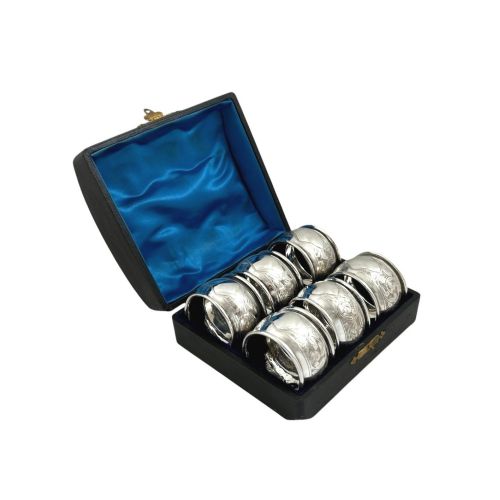
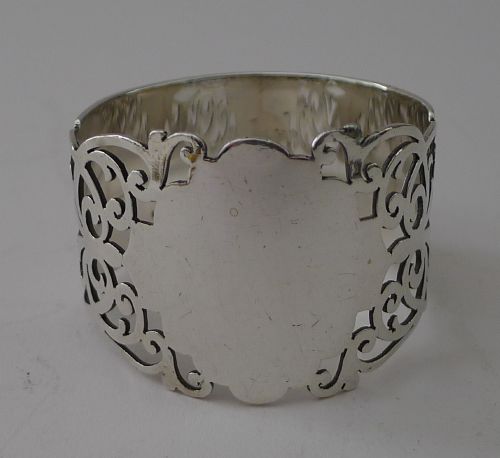
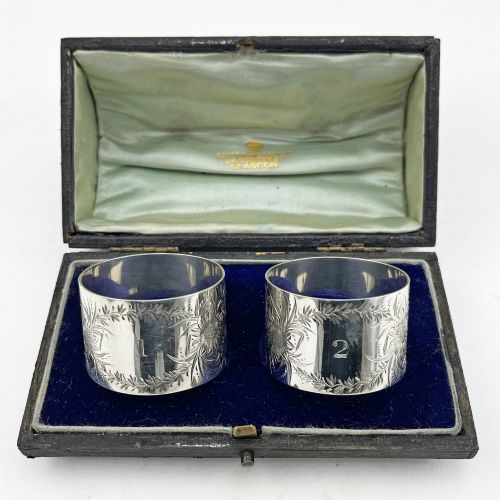
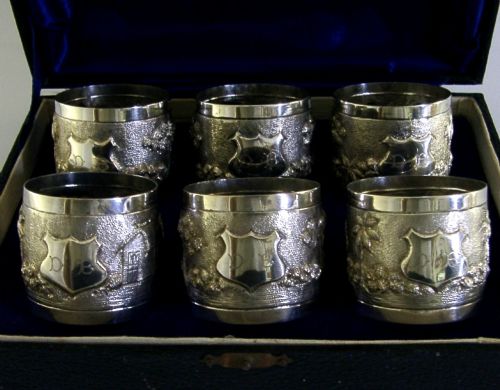
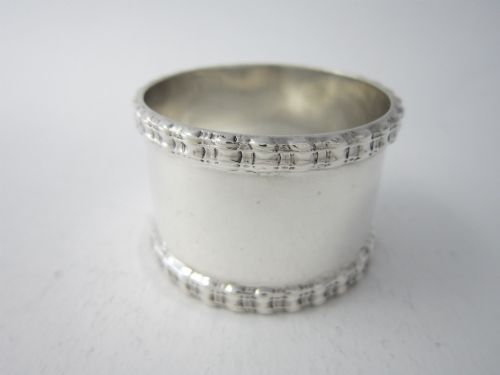
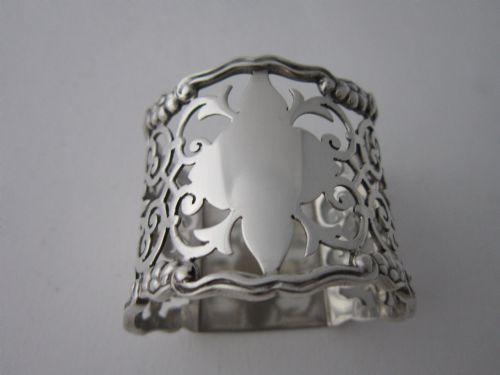
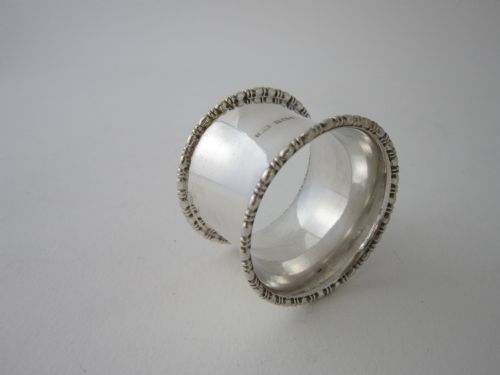
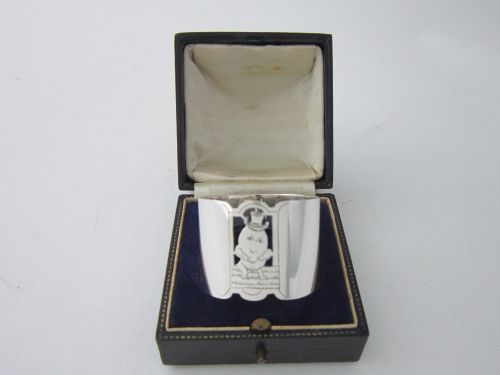
When you search for vintage napkin bands, you are looking at solid sterling silver and silver-plated rings designed to hold table napkins. These functional items appear in single examples, pairs, or matched sets of six, frequently accompanied by their original fitted cases.
The selections on this page draw from the Victorian, Edwardian, George V, and Art Deco periods, alongside mid-century British, Anglo-Indian, and Arts and Crafts styles. Sterling silver dominates the offerings, supplemented by occasional additions of enamel and silver plate.
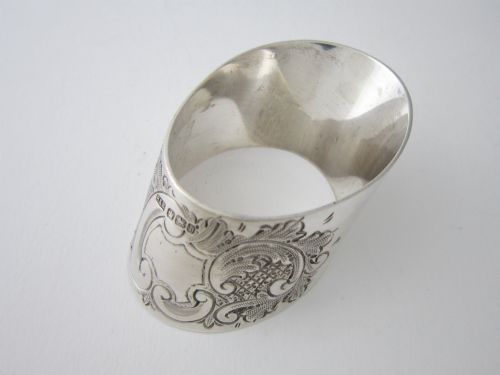
You will encounter pieces bearing hallmarks from various decades, including the early twentieth century and the interwar years. Makers such as Liberty & Co, Cartier, David Andersen, and Martin Hall & Co represent the higher tiers of craftsmanship available.
What varies in quality
The distinction between standard production and exceptional work rests on the weight of the metal and the crispness of the chasing or engraving. Thicker gauge silver maintains its structural integrity better over decades of handling.
Complete original casing and matched sets elevate the desirability of the objects. Pieces bearing clear hallmarks from notable firms or incorporating decorative enamel demonstrate superior craftsmanship compared to plain utilitarian versions.
Vintage Napkin Bands Retail Price Guide 2026
Typical asking prices for vintage napkin bands among the pieces listed under this phrase on Sellingantiques today, from the lower quarter to the upper quarter. They describe what is for sale here now, not the wider market.
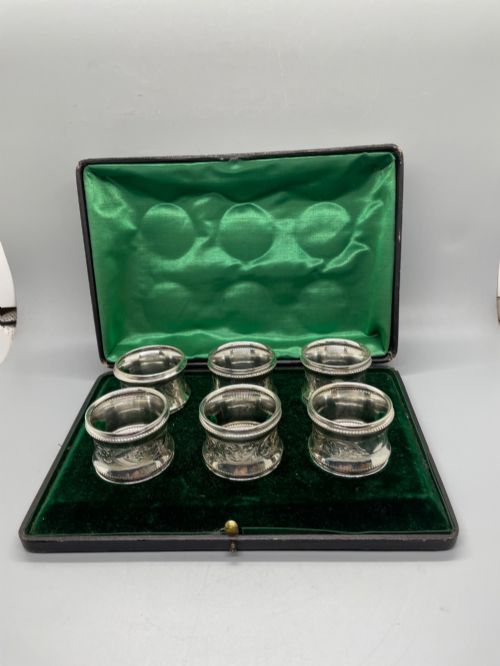
Some Edwardian dining sets quietly survived a century inside plush velvet slots, waiting for the return of formal table linen.
Martin Hall & Co·Liberty & Co·Cartier·David Andersen
The Vintage Napkin Bands Glossary
- Hallmark
- An official stamp applied by an assay office to indicate the metal purity, origin, and year of manufacture. These marks allow collectors to date pieces precisely.
- Sterling silver
- An alloy consisting of pure silver and other metals, predominantly copper, standardising at a fineness of ninety-two point five per cent.
- Guilloche
- A decorative technique where a precise, intricate pattern is mechanically engraved into a metal surface beneath translucent enamel.
- Repoussé
- A method of metalworking where the silver is hammered from the reverse side to form a raised design in relief on the front.
Vintage Napkin Bands: Frequently Asked Questions
How do I date my napkin ring?
You can determine the age of a silver napkin ring by examining the assay office hallmarks stamped into the metal. These small symbols reveal the specific year letter and city of testing.
Additional clues come from the stylistic traits of periods like Art Deco or Edwardian, as well as the typography used for any engraved initials.
Are cased napkin rings more desirable?
Sets found within their original fitted cases often attract greater interest from collectors because the packaging preserves the items in untouched condition. These boxes usually feature silk or velvet linings tailored to the specific ring count.
Original presentation boxes also confirm that the set has remained together since its manufacture.
How should I clean silver napkin bands?
Sterling silver benefits from gentle cleaning with a specialised microfibre polishing cloth to remove tarnish without abrading the surface. Avoid harsh chemical dips that strip away desirable patination.
Enamelled or gilt pieces require even greater care, using only a soft, dry cloth to protect the delicate coloured glass layers.
What is the difference between silver plate and sterling?
Sterling silver contains solid precious metal throughout the entire thickness of the band, marked to prove its composition. Silver plate consists of a base metal core coated with a very thin outer layer of pure silver.
Solid pieces show consistent metal properties over time, whereas plated items may reveal the underlying metal if worn extensively.