

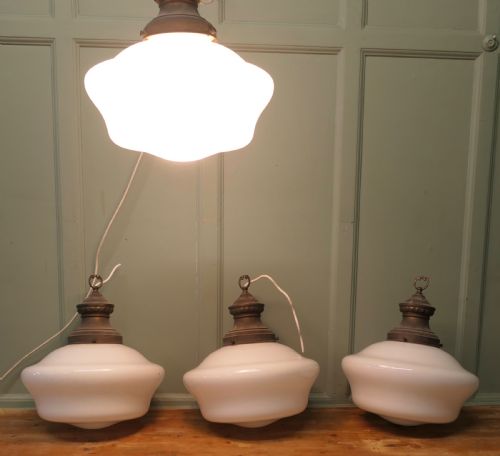


Vintage Milk Glass Light
A vintage milk glass light brings a soft, diffused glow to a room through dense white glass formed into pendants, shades, and oil lamps.
Vintage Milk Glass Light
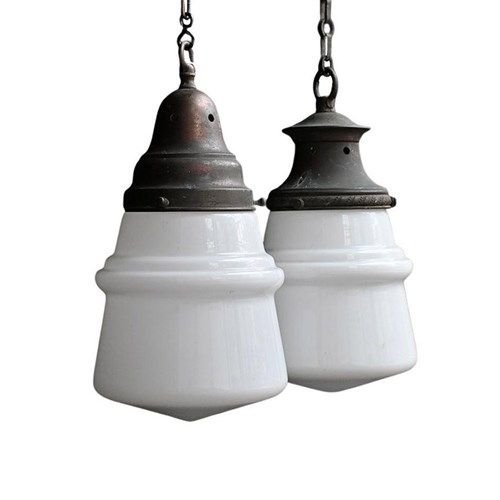
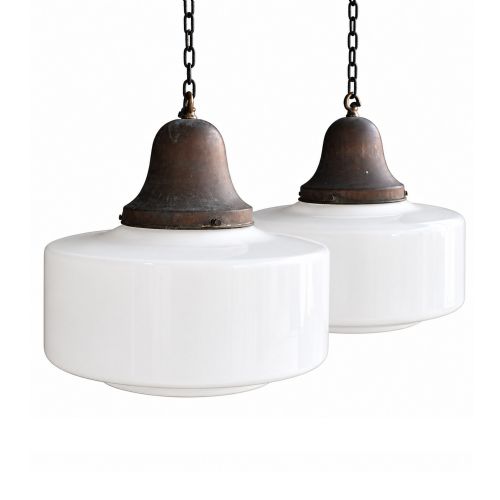
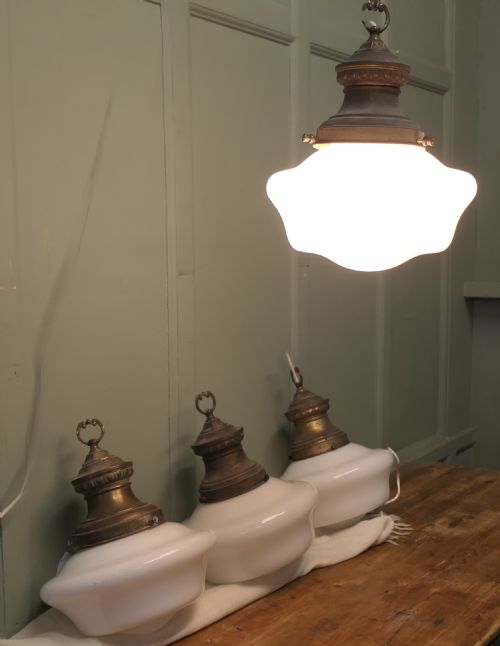
A vintage milk glass light encompasses opaque white glass fixtures from periods spanning the Victorian era through the mid-twentieth century. Buyers searching for a vintage milk glass light will frequently encounter pendant lights, ceiling lights, and lamp shades alongside converted oil lamps.
The selections on this page draw from the Victorian, Edwardian, and Art Deco periods, extending into the 1930s and 1940s. Industrial ceiling lights and domestic pendant lights sit alongside table lamps and oil lamps featuring glass globes.
Most pieces date from the early 20th century, specifically the 1920s and 1930s, utilising opaline, moonstone, and opaque glass forms. These range from diminutive lamp shades to large chapel lights and reeded pendants.
How they were made
Construction relies on combinations of glass and metal, principally brass, chrome, and enamel. Milk glass, opaline glass, and moonstone glass provide the translucent white body of the shades and globes.
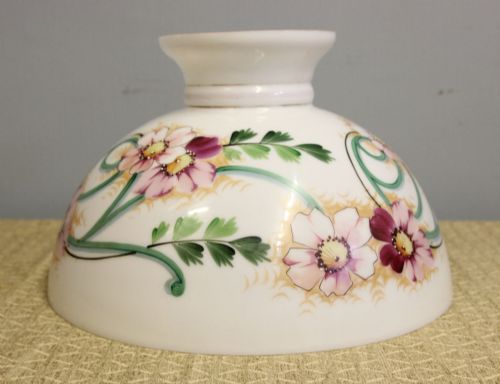
Metal components such as brass rings, gilt brass mounts, and ceramic or black glass bases support the glass elements. Surface treatments include hand painting and reeded designs moulded directly into the glass body.
Vintage Milk Glass Light Retail Price Guide 2026
Typical asking prices for vintage milk glass light among the pieces listed under this phrase on Sellingantiques today, from the lower quarter to the upper quarter. They describe what is for sale here now, not the wider market.
Materials recorded across the inventory include brass, chrome, enamel, ceramic, and multiple varieties of white glass.
What varies in quality
Quality reveals itself in the weight and consistency of the glass, where thicker opaline or moonstone variants diffuse light evenly without thin spots. The crispness of moulded patterns, such as fish scale textures or zig zag designs, distinguishes finer examples.
The finish of associated metalwork, including heavy cast brass fittings and enamel work, separates standard production items from superior pieces. Intact hand-painted details and well-matched original brass rings add to the integrity of an item.
The Vintage Milk Glass Light Glossary
- Opaline glass
- A type of semi-opaque glass, often white, that diffuses light softly. It appears frequently in pendant lights and lamp shades from the Victorian period onwards.
- Pendant light
- A hanging light fixture suspended from the ceiling by a cord, chain, or metal rod. These dominate the mid-century and 1930s selections.
- Oil lamp
- A lighting device that burns oil via a wick, typically comprising a glass shade or globe mounted on a ceramic, glass, or brass base. Many surviving examples date from the Victorian and Edwardian eras.
Vintage Milk Glass Light: Frequently Asked Questions
How do I clean milk glass?
Wash the glass gently in warm soapy water using a soft cloth, avoiding abrasive pads that can scratch the surface. Ensure any metal mounts or brass fittings remain dry during cleaning.
Dry the piece thoroughly with a lint-free cloth to restore the soft sheen of the opaque glass.
Can these lights take modern bulbs?
Many vintage fixtures accommodate modern LED or standard bulbs, provided the wattage matches the capacity of the original wiring and holder. Consult a qualified electrician to check the safety of vintage fittings before installation.
Adapting older pendants or table lamps for contemporary use is common practice among collectors.
What is opaline glass?
Opaline glass is a translucent or opaque white glass developed to soften and diffuse glare from the light source within. It gained popularity during the 19th century and remained widely used through the Art Deco period.
The density of the glass creates a characteristic milky appearance when unlit.
How do I date an oil lamp?
Examine the materials and construction methods, as Victorian and Edwardian examples often combine heavy brass burners with ceramic or black glass bases. Maker marks on the burner wicks or thumbwheels can also help establish a date of manufacture.
Stylistic shifts from ornate Victorian designs to simpler Edwardian or industrial forms provide further chronological clues.