

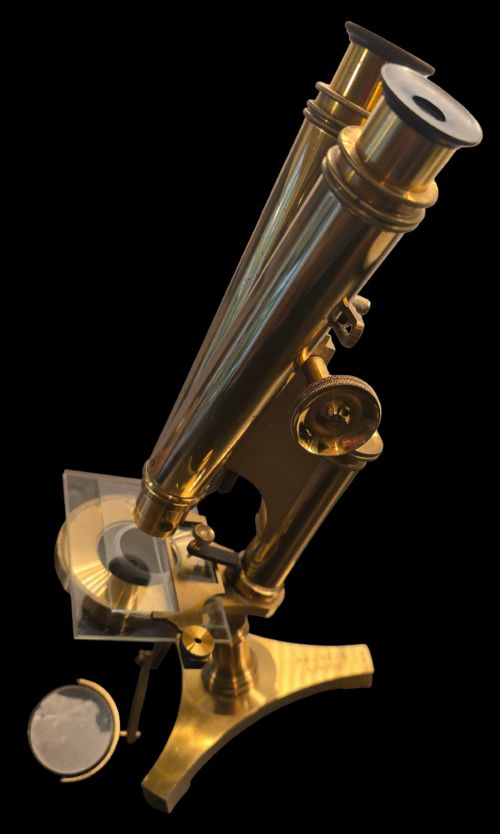


Vintage Microscope
These vintage microscope instruments and cabinets offer tangible links to early scientific discovery, prized by collectors for their precision engineering and period materials.
Vintage Microscope
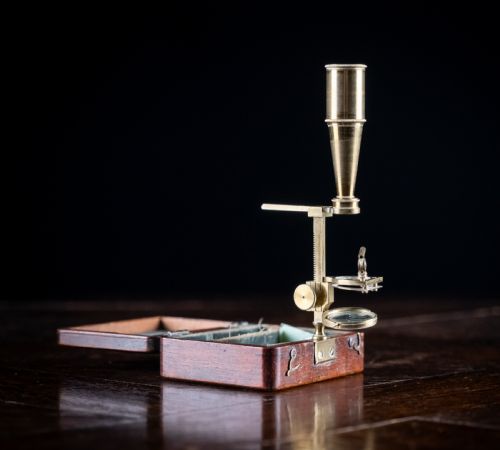
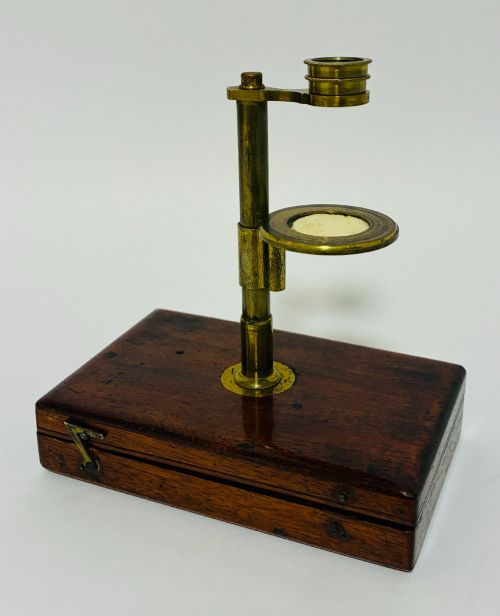
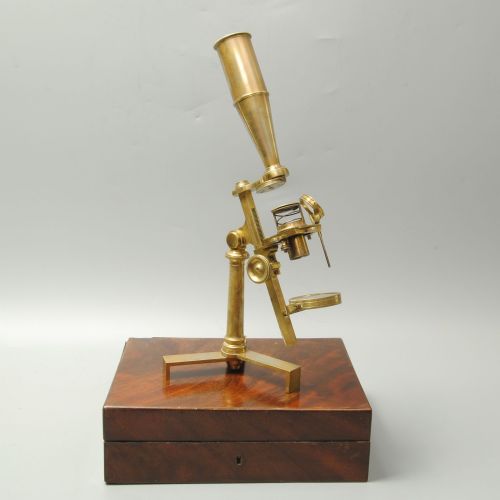
When you search for a vintage microscope, you enter a field defined by nineteenth and eighteenth century scientific instruments and their associated storage furniture. The pieces seen here range from pocket field models and drum microscopes to substantial binocular instruments housed in fitted mahogany cases.
Alongside the instruments themselves, this category includes specialist furniture such as multi-drawer slide collectors cabinets constructed in mahogany and satinwood. You are most likely to encounter Victorian and Edwardian brass scientific apparatus, often retaining trade papers, original lenses, or associated accessories like microscopy candle shades.
How they were made
Makers constructed these instruments primarily from heavy cast brass and optical glass, achieving smooth mechanical movement through precision machining. Wooden elements such as storage cases and slide cabinets utilise solid mahogany, frequently fitted with delicate brass handles and hinges.
Internal components and accessories often incorporate secondary materials including leather, velvet, fabric, and printed paper trade labels. Cabinets display fine cabinetry techniques, utilising contrasting timbers like satinwood for drawer fronts and structural framing.
Vintage Microscope Retail Price Guide 2026
Typical asking prices for vintage microscope among the pieces listed under this phrase on Sellingantiques today, from the lower quarter to the upper quarter. They describe what is for sale here now, not the wider market.
Materials documented across these scientific instruments and cabinets include brass, mahogany, glass, velvet, and leather.
What varies in quality
The distinction between ordinary and exceptional pieces rests upon the precision of the optics and the mechanical complexity of the instrument. Makers working to the highest standards produced heavy, stable brass assemblies with sophisticated rack and pinion focusing systems.
Presentation and completeness also drive the hierarchy of quality, particularly the presence of original fitted mahogany housing, manufacturer signatures, and intact documentation. Storage furniture is judged by the sheer capacity and execution of multi-drawer slide cabinets, where fine timber selection and meticulous joinery elevate the piece.
Cary London·R and J Beck London·M Pillischer of London·H Hughes and Son London·Swift and Son
The Vintage Microscope Glossary
- Binocular microscope
- An optical instrument fitted with two eyepieces for simultaneous viewing with both eyes. This configuration provides greater depth perception during extended examination.
- Culpepper microscope
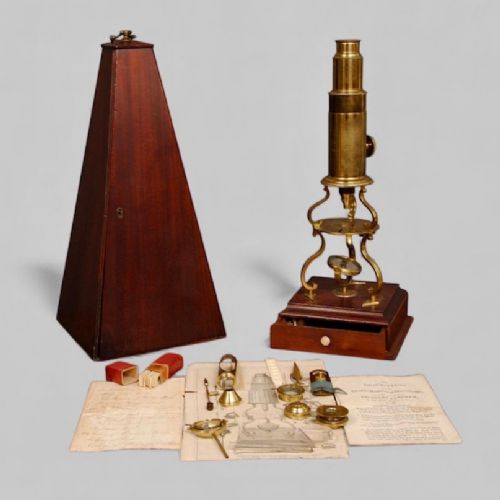
- An eighteenth century tripod design featuring a conical body tube supported above a mirrored stage. It represents a significant early form of compound microscope.
- Drum microscope
- A compact nineteenth century scientific instrument housed within a cylindrical body tube that slides inside an outer sleeve for focusing. These instruments are typically mounted on a simple heavy base.
- Field microscope
- A portable optical instrument designed for outdoor botanical or geological study. They usually pack directly into small pocket-sized cases for travel.
Vintage Microscope: Frequently Asked Questions
What is a Culpepper microscope?
A Culpepper microscope is an eighteenth century design featuring a characteristic tripod stand holding a stage and mirror beneath a main optical body.
These early instruments are distinguished by their architectural silhouette and association with the foundational period of British scientific instrument making.
How do I store a brass microscope?
Store your brass microscope in a dry environment away from direct sunlight to protect both the lacquer on the metal and the timber of its fitted case.
Original mahogany cases provide the ideal protective housing, keeping dust away from delicate lenses and mechanical stages.
What are microscope slide cabinets used for?
Microscope slide cabinets were designed to safely organise and store glass botanical, medical, or geological specimens in flat, dust-free drawers.
Collectors utilise these multi-drawer mahogany chests today to house small objects or preserve historical slide collections.
How do I date a Victorian microscope?
You can date a Victorian microscope by examining the engraved maker signatures, address details, and the complexity of the brass focusing mechanics.
Many instruments retain original trade papers or dated case labels that provide precise context for their manufacture during the nineteenth century.