

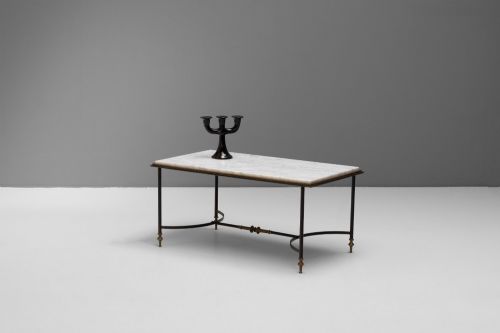

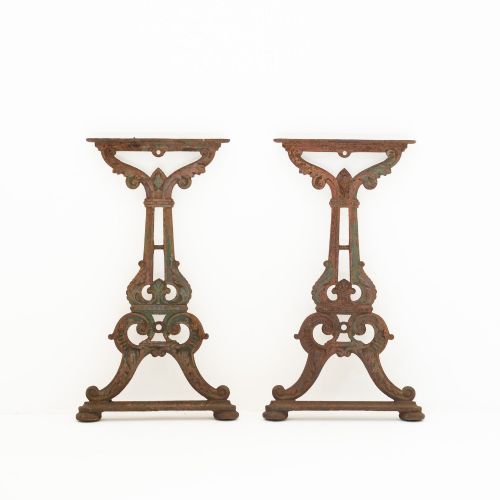
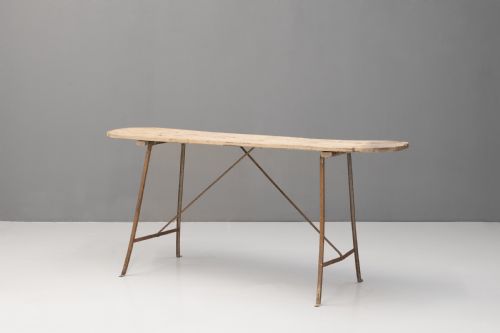


Vintage Metal Table Frame
These vintage metal table frame options provide sturdy structural supports and distinct character for bespoke table builds.
Vintage Metal Table Frame
A vintage metal table frame serves as the structural foundation for custom furniture, providing industrial or period character to a room. When searching for a vintage metal table frame, buyers typically encounter durable bases fashioned from materials like wrought iron or cast iron.
The selections available range from 19th-century Victorian cast iron table bases to 1930s chrome modernist designs. These pieces often originate from various European traditions, including French country and Arts and Crafts aesthetics.
Object forms span from side tables and coffee tables to garden dining sets and console tables. Buyers choose these frames to support marble, wood, or glass table tops while adding historical depth to an interior scheme.
Materials and construction methods
The construction of these frames relies heavily on metals such as wrought iron, cast iron, chrome, and brass, often paired with secondary elements like wood, marble, and glass. Cast iron components were formed using traditional foundry techniques, resulting in robust and heavy structural supports.
Wrought iron frames demonstrate manual forging and bending methods, creating fluid or geometric structural lines typical of Arts and Crafts and Victorian workshops. Later pieces incorporate chrome plating over metal cores, reflecting the industrial shifts of the 1930s.
Vintage Metal Table Frame Retail Price Guide 2026
Typical asking prices for vintage metal table frame among the pieces listed under this phrase on Sellingantiques today, from the lower quarter to the upper quarter. They describe what is for sale here now, not the wider market.
Materials paired with these metal frames include marble, glass, and wood alongside wrought iron, brass, and chrome.
Assessing quality in metal frames
Quality in these frames rests upon the integrity of the metalwork, the weight of the casting, and the preservation of the original surface finish. Superior examples display clean joints, robust gauge metal, and stable weight distribution capable of supporting heavy tops like marble.
The distinction between ordinary production and finer execution lies in the detail of the metal shaping, whether through hand-forged wrought iron scrollwork or precise chrome finishing. Patina and surface wear should appear natural to the period, reflecting genuine age without compromising structural soundness.
The Vintage Metal Table Frame Glossary
- Cast iron
- A strong, hard alloy of iron and carbon poured into moulds to create intricate or heavy structural shapes. It forms the backbone of many Victorian table bases.
- Wrought iron
- Iron that is beaten, bent, and shaped by hand using tools rather than poured into a mould. This material defines many French country and Arts and Crafts frames.
- Chrome
- A thin layer of chromium electroplated onto metal to provide a bright, corrosion-resistant finish. It is a hallmark of Art Deco and 1930s design.
- Aesthetic movement
- A late 19th-century design style that emphasised visual beauty over narrative or moral content in decorative arts. Pieces from this era often feature stylised natural motifs.
Vintage Metal Table Frame: Frequently Asked Questions
What tops fit these metal frames?
These frames typically accommodate marble, wooden plank, or glass table tops depending on the weight capacity and footprint of the base.
Buyers often pair industrial or Victorian cast iron bases with reclaimed timber or thick marble slabs to create bespoke dining or coffee tables.
How do I clean a vintage metal frame?
Cleaning depends entirely on the specific metal finish, whether it is patinated wrought iron, polished chrome, or oxidised brass.
Light dusting and microfibre cloths generally suffice, avoiding harsh chemical solvents that can strip historic patinas or protective coatings.
Are these frames suitable for outdoor use?
Certain metal frames, particularly those made from heavy wrought iron or zinc-topped garden designs, tolerate outdoor environments better than others.
Indoor pieces featuring chrome or delicate brass plating require protection from damp conditions to prevent rust and surface pitting.
How can I date a metal table frame?
Dating relies on observing manufacturing techniques, such as the difference between rough Victorian sand-cast iron and smooth 1930s chrome plating.
Stylistic cues like Art Deco geometry or Arts and Crafts hand-hammering also provide clear indicators of a piece's period of origin.