

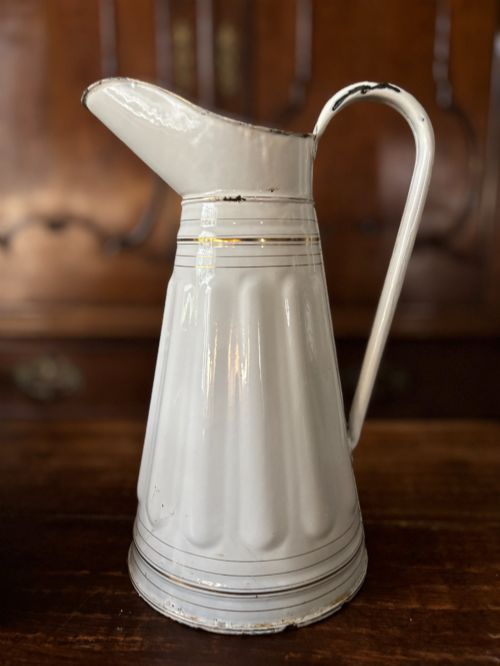
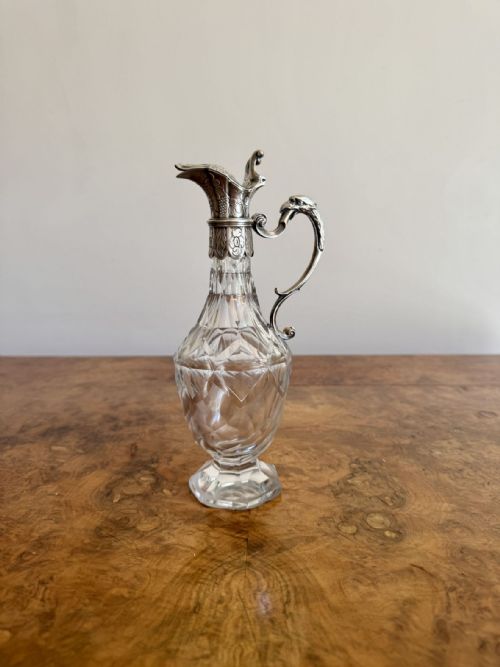
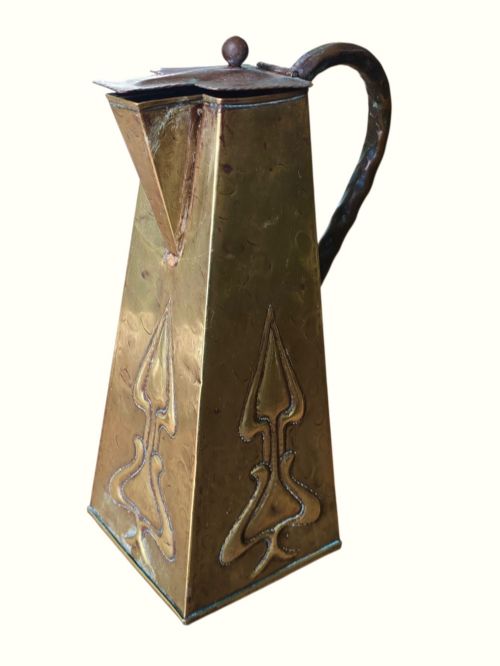
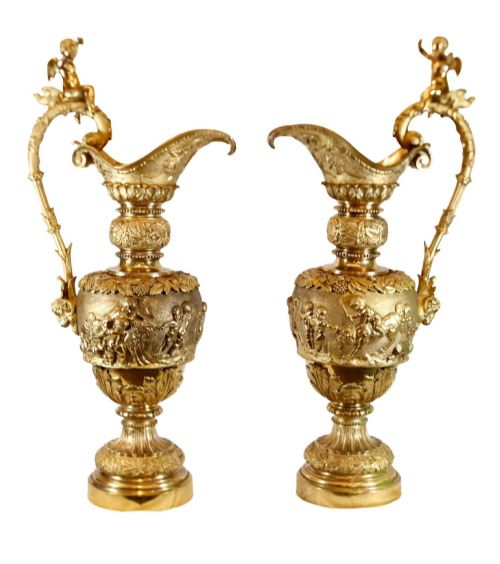
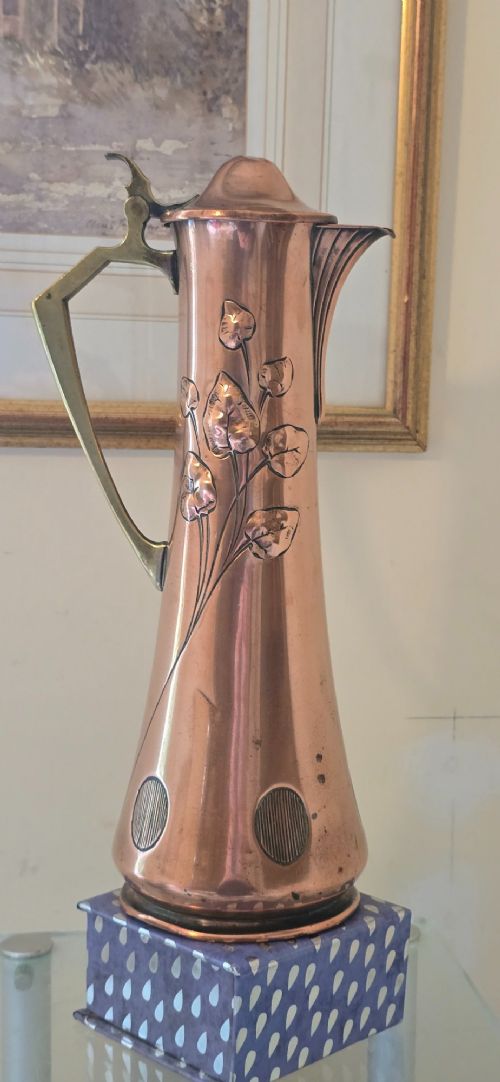

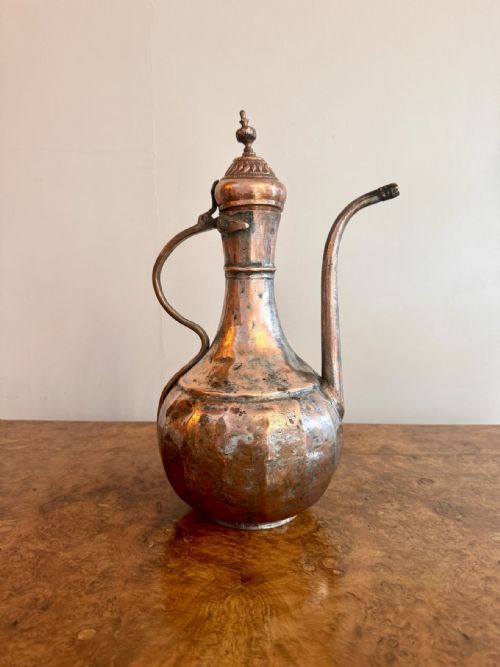


Vintage Metal Ewer
These vintage metal ewer examples bring sculptural poured forms into domestic spaces, drawing on centuries of utility and decorative design.
Vintage Metal Ewer
A vintage metal ewer functions primarily as a decorative vessel, pitcher, or coffee pot shaped for pouring liquids. When you search for a vintage metal ewer, you encounter forms ranging from heavy Victorian copper jugs to elaborate French gilt vessels.
The selections span periods from the eighteenth century through the nineteenth century and into nineteen hundred. Styles stretch across Victorian, Art Nouveau, Ottoman, Middle Eastern, and Indo-Persian designs.
The physical objects appear in varied materials including copper, brass, bronze, gilt bronze, ormolu, tin, porcelain, cast metal, and silvered pewter. Many serve as decorative items rather than utilitarian table service pieces.
How they were made
Makers utilised heavy sheet metals and casting techniques to build these vessels, working extensively with copper and brass. Surface decoration often involved hand-beating, repoussé, or applied relief work.
Foundry casting created structural components such as handles and spouts, visible in bronze aftabas and French gilt ewers. Gilt bronze, ormolu, and silvered pewter finishes provided gleaming decorative surfaces on specific decorative ewers.
Vintage Metal Ewer Retail Price Guide 2026
Typical asking prices for vintage metal ewer among the pieces listed under this phrase on Sellingantiques today, from the lower quarter to the upper quarter. They describe what is for sale here now, not the wider market.
Some ewers feature elaborate handles shaped like mythical sea creatures or Indian makaras, ready to pour.
What varies in quality
The calibre of a vintage metal ewer rests on the crispness of its cast details and the integrity of its metalwork. Pieces featuring complex figural handles, such as mermaids or makaras, demonstrate superior sculptural ambition compared to plain utilitarian jugs.
Makers such as WMF introduced distinct stylistic identities through floral relief and silvered pewter finishes. The weight of the metal and the precision of the construction separate everyday utility items from monumental decorative vessels.
WMF·H F Fearncombe & Co of Wolverhampton
The Vintage Metal Ewer Glossary
- Ewer
- A large jug or pitcher with a wide spout and handle, traditionally used for holding water or wine.
- Aftaba
- A traditional long-spouted metal ewer originating from South Asia and the Middle East, often used for ritual washing.
- Ormolu
- Finely ground high-carat gold mercury-gilded onto a bronze object, frequently found on French decorative pieces.
- Repoussé
- A metalworking technique where a design is hammered into relief from the reverse side of the sheet metal.
Vintage Metal Ewer: Frequently Asked Questions
What is a vintage metal ewer?
A vintage metal ewer is a poured vessel shaped from materials like copper, brass, bronze, or pewter. These objects function primarily as decorative vessels or display pieces.
They originate from periods spanning the Georgian era, through Victorian times, up to the early twentieth century. Their forms reflect European revival styles alongside Middle Eastern and Indo-Persian designs.
How were old ewers used?
Historical ewers served practical roles for pouring water, coffee, or wine during domestic service and formal dining. Many examples accompanied basins for hand-washing at the table.
Over time, larger pieces transitioned into purely decorative objects. Monumental French and Middle Eastern examples were designed to be displayed on sideboards or mantelpieces.
How do I clean a metal ewer?
Cleaning depends entirely on the specific metal and the presence of any original surface treatments or patination. Unlacquered copper and brass respond well to gentle polishes designed for those specific metals.
Plated items, gilt bronze, or silvered pewter require extreme caution to avoid removing the surface finish. Dusting with a soft cloth is often sufficient for antique decorative pieces.
How do I date a copper ewer?
Dating relies on observing construction marks, material composition, and stylistic cues. Victorian and Georgian pieces often display hand-beaten seams or specific joinery methods associated with nineteenth-century workshops.
Art Nouveau examples from around nineteen hundred typically feature organic floral relief and distinctive maker signatures. Comparing the decorative motifs against known historical periods helps narrow down the origin.