

Vintage Metal Arms
These vintage metal arms provide structural support and illumination across wall lights, sconces and multi-arm chandeliers.
Vintage Metal Arms
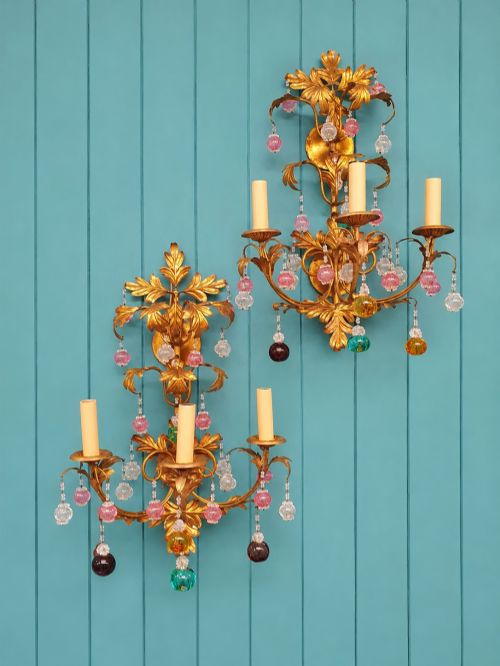
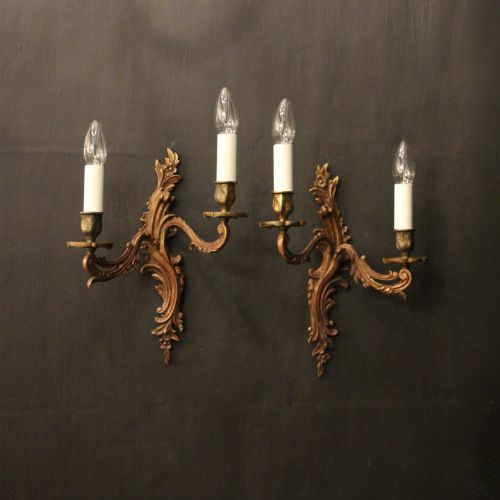
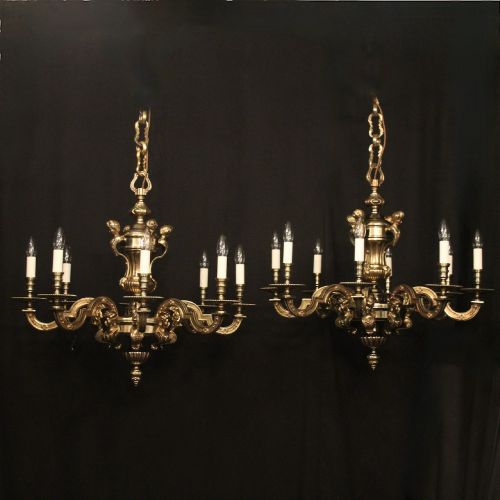
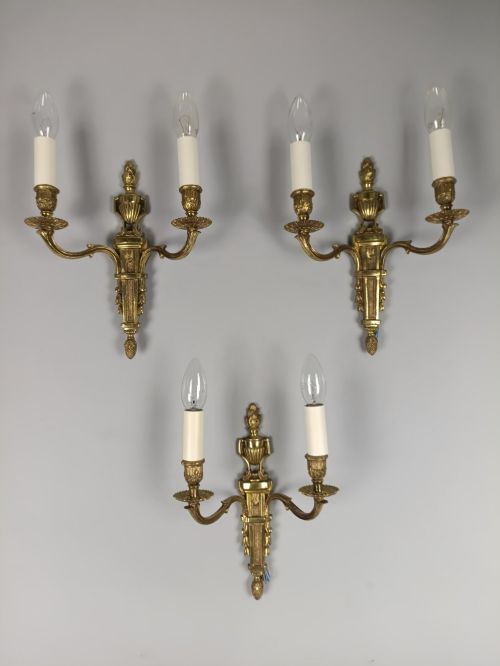
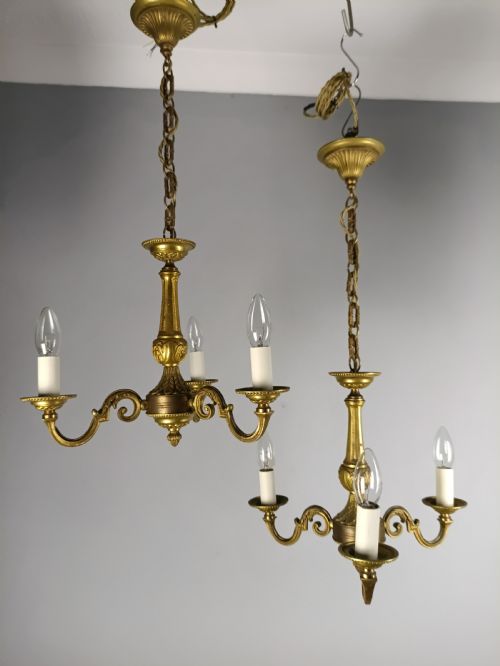
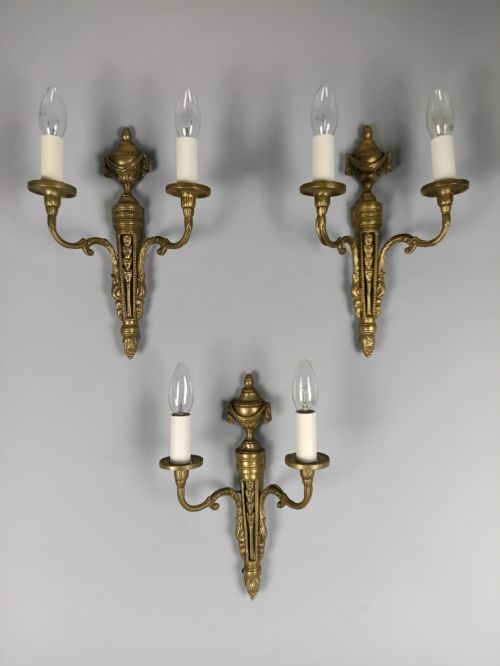
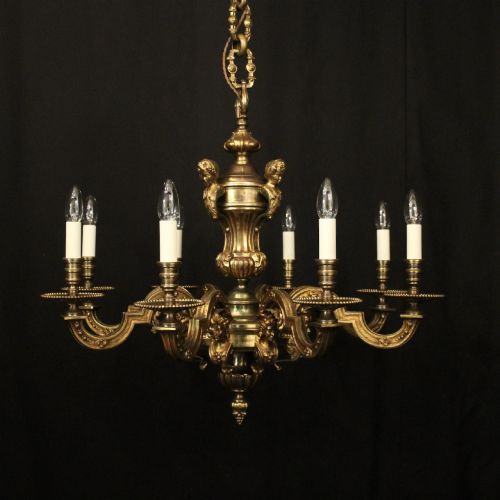
When searching for vintage metal arms, you are examining the structural supports, branches and brackets that project from wall lights, candelabra and multi-light chandeliers. The pieces on this page encompass various configurations, from twin-arm wall sconces to fourteen-arm chandeliers.
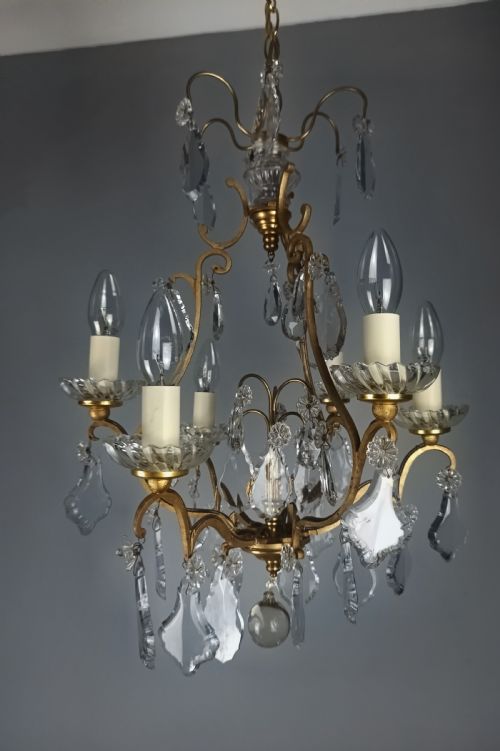
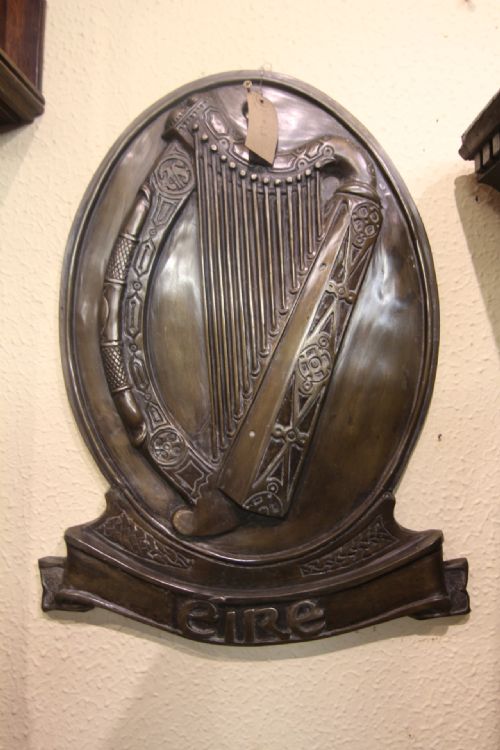
You are most likely to encounter French gilded bronze and brass wall lights and chandeliers dating from the 1920s and 1930s. Alongside these, the selection includes English bronze wall lights, Italian fixtures, and occasional iron garden benches and wall plaques.
The forms span domestic lighting and decorative metalwork, reflecting periods from the Regency era through to the early twentieth century. Each item demonstrates how metal arms were cast, forged or wrought to support multiple points of illumination.
Construction and Materials
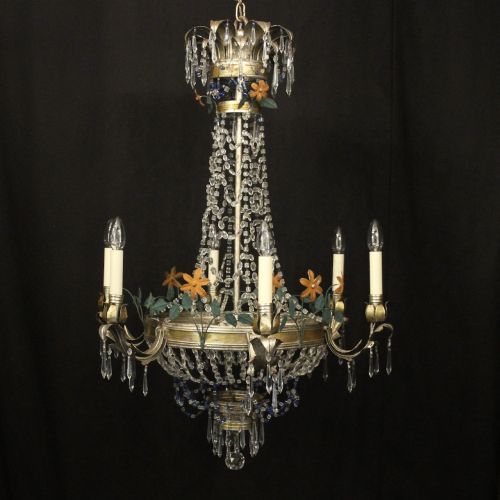
The pieces rely primarily on brass, bronze, gilt metal, and wrought iron, often combined with cut glass crystal and toleware. Bronze and brass components were frequently cast and subsequently gilded or silver-plated to achieve a polished finish.
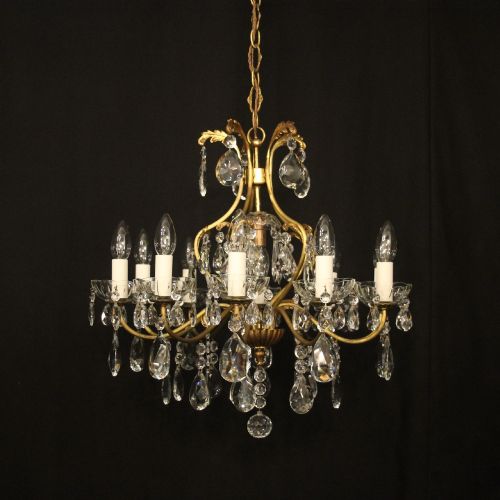
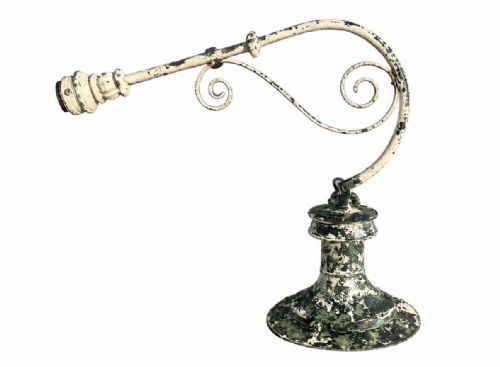
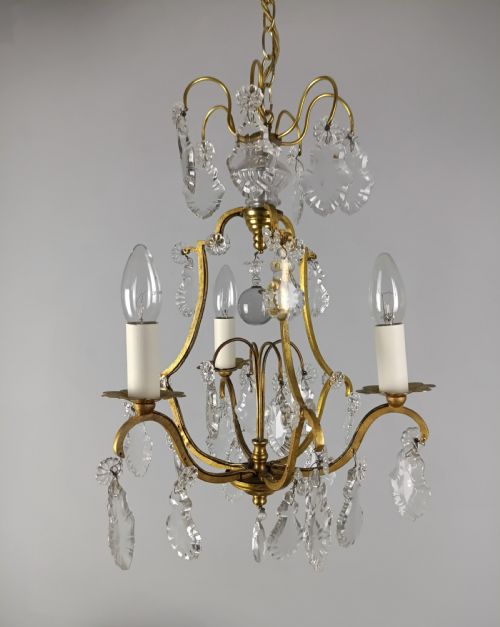
Wrought iron elements, such as those found on garden benches and strapwork structures, demonstrate hand-hammered and forged techniques. Crystal drops and pendeloques are integrated into cage and birdcage chandeliers using wire fixings attached to the metal framework.
Vintage Metal Arms Retail Price Guide 2026
Typical asking prices for vintage metal arms among the pieces listed under this phrase on Sellingantiques today, from the lower quarter to the upper quarter. They describe what is for sale here now, not the wider market.
Materials across the inventory include bronze, wrought iron, gilt brass, and cut glass crystal.
Assessing Quality
Quality rests in the crispness of the casting and the depth of the chased detail upon the metal arms. Superior examples exhibit sharply defined ornamentation on the bronze or brass branches, whereas lesser pieces show softer, more generalised contours.
The integrity of the construction and the preservation of the original gilding or silver plating dictate the standing of a piece. Hand-hammered ironwork and original crystal components further distinguish high-grade examples from standard production.
The Vintage Metal Arms Glossary
- Ormolu
- Gilded bronze, where finely ground high-carat gold is applied to a bronze base. This technique was widely utilised in French lighting and candelabra.
- Toleware
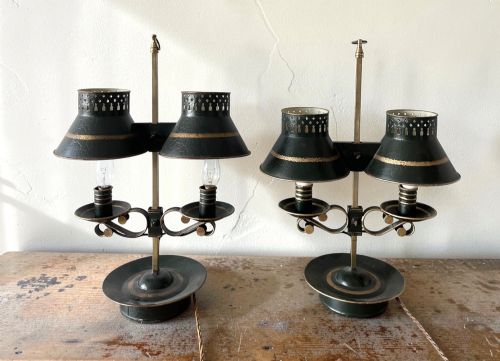
- Painted or enamelled sheet metal objects, often appearing in green on desk lamps and chandeliers. It provides a coloured contrast to brass and crystal components.
- Birdcage Chandelier
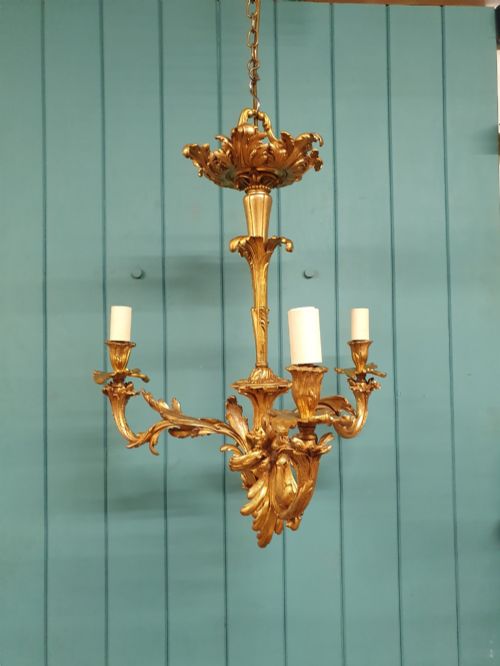
- A lighting fixture constructed with a metal frame resembling the silhouette of a birdcage. These designs typically incorporate numerous crystal drops and multiple light arms.
- Candelabra
- A branched candlestick holder designed to support multiple candles or, in later adaptations, electric lights. They frequently appear in matched pairs from the nineteenth century.
- Strapwork
- Flat bands of metal arranged in ornamental patterns, seen on nineteenth-century garden benches and structural ironwork. This technique provides both rigidity and decorative linear detail.
Vintage Metal Arms: Frequently Asked Questions
What periods do these metal light fittings cover?
The lighting fixtures and metalwork span from the nineteenth century through the 1920s and 1930s. Earlier examples draw on Regency and Victorian aesthetics, while the interwar decades are strongly represented by French production.
Stylistic influences range from French Rococo and Empire revivals to Edwardian and Italian designs. Each period brings distinct casting methods and decorative motifs to the metal arms.
How were multi-arm chandeliers constructed?
Multi-arm chandeliers were built around a central metal stem that branched out to support individual light holders. These arms were secured to central hubs using threaded screws, pins, or welded joints depending on the metal used.
Manufacturers added crystal strands, drops, and glass plates to amplify the light reflection. The resulting structures balanced weight distribution across every projecting arm.
Where were these metal wall lights originally used?
Wall lights and sconces were designed for domestic drawing rooms, hallways, and formal reception spaces. Their projecting arms held candles or electric bulbs away from wall surfaces to maximise illumination.
Pairs and larger sets allowed for symmetrical placement flanking fireplaces, mirrors, or architectural doorways. This arrangement provided balanced lighting schemes in period interiors.
How do I care for vintage brass and bronze?
Vintage brass and bronze require gentle dusting with a soft, dry cloth to prevent the accumulation of surface dirt. Avoid abrasive cleaning agents that can strip away original gilding, patination, or silver plating.
For pieces with crystal elements, individual glass drops can be cleaned carefully with mild soapy water while detached from the frame. Preserving the natural surface age maintains the integrity of the metalwork.