
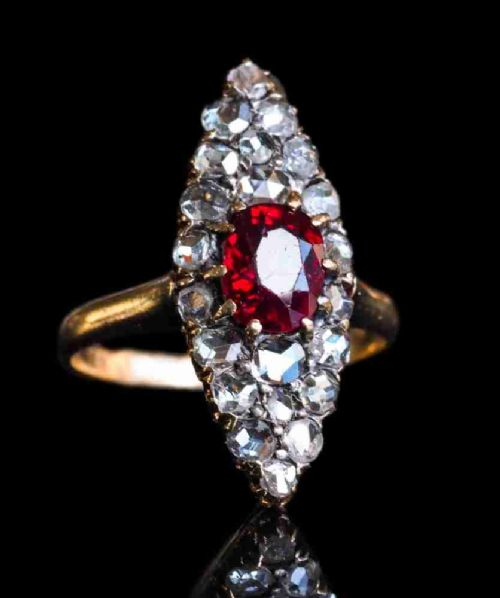


Vintage Marquise Diamond Ring
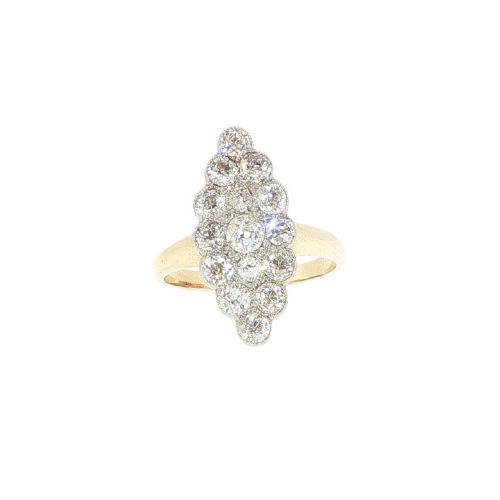
A vintage marquise diamond ring uses an elongated, boat-shaped silhouette to elongate the finger while showcasing brilliant-cut stones.
Vintage Marquise Diamond Ring
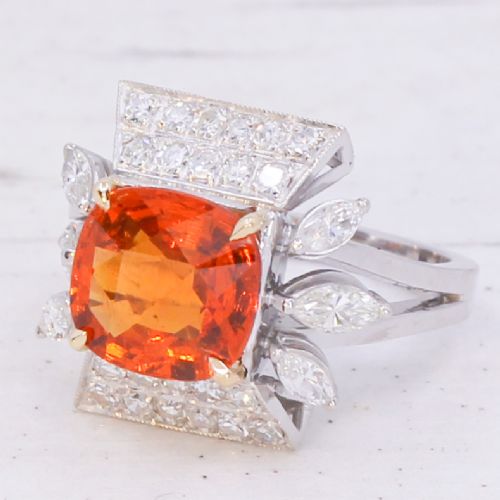
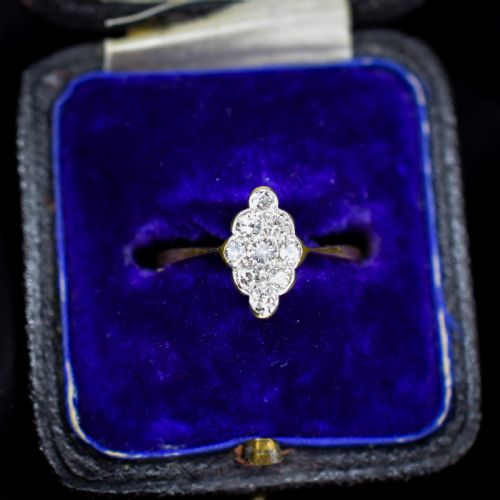
A vintage marquise diamond ring sits within a broad sweep of jewellery history, spanning Victorian, Edwardian, Art Deco and mid-century design. Buyers exploring this category encounter distinct forms including cocktail rings, dress rings, navette clusters and boat-shaped settings.
The silhouettes draw heavily on geometric lines during the Art Deco era and softer floral or cluster arrangements in earlier Victorian and Edwardian periods. These pieces serve as both historical artefacts and wearable jewellery with a notable presence on the hand.
Materials and construction
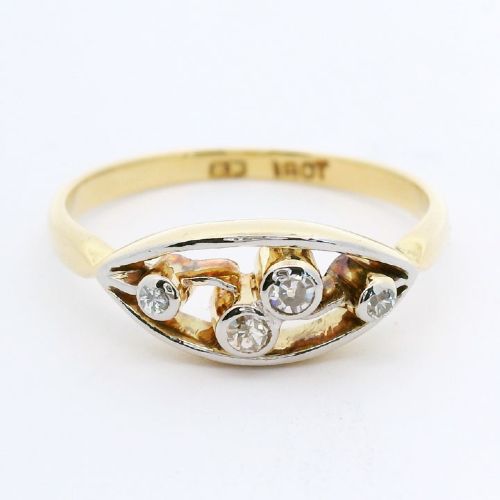
Goldsmiths constructed these rings using platinum, 18ct yellow gold and 18ct white gold, frequently pairing platinum heads with gold bands to secure stones firmly while maintaining a bright white reflection beneath the diamonds. Early pieces often relied on silver-topped gold settings before platinum gained widespread favour in the twentieth century.
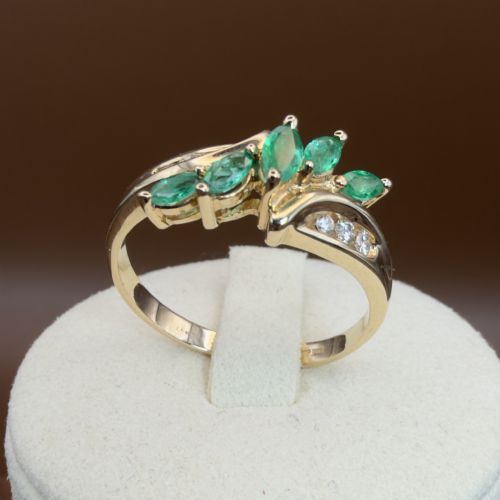
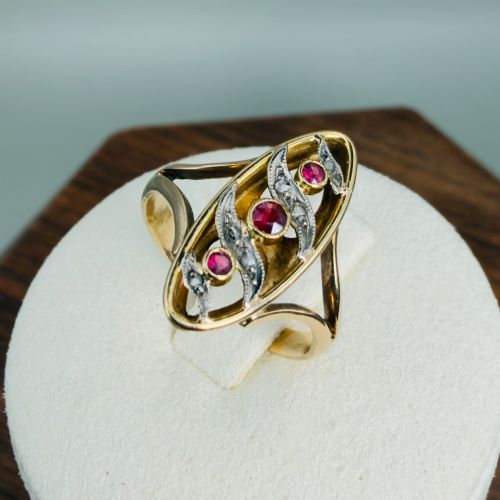
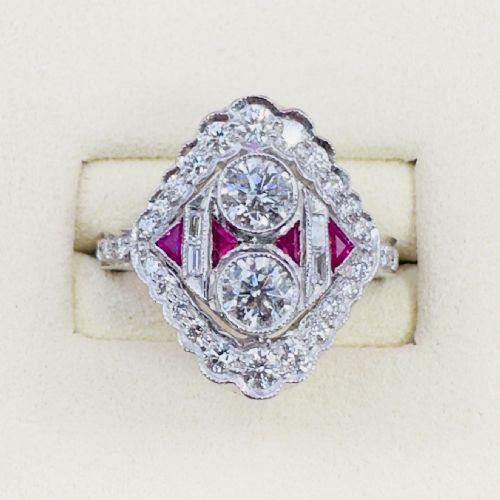
Gemstones including sapphires, rubies, emeralds and garnets accent the central diamonds in cluster and navette configurations. Settings utilise meticulous claw, bezel and pavé techniques to hold elongated marquise cuts and old-cut diamonds in alignment.
Listings feature platinum, 18ct yellow gold, 18ct white gold, and 14ct gold alongside diamonds, sapphires, rubies, emeralds, garnets, aquamarines, amethysts, and pearls.
Craftsmanship and stones
Quality rests upon the precision of the stone cutting and the integrity of the metalwork, particularly along the delicate tapering points of the marquise outline. Superior examples display balanced symmetry in the cluster arrangement and secure, even claw work that protects vulnerable corners.
The selection of the central diamond, alongside matched calibre-cut coloured gems like sapphires or rubies, dictates the overall character. Maker marks, hallmarks and well-preserved geometric millegrain detailing further distinguish finer workshops from standard production.
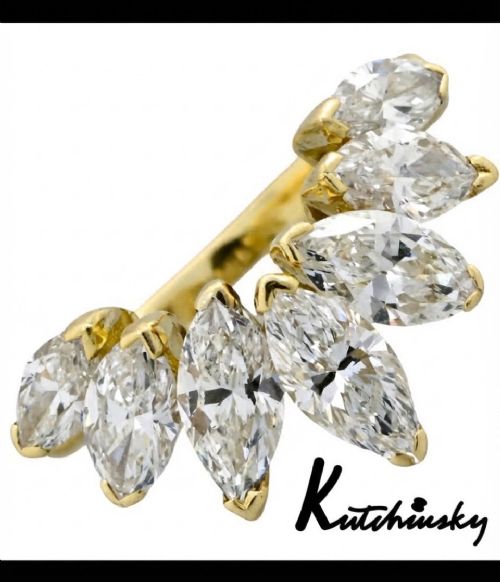
Kutchinsky
The Vintage Marquise Diamond Ring Glossary
- Marquise cut
- A football-shaped gemstone featuring pointed ends and curved sides designed to maximise carat weight visually. This shape is also known as a navette cut in period pieces.
- Navette
- French for little ship, describing an elongated, boat-shaped ring setting tapering to two points. This style appears frequently across Victorian and Edwardian jewellery.
- Millegrain
- A decorative technique featuring tiny raised metal beads along the edges of a setting. It provides a delicate, textured border popular in Art Deco design.
- Old cut
- A diamond cut from the late nineteenth or early twentieth century featuring a small table, high crown and large culet. These stones were shaped by hand to catch candle and gas light.
- Cluster ring
- A ring design featuring a central stone encircled by a border of smaller gems. This layout amplifies the visual impact of the primary diamond.
Vintage Marquise Diamond Ring: Frequently Asked Questions
How do I style a vintage ring?
These rings pair easily with plain gold or platinum bands that do not compete with the intricate geometric work of the central setting. Wearing them singly lets the elongated silhouette stand out on the hand.
Due to the pointed ends of the marquise cut, owners often pair them with curved wedding bands or wear them on fingers less prone to hard daily knocks. Routine checks by a jeweller ensure the claws remain tight.
How do I date a diamond ring?
Dating relies on hallmarks, metal choices, and stone-cutting styles. Edwardian and Victorian pieces often utilise yellow gold and platinum-topped settings with hand-cut old stones.
Art Deco examples lean towards crisp platinum frameworks, geometric symmetry and millegrain decoration. Mid-century rings introduce heavier cast white gold bands and different cluster arrangements.
Are old cut diamonds different?
Old cut diamonds possess distinct proportions compared to modern brilliant cuts, including smaller tables and deeper pavilions. These geometric traits were hand-polished to perform under ambient indoor lighting.
Each stone carries slight irregularities that reveal its handmade origins. These subtle variations give vintage rings an organic warmth missing in modern mass-produced stones.