





Vintage Marquetry Armchair
A vintage marquetry armchair brings pattern and presence to a room, offering both comfortable seating and intricate wood craftsmanship.
Vintage Marquetry Armchair
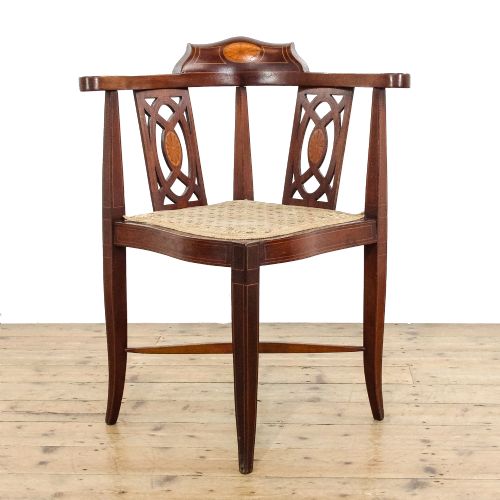
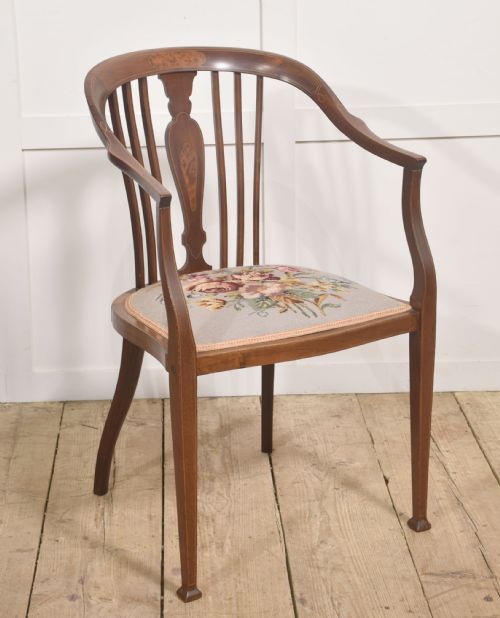
A vintage marquetry armchair sits at the intersection of practical seating and decorative woodwork, originating predominantly from the Edwardian period and the late nineteenth century. These seats emerge in various forms, including corner chairs, desk chairs, occasional chairs, and rocking chairs.
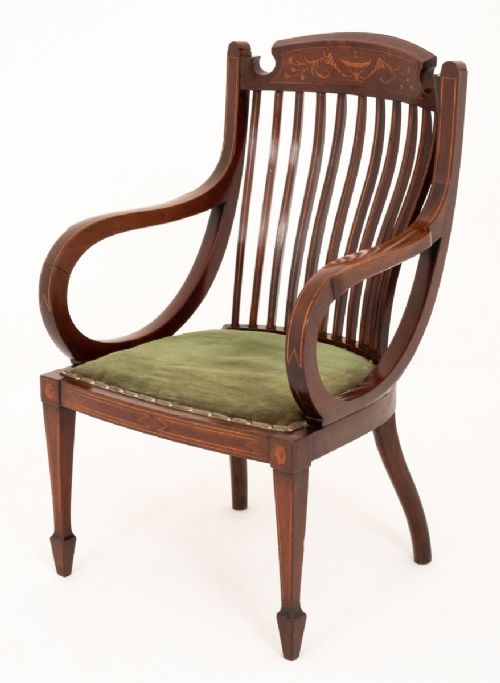
The pieces appearing on this page draw upon traditional styles such as Edwardian, Art Nouveau, Sheraton Revival, and Victorian. Most examples rely on a mahogany or rosewood structure enriched with detailed wood inlay.
Buyers encounter everything from high-backed parlour seats to swivelling ships chairs and low salon armchairs. Each variant serves a distinct domestic function while retaining the characteristic inlaid surface decoration.
How they were made
Cabinetmakers constructed the frames primarily from solid timbers like mahogany, walnut, and rosewood, ensuring structural strength for daily use. Satinwood, boxwood, and various contrasting veneers were then meticulously shaped and fitted into recessed channels to form pictorial or geometric marquetry patterns.
Upholstery techniques matched the period, utilising materials such as fabric, velvet, and leather over sprung or stuffed foundations. Brass fittings occasionally reinforced structural points or adorned swivel mechanisms on desk and library variants.
Vintage Marquetry Armchair Retail Price Guide 2026
Typical asking prices for vintage marquetry armchair among the pieces listed under this phrase on Sellingantiques today, from the lower quarter to the upper quarter. They describe what is for sale here now, not the wider market.
Listings span from the late nineteenth century through the Edwardian era into the nineteen-twenties, featuring mahogany, rosewood, and satinwood.
What varies in quality
Quality rests heavily on the precision of the wood inlay and the crispness of the marquetry design. Superior pieces display seamless integration of contrasting timbers without noticeable gaps or excessive filler.
The structural integrity of the frame and the quality of the primary timber define the tier of the piece. Denser hardwoods and more complex forms, such as high-backed or swivelling designs, generally indicate higher workshop standards.
Shoolbred
The Vintage Marquetry Armchair Glossary
- Marquetry
- Decorative veneer work where small pieces of varied wood are assembled to form picture designs. This technique provides the primary visual interest on the backrests and frames.
- Sheraton Revival
- A late nineteenth-century design movement inspired by the furniture of George Sheraton. These pieces typically feature slender mahogany frames with delicate satinwood inlay and classical motifs.
- Corner Chair
- A seat designed with a diagonal orientation to fit snugly into room corners, often featuring a curved backrail supported by multiple turned spindles.
- Occasional Chair
- A light, movable seat intended for periodic use rather than primary lounging. They frequently appear in sets or matched pairs within a parlour setting.
- Tub Armchair
- A rounded seat where the arms curve continuously into the backrest. This form provides an enclosed, supportive posture.
Vintage Marquetry Armchair: Frequently Asked Questions
Where should I place an inlaid armchair?
These chairs suit quiet corners, home desks, or drawing rooms where their detailed woodwork remains visible. They function well as accent pieces rather than primary lounging seats.
Pair them with simple surrounding furniture to let the marquetry patterns stand out without overwhelming the room layout.
How do I care for the wood inlay?
Keep the chair away from direct sunlight and strong heat sources to prevent the veneers and adhesives from drying out. Regular dusting with a soft, dry cloth preserves the polished surface.
Apply a suitable wax polish sparingly to nourish the timber and maintain the natural lustre of the contrasting woods.
Are these chairs comfortable for daily use?
Many models offer supportive upright seating designed for parlours, desks, or occasional resting. Their ergonomics reflect the domestic habits of the late nineteenth and early twentieth centuries.
Upholstered variants provide softer seating, while wooden corner or desk chairs prioritize firm posture and structural rigidity.
How do I distinguish Edwardian from Victorian examples?
Victorian pieces tend to use heavier walnut frames with deeper, more robust carving and substantial proportions. They often reflect country house or maritime utility.
Edwardian items frequently display lighter mahogany structures with refined satinwood stringing and brighter, airier Sheraton Revival influences.