


Vintage Magazine Side Table
A vintage magazine side table combines practical periodical storage with a sturdy surface for lamps and cups, drawing on traditional designs like the Canterbury and the occasional table.
Vintage Magazine Side Table
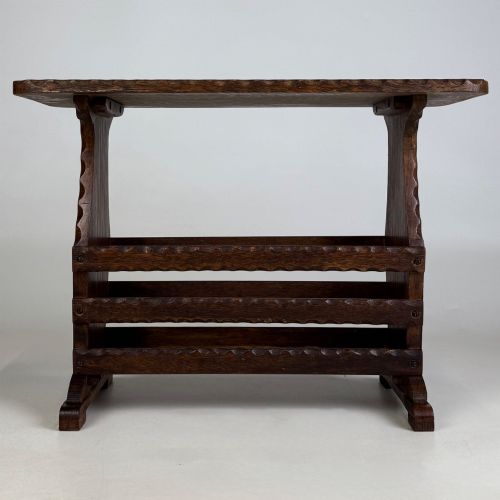
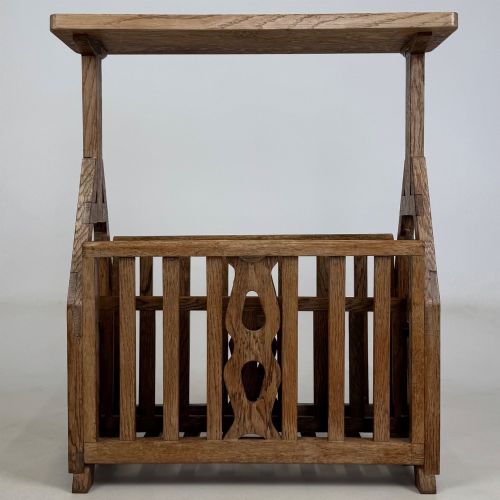
A vintage magazine side table brings together multi-tier literature storage and a compact table surface, originating from forms like nineteenth-century canterburys and early twentieth-century oak racks. The selection spans periods from the Victorian era and the Aesthetic Movement through to Art Deco pieces from the nineteen-thirties.
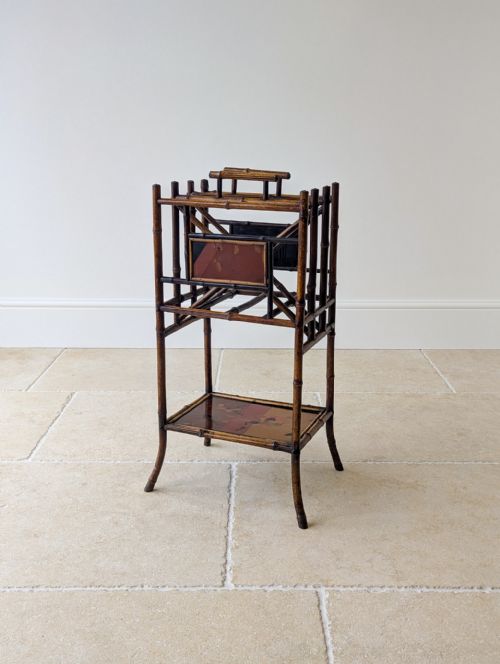
Buyers will encounter traditional wooden constructions alongside bamboo and brass iterations, fulfilling both functional reading storage and decorative occasional furniture roles. These items often double as music stands, lamp tables, or folding reading surfaces depending on their specific period configuration.
How they were made
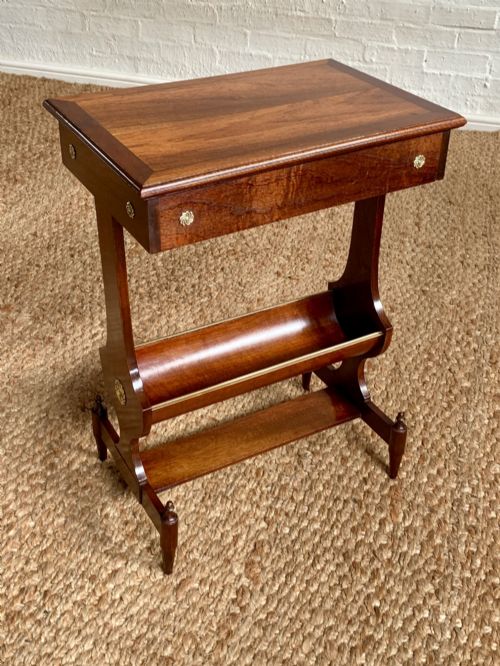
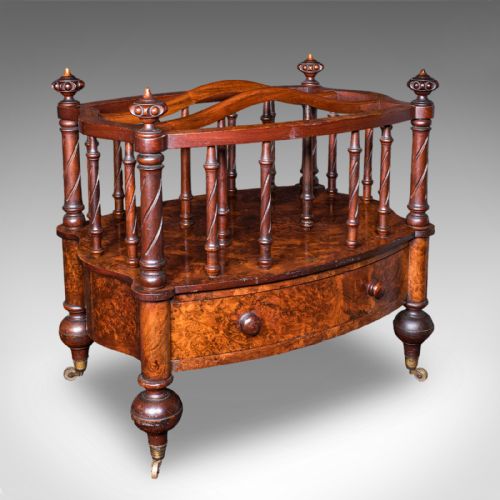
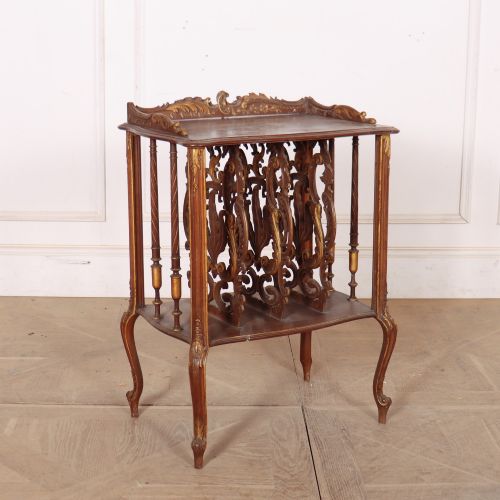
Cabinet makers utilised dense hardwoods such as mahogany, oak, burr walnut, and rosewood, frequently incorporating decorative inlays, hand-painted details, and carved woodwork. Canterburys and side tables often feature integrated drawer compartments and slatted wooden divisions designed to hold newspapers, magazines, and sheet music securely.
Alternative materials like tiger bamboo and brass appear in later nineteenth and twentieth-century interpretations, paired with lacquer and bentwood techniques. These diverse methods allowed makers to produce rigid frames capable of supporting both reading materials on lower tiers and tabletop items above.
Listings feature oak, burr walnut, mahogany, and bamboo materials across Victorian, Edwardian, and Art Deco periods.
What varies in quality
The standard of a vintage magazine side table rests upon the choice of timber veneer, such as figured burr walnut or rich mahogany, and the precision of its inlaid details. Finer examples display carefully joined slatted dividers and stable underframes that withstand the weight of books and periodicals without sagging.
Heal s
The Vintage Magazine Side Table Glossary
- Canterbury
- A low, open-framed stand featuring slatted partitions, originally designed for holding sheet music and later adapted for newspapers and magazines. It frequently includes a small drawer beneath the storage section.
- Aesthetic Movement
- A late nineteenth-century design style that embraced simplicity, craftsmanship, and decorative bamboo or lacquer finishes inspired by Japanese art. This movement produced light, exotic occasional tables.
- Burr Walnut
- A highly prized timber veneer taken from the knotted growths of walnut trees, yielding intricate, swirling grain patterns. It was commonly applied to the top surfaces of Victorian and Edwardian tables.
- Occasional Table
- A small, movable table designed for specific, intermittent uses within a room, such as holding a lamp or books. These pieces form a large portion of multi-functional literature stands.
Vintage Magazine Side Table: Frequently Asked Questions
What is a Canterbury table?
A Canterbury is a traditional stand featuring upright slatted divisions used for storing newspapers, magazines, and sheet music. Many variants combine this storage compartment with a functional side table surface.
Originating in the eighteenth century, the form evolved through the Victorian and Edwardian periods into diverse occasional tables with built-in literary storage.
How do I date a magazine table?
Dating relies on identifying period characteristics such as Victorian burr walnut inlays, Aesthetic Movement bamboo frames, or Art Deco modernist oak styling. Materials and construction methods provide clear chronological markers.
Earlier nineteenth-century pieces often utilise solid mahogany and rosewood, while nineteen-thirties examples favour blonde oak and streamlined geometric forms.
Are bamboo magazine racks sturdy?
Bamboo and tiger bamboo frames from the nineteenth and twentieth centuries offer surprising structural strength despite their lightweight appearance. Skilled makers bound the joints tightly to ensure stability.
These pieces were constructed to hold heavy portfolios of paper and books while serving as decorative occasional furniture in sitting rooms.
Where should I place an occasional table?
These compact tables fit easily beside armchairs, sofas, or beds where reading materials need to be kept close at hand. Their dual function provides both a surface for lamps and immediate access to periodicals.
Placing them away from direct heat sources helps protect older wood veneers and polished lacquer finishes from drying out.